Showing posts with label 4 stars. Show all posts

Saturday, August 29, 2026

2026 #28 Small Things Like These (Keegan)


Small Things Like TheseSmall Things Like These by Claire Keegan
My rating: 4 of 5 stars

The writing here is beautiful. Keegan manages to do so much with just a few words. There's little in the way of hyberbole or superlatives, but there is a clean rhythm that is almost poetic and draws you in. It is a touching story, but also relatable in how most of us face moral quandaries at one point or another. Bill Furlong is just a coal merchant delivering fuel to a Magdalene convent laundry in Ireland during the 1980s. But over just a few pages (it is a novella), we start to walk with him. We feel what he feels, and we see what he sees. You can almost feel the knotted tension forming in the pit of his stomach as he grapples with what he's witnessed at the convent. This is a very good book about the "small things" that can be opportunities to test or own moral courage.

View all my reviews

Challenges 
2026 Reading Goals 28/60

Saturday, July 18, 2026

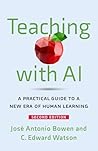
2026 #20 Teaching With AI (Bowen/Watson)


Teaching with AI: A Practical Guide to a New Era of Human LearningTeaching with AI: A Practical Guide to a New Era of Human Learning by José Antonio Bowen
My rating: 4 of 5 stars

If you are an educator, no matter where you land on the topic of AI, you should, as Louis Epstein said in a review of the first edition in the Journal of Music History Pedagogy*, “read this book.” Epstein also notes the authors’ “almost gleeful boosterism,” and indeed, there is no real doubt that they assume AI as a given. In the epilogue to the second edition, the authors generously allow: “Faculty are the ultimate decision-maker, arbiter of quality, and content expert within their own classroom” (319). But make no mistake, the book is unapologetically prescriptive: “You need to start playing and working with AI” (319); “Our curriculum and classroom discussions also need immediately to include AI topics around ethics, data privacy, civics, environmental and energy costs, labor, discrimination and bias” (321). On those latter fronts, if you are looking for advice on how to approach those topics, this is not the book for that (it will only tell you that you need to, not necessarily HOW to). Most of the book is focused on better prompt writing, because, as the authors claim: “All assignments are now AI assignments” (245). In his aforementioned review, Epstein notes that the “unspoken thesis” of the book is that student and faculty are now forced “to decide what really matters to us in our teaching and learning”. I don’t disagree, actually, but I have a feeling my human-generated SWOT analysis of AI and that of the authors would differ greatly.

Bowen and Watson offer: “The new goal of any assignment, especially a writing assignment, is to emphasize the important human contribution while recognizing the realities presented by AI” (250). I like the use of the word “realities” here, but the book is instead heavily focused on “opportunities”, with a strong belief that if we invest the time, students can integrate AI in meaningful ways. What isn’t clear (yet), is how this will really play out, given students’ various motivations for “efficiency.” There are good select studies on issues such as human agency in creative problem solving in AI collaboration, but the full-scale adoption of AI as our “thought partner” in higher ed has not yet come to pass in such a way that we have large-scale data on the impact. But we are probably getting there.

There are some seeming contradictions. Some of the examples and prompts offered by the authors mention how AI can be used to alter/experiment with “voice” in a piece of writing. I’ll be transparent and say that this, along with a new interpretation on the role of citation in writing, is one my biggest issues with AI. If I go full-on “the Borg are coming,” this is where I see a real abdication of human-ness. So, I found it odd to offer guidance on including “voice” in prompts for AI (p.59), but then in Chapter 8, on “Cheating and Detection”, the authors advocate starting a conversation with a student who you suspect might have used AI with “I don’t really hear your voice as much as I would like” (161). I happen to think that’s a GREAT way to start the conversation (and I have), but I also don’t encourage them to use AI with thorough prompts that include directions to “respond as if you were x” or write “like an engineer.” The conflation of “language” and “voice” I find problematic as well.

There is also a lack of acknowledgement of potential tokenism and essentialism in prompting AI in the ways the authors describe. For example, as a faculty member, the authors promote doing a practice conversation with AI wherein it is prompted to be “my student Jeff, who is a nineteen-year-old from Wisconsin majoring in biology and taking my course pass/fail” and then directed: “Please respond as if you were Jeff.” (133) While only a “practice conversation” and not a script, it posits poor Jeff as some sort of archetype of whatever identities we’ve given the AI. It isn’t to say that our experience of Jeff IRL is complete, but one hopes that we might have a better sense of Jeff as a student than an AI combing known character traits of nineteen-year-olds, biology majors, and folks from Wisconsin. More problematic (perhaps) is the counsel: “Perhaps you simply ask the AI to be an under-represented voice in the room (225).” On the same page, an author might ask an AI to “reimagine” their work with the lead character as “an Asian American and identify what plot lines might need to be changed.” I note that it does say “might”, but the idea that we would ask AI to represent “an Asian American” doesn’t seem any better than asking an Asian American to speak for all Asian Americans.

My critique of the authors’ suggestions for citation goes far beyond the confines of their book. There seems to have been a large-scale shift in discussion about “checking citations” without highlighting the point of citation in the first place. I carefully say “seems” here, because this is a baseline perception, not a carefully researched thesis. But the authors tell me that I might, as a scholar writing an article, prompt an AI with “Who are the other major figures in this field, who might be reviewers of this article? What work of theirs should I cite?” (114). I understand the pragmatism there, but why not instead: “What work of theirs should I read?” I don’t think that’s a pedantic distinction.

In the chapter on “Reimagining Creativity”, the authors supply a cartoonish image created with Gemini-2.5 via a prompt that prescribed “style of a Renaissance woodcut with seventeenth-century London in the background” and features Genghis Khan on the left with his face merged into a strawberry, and Queen Victoria is on the right with her face hybridized with a cauliflower (Figure 4.1, 81). Both figures then have a thought bubble (as directed in the prompt) that asks “Will anyone care if we are AI generated?” The image is an answer to the question the authors pose: “What if AI makes the art itself?...Humans still need to think of the ideas, but does it matter whether AI was used to realize the actual image?” (80) Bowen and Watson don’t have the answer, but only offer “There are important personal, social, economic, and ethical issues that deserve a place for discussion in society and in our revised curricula.” (80). These discussions have long been part of artistic and creative production (think digital photography), so they aren’t wrong, but I’m growing tired of the “just because we can” advocacy when it comes to AI. I'm reminded of an AI demo on my campus wherein we were shown how one might create a "nature documentary" using AI generated images. I was alarmed that the irony was not acknowledged.

Ultimately, however, the book backs a lot of what is just good pedagogy. For example, there’s an excellent suggested exercise for a class on defining values, teamwork and accountability (180 – 181), something that mirrors the “Community Agreements” I facilitate for all my classes. Whether that discussion needs to be in service of using AI or not might be challenged, but it is good that it is offered in the book. Table 12.1, an “Assignment template combining motivation, task clarity, and success criteria” is another useful example both in and outside of AI contexts. And while I have not yet embraced intentional integration of AI into my own teaching/course content, I might get behind allowing specific prompts such as “Identify which ideas and arguments in this essay are common, flawed, repetitive, heteronormative, or culturally limited”(268). I see this as a bit different than the prompt I mentioned above that essentializes Asian Americans, but I’d have to run it on several examples for myself to see what a given AI calls “culturally limited.”

And that’s probably the biggest problem. One takeaway from the book is that converting core critical thinking skills into AI prompts is no simple task, and it isn’t until the Epilogue that Bowen and Watson seem to vaguely acknowledge the immense amounts of labor being placed on faculty: “Much of the AI-fueled pedagogical revision on college campuses has emerged as another unfunded mandate for faculty and their time.” (325) Even if I entertain sharing just the basic information of this book regarding how to prompt, I cannot imagine doing so at the sacrifice of things I find just as (or more) important for my particular course. And I certainly do not have the time to teach them “how to be expert prompters” AND music history. It isn’t to say that I can’t incorporate “relevant” examples and creative projects, but I certainly cannot afford the time to invest in the type of nuanced prompting the authors promote. So, who will? That remains to be seen.

So yes, my colleague Louis is right. Read this book. It features excellent and recent sources, and it will either strengthen your resolve, confirm your intentions, or move the needle to the middle, depending on your starting point.

*Now called The Journal of Musicology Pedagogy  


View all my reviews

Sunday, July 12, 2026

2026 #19 Water for Elephants (Gruen)


Water for ElephantsWater for Elephants by Sara Gruen
My rating: 4 of 5 stars

I typically read "hyped" books well after the hype calms down so I can resist the noise and form my own opinion. I was given Water for Elephants as a gift back in 2007, so in this case, the waiting period has been a *bit* longer than I intended. I enjoy my engagement with lit-social media, but in this case, it may not have been a good thing. One of the "bookTokers" I follow half-heartedly (because I find his "reviews" rather ego-swollen, even though I mostly agree with him) did a quick video about the biggest "plot twists," based on his audience's feedback. He mentioned that he didn't really feel this one had a plot twist, but it was more just a part of the plot. What bothers me is that I now had this in mind the ENTIRE time I was reading the book.

Plot twist or no, I'll say that I think I would have preferred to do without the part of the book that enables the so-called plot twist at the end. I don't think it added much, and the real story was gritty enough. I don't like to use the spoiler tag, so I'm hoping that's vague enough for those who haven't read it, and will make sense to those who have.

It is a great read -- I sped through it basically in two days when I had a chunk of time to read. The characters are vivid and the story is compelling as is the historical context of a depression-era circus. The shifts between time periods work (not an easy move to do well), and there are some really beautiful and human moments. I was prepared for more of a tear-jerker given what I've heard over the years, so I was surprised to have had only two moments of deep sadness, and one of them I saw coming, so I braced myself for it. What I suspected would be the tragedy of the novel was not, so I guess on that front I was pleasantly surprised.

I personally did not need what I call the "catch-up" chapter (Chapter 25), but I can also see that it would be necessary for some. I'm usually happy to have some loose ends left to weave together in my imagination. All in all, however, this is worthy of a lot of the acclaim it received and I'm glad I (finally) read it!

View all my reviews

Challenges on Storygraph (@rebcamuse):
2026 Reading Goals 19/60
Tackle your Physical TBR 2026: no. 13
#192030 Challenge:2006

Monday, June 22, 2026

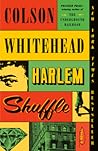
2026 #15 Harlem Shuffle (Whitehead)


Harlem Shuffle (The Harlem Trilogy, #1)Harlem Shuffle by Colson Whitehead
My rating: 4 of 5 stars

For reasons not totally clear to me, it took me a LONG time to get into this book. In truth, it was only Part 3 that really engaged my interest, but I think that had a lot more to do with the fact I was traveling and unfocused. I loved The Underground Railroad so I had big hopes here, and when I sat down and read carefully, I felt much more connected to Ray Carney and the book. So I'm probably going to go back and read the first two parts at some point.

This historical backdrop isn't easy (partially because some of the same issues persist), but the wry narrative works really well, and Whitehead peppers in scenic references to this historical landscape: the recently completed Pan Am building (now MetLife), the partially completed Lincoln Center, the demolition and clearing that made way for the World Trade Center. That alone cast an eerie pall over the last few pages of the book. I also thought the 1964 Harlem Riot was integrated in a very real way--in how it impacted real folks "on the ground". As someone who marks the 1992 Los Angeles riots as a formative experience of my life, I recognized the complex and wide variety of feelings from the city's inhabitants. Like the emerging space for the WTC, the weight that history repeated/repeats itself makes this way more than a "suspenseful crime thriller" (NPR blurb in book).

The detachment from violence and the sort of "everyman" qualities of the protagonist are very effective in conveying a sense of realism rather than sensationalism. Strangely, Pepper became my favorite character -- or at least Pepper's later interactions with Ray.

And there are moments of absolutely spectacular dry humor -- Ray's noting of the furniture in the board room in the final showdown, his complete "payment" to Pepper, descriptions of Aunt Millie: "She could have kicked the ass of a druggie or the ne'er-do-well nephew of her upstairs neighbor--her mastery of her weapon of choice, the hairbrush, went unchallenged..." (246). I also loved the descriptions of some of the less scrupulous characters: "Miami Joe was not a law-abiding sort and had no love for its earthly muscle..." (96).

Whitehead's writing is so clever in how it packs character into description: "[Carney] ran like a kid convinced that the whole grown-up world with its entire grown-up might was going to beat him silly." (291)

Or another favorite:

"No, its best not to hear your grown friends talked to the way Ambrose Van Wyck addressed his son. The humiliation splashes everywhere. You'll get it on you and it'll become your own bad time, the bloody resurrection of your own childhood sadnesses." (270)

Despite the rough beginning, I'm sold enough to read Crook Manifesto and my four stars acknowledges my own fault in not engaging with the first two parts of the novel.

View all my reviews
Challenges on Storygraph (@rebcamuse):
2026 Reading Goals 15/60
Tackle your Physical TBR 2026: no. 9

Saturday, May 16, 2026

2026 #13 The Guilty Feminist (Frances-White)


The Guilty Feminist: You Don't Have to Be Perfect to Overthrow the PatriarchyThe Guilty Feminist: You Don't Have to Be Perfect to Overthrow the Patriarchy by Deborah Frances-White
My rating: 4 of 5 stars

I'm going to start with one ofthe drawbacks (for me -- specifically in regard to the audiobook), as much of the book is really great. I'm not sure, but many of the "interviews" seemed to be read (rather than the recorded originals), with Adjoa Andoh acting as the guest (?), but it was honestly hard to tell, and the credits on Audible are no help. Regardless if it is the actual guests reading their answers or not, it seemed rather artificial and I missed the organic quality of an interview. That aside...

I was not aware of Frances-White's podcast when I bought this book on Audible, so I came in with few expectations beyond liking the premise of "I'm a feminist, but..." One thing the author really drives home is how WOMEN can be so damn judgmental of each other and she decries the gatekeeping that happens in the name of "feminism." I appreciated that Frances-White seems to recognize that feminism is a broad term that can encompass a wide range of CHOICES (and that having the autonomy and agency to exercise those choices is REALLY the point).

Raised as a Jehovah's Witness, and now a comedian and podcaster, Frances-White comes at this topic with the exact lack of apology and forthrightness that needs to be there. She does love a metaphor, to be sure, but growing up as she did, I think driving a point home became an ingrained practice--sadly I'm sure much of it was internal for a good long time. Her ultimate goal seems to be to unite the different "sub-genres" of feminism against patriarchy, and I think that's a noble endeavor.

I'd quibble with some things, and what I'll say is that she seems to welcome dissent and argument. For her, women SHOULD disagree with each other (respectfully) but not to the point where our infighting undermines the larger goals. I felt there was a strong bias toward women being sexually repressed as a result of the patriarchy, and very little acknowledgment that some women may just not want sex, and might engage with it purely to share something with a beloved partner. There was also a subtext sometimes that "real" feminists behave badly, and I don't necessarily subscribe to that, but I certainly appreciated her points about how often women can sugarcoat their own anger because we are beholden to the social conditioning of being nurturers. I don't think shock value is always the right method, particularly if you carry white privilege-- it often comes at the expense of taking space AWAY from intersectional voices. Frances-White makes a concerted effort to be intersectional and that is a strength of the book -- particularly useful for white women who consider themselves feminists but travel exclusively in white packs of feminists or use various facets of their identity to play the "oppressed Olympics."

Sometimes the audio from the podcast where she mouths off on a particular topic made me feel a bit cynical. Delivering a speech on stage for a podcast where the audience is primarily full of fans is not quite the same as testifying before Parliament and some of these moments felt a bit self-congratulatory.

On accessibility. The interview with Becca (someone --- I wish she would have mentioned who the interviews were with at the end as well), made an excellent point about competing access needs, and that it is important to just be transparent about what your event is doing to be more accessible and try to mix it up so that you are moderately accessible to as diverse a crowd as possible. That seemed like really great advice and useful for those who instead throw up their hands in the face of "can't please all of the people all of the time" and end up choosing the status quo rather than even trying.

Reframing saying "yes to the dress" fell a bit flat for me, but in the same vein as the idea that being a b*itch is validated in the name of feminism (I'm overstating her point a bit here, I realize). Her point that some women become bridezillas because it is the only time of their lives that they are in complete control of everything didn't resonate...I think it is also a huge privilege and if you are going to be sh*tty to people when you are a bride, it just makes you sh*tty, feminist or not.

Her feminist readings of films (so-called "chick flicks"/rom-coms)? Dirty Dancing worked for me--it was a fairly compelling argument, and something of which I was probably semi-aware when I saw it as a young teenager. Pretty Woman on the other hand...Frances-White does acknowledge that it is still problematic and I get that her larger point is that rom-coms often center female autonomy within the context of whatever class level that is present. But as someone who often doesn't enjoy rom-coms, I guess I feel a reframing or re-contextualizing isn't necessary (but importantly, nor is an apology).

In other ways, however, her nuanced parsing of rude cat calling versus genuine complimenting was appreciated. Where it is difficult is that the metric is different for every woman: one person's compliment is another person's harassment.

Essentially, she really trying to message that women have choices and can make choices, and that the fighting among us is really underserving us, and can be as pernicious as the patriarchy. Having gone to a women's college, I'm particularly sympathetic to this viewpoint, and I wish that the women who could really benefit from hearing what she has to say are going to be the ones to pick up a book called "The Guilty Feminist". I've had fellow feminists, whom I consider friends, tell me I was "losing my identity" when I chose to take my husband's name. I've seen that evidently I am serving the patriarchy by preferring to shave my legs. I had a man YELL AT ME once because I held the door open for him when I sensed that he was following me into a coffee shop. "You shouldn't do that!!" he yelled, failing to grasp the irony of mansplaining to me about the patriarchy.

There are a lot of nuggets of wisdom here and some thoughtful reflection and even when I didn't always agree, I welcomed the space to think about these things. One last bit that I'll close with is a quote: "Hope without a plan of action is the doorway to depression." It is, most definitely, time for a plan of action, and I hope that we can find a way to embrace each other, with all our imperfections, to gather our collective hope and make a bold move.

View all my reviews

Thursday, March 26, 2026

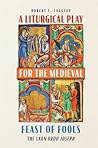
2026 #11 A Liturgical Play for the Medieval Feast of Fools: The Laon Ordo Joseph (Lagueux)


A Liturgical Play for the Medieval Feast of Fools: The Laon Ordo JosephA Liturgical Play for the Medieval Feast of Fools: The Laon Ordo Joseph by Robert C. Lagueux
My rating: 4 of 5 stars

Full disclosure: the author is a friend and colleague/boss.

That said, I read this on its own merit (and NOT at the behest of the author), as I am a self-described "medievalist groupie" (in terms of musicological specialty) and I found myself entranced by the detailed contextualization of this medieval drama. Lagueux devotes much needed attention to the "gloss" and how it operates dramaturgically, supported by well-conceived suppositions regarding the performance of the work in Laon. The situation is very nuanced, and he makes a convincing case for multiple levels of Biblical exegesis that play out in the Ordo Joseph. Most fascinating is the symbology and the role reversal of various clerics of the Church in service of enacting social inversion. Unlike the music associated with Florentine Carnival (e.g. canti carnascialeschi), in this context, Lagueux notes, "...inversion does not require mad revelry." (88). His investigation of the Ordo Joseph supports his claim that, "...meaningful inversion can and does occur in the context of an ecclesiastically sanctioned undertaking." (88)

Equally valuable and intriguing is the author's "reconstruction" or after Peter Jeffery, "re-envisioning" of the music, based on thoughtful and detailed consideration of the available chants (in Laon 263, many for Epiphany) that would work for the rhythms and rhyme schemes of the text. Lagueux also considers intertextual significance, such as the use of the sequence In sapientia (fol. 131v-132v) which offers a Reader's Digest view (my words) of the life of Christ, reflecting both the commemoration of Epiphany as celebrated in the Middle Ages, as well as dialoguing with christological connections in the story of Joseph.

View all my reviews

Challenges on Storygraph (@rebcamuse):
2026 Reading Goals 11/60
Tackle your Physical TBR 2026: no.7


Wednesday, March 18, 2026

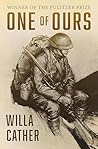
2026 #10 One of Ours (Cather)


One of OursOne of Ours by Willa Cather
My rating: 4 of 5 stars

I was once asked why I join different reading challenges, and it is to have opportunities like reading this book. Male protagonist. Coming of age story. Wartime (WWI). The combo of all of these put together would normally put me off, but it won the Pulitzer Prize in 1923 (thereby checking off two different challenges I've signed on for), and this was my first Willa Cather (and probably won't be my last). When Cather was writing in 1922, it was a mere four years after World War I ended, so for her time it was contemporary fiction (for mine, historical). Claude Wheeler, a young Nebraskan farmer, searches for his identity as a student, as a farmer's son, as a friend, as a husband, as a soldier, and not least as an American. Cather has a gift for making you care about sunsets and wheat fields in the same measure as young men marching off to war because she weaves these things together with intentionality, always teetering on the brink of idealism to remind you it is there, but also with a certain pragmatism to keep us with one foot in reality. The book is harshly beautiful, if I can describe it thus. Cather allegedly ascribed to Claude some aspects of her own personality, along with that of her cousin G.P., who was killed in action during WWI. The result is a protagonist with whom we can sympathize, even when he makes poor decisions (or maybe ESPECIALLY when he does), and for whom we cheer in his idealism and sense of resolve.

The book is not a "war novel" -- the war only makes a real entrance with descriptions of trench warfare and the like toward the end of the book. There are moments where Cather's critique shines through, like when Ernest tells Claude: "You Americans are always looking for something outside yourselves to warm you up, and it is no way to do. In old countries, where not very much can happen to us, we know that, --and we learn to make the most of little things." (88). And other times she zooms out from the story to remind us of the entire Zeitgeist. As news of the war becomes more noted by members of the Wheeler family, Claude's mother goes up to the attic to find a map of Europe -- "a thing for which Nebraska farmers had never had much need."(246). Cather follows this with: "But that night, on many prairie homesteads, the women, American and foreign-born, were hunting for a map." (246). There are so many moments like this.

Cather received criticism (from the likes of Sinclair Lewis and H.L. Mencken) for romanticizing war, and that's perhaps a valid critique. However, with almost a century of hindsight, I read it differently. The romanticization is really about Claude and his idealism (and that of his soldier companions). The emotional distance Cather employs in her descriptions of some of the brutalities of war creates an almost journalistic narrative, and she reserves her emotional energy for moments of human interaction. I don't think Cather is suggesting/advocating war as a solution for youthful searching for purpose, but I think she is suggesting that World War I offered something particular for certain young American men who became disillusioned with what was available on their home turf.


View all my reviews

Challenges on Storygraph (@rebcamuse):
2026 Reading Goals 10/60
#192030 Challenge: 1922


Thursday, March 12, 2026

2026 #8 Raising Hare (Dalton)


Raising Hare: A MemoirRaising Hare: A Memoir by Chloe Dalton
My rating: 4 of 5 stars

We can start with the fact that I've never really given a lot of thought to rabbits and hares being distinct animals, although it registered somewhere in the back-burner of my brain. I think I'm probably not alone. Dalton's memoir sets out to change that, at least in passing. When she encounters an abandoned leveret (baby hare), her life is forever changed (and that isn't hyperbole). Yes, it is a story of one woman and and at least at first, one hare. But it is also a very thoughtful meditation on the fragile ecosystem and how humans must struggle to maintain some sort of precarious equilibrium, as the balance was long ago upset. Dalton is transparent about her struggles and her questions (of herself, of the relatively isolated world of hare-related knowledge, of her little furry friend(?)). It is this questioning that keeps things from falling into the trap of an overly saccharine and anthropomorphized tale. She reels us in with her narrative in such a way that we find ourselves holding our breath as she writes of circling hawks and various other garden predators, any of whom would like a lunch of leveret. She introduces us to previous chronicles offered by hunters, poachers, and poets alike, who offer musings and (mis)characterizations of these enigmatic animals. Dalton seems conscious of adding her voice to the small trove of information so that sometime in the future, another leveret-encounterer might turn to her memoir for assistance.

The hare is never named and this is ultimately an act of respect, but, also, one suspects, an act of self-preservation. While Dalton works hard not to domesticate the animal, there is something else -- some undefined opportunity to commune (sort of) with another species. I picked this up in the airport because I had heard about it and I wanted something short enough to finish over the course of two shorter flights. I might not have gotten around to it otherwise, so I'll thank not only the airport bookstore, but also Denise Nestor's gorgeous illustration on the front cover (and those that are included inside the book as well). It is truly a delightful and tender read.

View all my reviews

Wednesday, January 21, 2026

2026 #2 Ungrading (Blum, ed.)


Ungrading: Why Rating Students Undermines Learning (and What to Do Instead) (Teaching and Learning in Higher Education)Ungrading: Why Rating Students Undermines Learning (and What to Do Instead) by Susan D. Blum
My rating: 4 of 5 stars

Another excellent tome in the Teaching and Learning in Higher Education series from West Virginia University Press, Blum's Ungrading is probably one of the most often cited sources on the topic. The essays in the book provide "solutions in the plural" as Blum puts it, recognizing that capacity and agency will vary across faculty and different contexts, and that ultimately "Ungrading" can mean a lot of different things. Jessie Stommel's "How to Ungrade" offers a fairly extreme form of ungrading (no grades until the course grade, only feedback), while others provide more moderated approaches. Always as entertaining as he is erudite, John Warner gives us "Wile E. Coyote, The Hero of Ungrading" milking an extended metaphor in service of understanding the challenges of ungrading (for both learner and teacher/facilitator). I appreciated Marcus Shultz-Bergin's reflections, "Grade Anarchy in the Philosophy Classroom" which reminds us that we should be prepared for (some) things to perhaps not work as well as we thought they might. In other words --- stay humble. Celebrate your victories, learn from your mistakes. For those interested in a diving in a bit more deeply to pedagogical theory, Christopher Riesbeck's "Critique-Driven Learning and Assessment" gives good information about how to mix the quantitative and the narrative when it comes to assessment.

The mix of approaches and perspectives is generally an asset, although I found some of the essays less relevant and/or robust. As a whole, however, a very worthy read and a great place to start if you want to know about alternative grading.

View all my reviews

Challenges on Storygraph (@rebcamuse):
2026 Reading Goals: 2/60
Tackle Your Physical TBR 2/18

Wednesday, December 31, 2025

2025 #58 Undoing the Grade (Stommel)


Undoing the Grade: Why We Grade, and How to StopUndoing the Grade: Why We Grade, and How to Stop by Jesse Stommel
My rating: 4 of 5 stars

Jesse Stommel is (and has been) one of the most important voices in "ungrading" as a practice. His insights shared on social media, various blogs, and in previous publications have done much to foster the important dialogue(s) that have multiplied over the last decade or so. There's a lot in this tiny volume that is great for excerpting, but the manifesto-like tone and compilation of previous writings (which is more of what it is rather than a book) frustrated me occasionally, especially as someone who is not new to these topics.

Stommel makes a convincing case for "why" we shouldn't grade, for the most part, but the "how to stop" part could be a bit more robust in terms of nuance and detail. That said, there are some really important take-aways, even for those who might not want to adopt a complete "ungrading" approach. Stommel writes, "My goal in eschewing grades has been to more honestly engage student work rather than simply evaluate it" (2). This is a key factor and should be an overarching pedagogical objective for anyone looking into alternative assessments (I use the term in acknowledgement of its problematic aspects). There are also some really wonderful pithy quotes: "Grades are the bureaucratic ouroboros of education" (11) sums up the raison d'etre for Stommel's work, in that it isn't just about grading/not grading/ungrading, etc..., but looking at the larger structural failings of education. "Ungrading" (broadly interpreted) is one way to fight back, and it can be done without necessarily jeopardizing one's gainful employment, especially if it is grounded in sound pedagogy and includes student dialogue and buy-in. That's not to say everyone will have the academic freedom to do so, but as more and more educators make "plus 1" changes (to borrow from Behling and Tobin's Reach Everyone, Teach Everyone: Universal Design for Learning in Higher Education), the tide may eventually turn.
 
Stommel's indictment of relegating "pedagogy" to the LMS is spot-on, although I'd push back a bit at his disdain for rubrics. I appreciate and agree with his criticism of "overly mechanistic" rubrics that are more focused on "efficiency in evaluation" (29), but I gently part company with him when he says: "...when rubrics are given in advance to students, they are likely to close down possibility by encouraging students to work toward a prescribed notion of excellence." (30). While I can see that, I would offer that the right rubric can be an excellent tool for transparency of expectations (especially if those expectations are cultivated through dialogue with the students, as Stommel advocates). With LMS incorporating AI more frequently to assist with things like making rubrics, I fear rubrics are being defined, especially for new faculty, as mechanistic tools for evaluation rather than realizing a fuller potential that they could have as a pedagogical implement for engagement and transparency.
 
In "How to Ungrade" Stommel says, "If you're a teacher and you hate grading, stop doing so much of it." (68). He helpfully differentiates the conversation from one about "efficiency" (a word I'd like to see removed from pedagogical spaces, at least until we regain some balance as far as AI is concerned). I think there's a lot of joy to be had from engaging with student work, and this might shift the conversation a bit: rather than aiming for "less grading" it might be about spending that energy cultivating relationships and I think Stommel makes a strong and impassioned case for doing just that . Overworked and underpaid teachers are (rightfully so) often leaning into "easier said than done" because they are exhausted. So, I'd encourage those who are new to the ideas of people like Paulo Freire and bell hooks to use Stommel's book as a starting point for inspiration, and try out some of the concrete examples for alternative assessment in Chapter 8.

View all my reviews

Tuesday, December 30, 2025

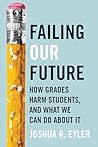
2025 #57 Failing Our Future (Eyler)


Failing Our Future: How Grades Harm Students, and What We Can Do about ItFailing Our Future: How Grades Harm Students, and What We Can Do about It by Joshua R. Eyler
My rating: 4 of 5 stars

This is a great primer for those uninitiated to the idea of alternative grading, or those who need a baseline rationale. Beautifully researched and convincingly argued, Eyler demonstrates, on multiple levels, the actual harm of grading as a system, without resorting to heavy-handed rhetoric or sanctimonious finger-wagging. Eyler's audience should be parents, educators, and administrators, and there is wisdom here for both K-12 and higher ed. For the purposes of this particular book, his grouping of several alternative grading models under "Standards Based Grading" (SBG) makes sense, but it means that this is not the book if you are looking for nuanced explanations of the differences between, for example, SBG and Specifications (or "Specs") Grading. For that I recommend Grading for Growth by David Clark and Robert Talbert -- a book Eyler cites. Some of the stats and case studies make for tough reading, so consider this a content warning as he does briefly mention suicides at particular institutions (hopefully that doesn't shock anyone working for more than a few years in higher ed). Eyler covers a lot of ground in terms of providing both background and practical advice, and the rich bibliography is a fruitful place for further exploration.

View all my reviews

2025 #56 Signs Preceding the End of the World (Herrera)


Signs Preceding the End of the WorldSigns Preceding the End of the World by Yuri Herrera
My rating: 4 of 5 stars

A timely read, the book offers a "hero's journey" of Makina, a Mexican woman sent by her mother to find her brother on the 'other side', while also carrying a "package" for a certain Mr. Aitch. While something is always lost in translation, I think Lisa Dillman worked hard (at least according to the Translator's Note) to pick up on the craft of Herrera's writing. The style reminded me of both Italo Calvino and José Saramago, the former of whom I love, and the latter I'm still trying...

Pay attention to the beginning as it is what helps situate this Campbellian monomyth. There's a lot of subtlety in the book, and certain moments almost seem like meta-narrative: "Using in one tongue the word for a thing in the other makes the attributes of both resound: if you say Give me fire when they say Give me a light, what is not to be learned about fire, light and the act of giving? It's not another way of saying things: these are new things." (67-68).

Yes, it is a book about migration, but also more metaphorical border crossings.

View all my reviews

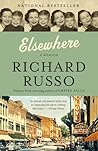
2025 #55 Elsewhere (Russo)


Elsewhere: A MemoirElsewhere: A Memoir by Richard Russo
My rating: 4 of 5 stars

I picked this up randomly as someone had offloaded a bunch of Russo's works in a Little Free Library, and I read and enjoyed Empire Falls. While I'm not usually into memoirs, this is really a beautifully written remembrance of his mother. What makes it beautiful is its honesty. Russo steps back enough in the narrative that it almost reads like fiction--we watch love mixed with guilt and manipulation, with a complexity that I think most people will recognize. Russo also addresses ideas of "home" and how easily they can shift and change, but also how love-hate relationships form with places. It is also an unflinching look at the realities of mental illness in a relatable way, revealing how easy it is to enable and excuse with the best of intentions.

View all my reviews

Saturday, November 22, 2025

2025 #48 Weyward (Hart)


WeywardWeyward by Emilia Hart
My rating: 4 of 5 stars

It has been awhile since I've read 50% of a book in one sitting, but I picked this up at a LFL in Minneapolis (since the book had been on my wish list for awhile), and read half of it on my journey back to Boston.

It is definitely a more-than-respectable debut for the author, and the chapters were short so the three timelines of Kate, Altha, and Violet received equal footing. I liked the anchoring of witchcraft in nature. I felt the mystery aspect (especially Violet's mother's backstory) could have been beefed up a bit, maybe to replace a bit of the narrative of Kate's journey to the cottage, for example. It did start to feel a bit predictable, as others noted, although I have to say the surprise in the Epilogue made my day (I usually hate epilogues).

A solid and entertaining read.

View all my reviews

Thursday, October 30, 2025

2025 #45 Beautyland (Bertino)


BeautylandBeautyland by Marie-Helene Bertino
My rating: 4 of 5 stars

The title felt a bit gratuitous to me, but then I thought, what would I title this novel? I have no idea. There are moments that read like a charming coming-of-age tale, others that twist your heart as our human-ness is witnessed and performed by Adina, and still others that serve up whimsical nostalgia from the late 70s, spanning from a famous moment on The Price is Right to Voyager's gold-plated time capsule phonograph record. It turns out the whimsy is deeper, after all, especially as Adina struggles with homesickness and trying to belong, and then experiences the deep grief of loss. Similar to Kazuo Ishiguro's Klara and the Sun, Bertino's novel made me care about Adina more than her origin story, and I often forgot that there was an element of fantasy/sci-fi here. Part of this is due to the dry, but not unfeeling, delivery of the protagonist. Adina has an element of an "Everyman" (and yes, I'll use the male dominant term to connect specifically to its 15th-century reference) to her--we are Adina, if we choose to step back and look. What a gift to be able to see ourselves through her eyes, to laugh at our silliness, to cry at our cruelty, to empathize with our pain.

View all my reviews

Saturday, October 11, 2025

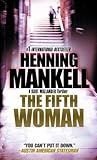
2025 #42 The Fifth Woman - Wallander #6 (Mankell)


The Fifth Woman (Vintage Crime/Black Lizard)The Fifth Woman by Henning Mankell
My rating: 4 of 5 stars

Having been a fan of the series with Kenneth Branagh (we didn't have the opportunity to watch more than one episode of the original Swedish series), I was eager to compare the experience of reading one of the books. This did not disappoint. There's a lot happening. Lots of character development for Wallander, who is going through his own stages of grief. My only real complaint is that I wanted more of the catalyst to be involved in the plot. Instead, we get the trigger, and we know who the culprit is, but I was left feeling like the plot took a huge left turn, and used insanity as the defense. Still, there are truly interesting characters and it was a rich experience for a book that I'd normally designate as a "beach read" (nothing wrong with that, but this book was more intense and deep than anticipated!).

View all my reviews

Friday, August 29, 2025

2025 #37 Margo's Got Money Troubles (Thorpe)


Margo's Got Money TroublesMargo's Got Money Troubles by Rufi Thorpe
My rating: 4 of 5 stars

Lots of folks misuse the word "ambivalent" but I think that's the right word to describe how I feel about this book. Think more 3.75 stars. There were parts of this book I LOVED and parts I really did not love.

Suzie? I kept forgetting she existed and then she'd pop up like a game of whack-a-mole. The mushroom "scene" was off the rails, although I suppose that was the point. But these types of things made the plot feel like a manipulation, as if Thorpe was just interested in having the reader be a yo-yo she could play with. I least enjoyed the descriptions of the OnlyFans content - not that I'm prudish, but if I'm not a consumer of that content, I don't really relish reading about it either, even in a pragmatic, funny way. I did find, however, Margo's "writeups" very amusing. The more surreal content? Not my thing.

Jinx was a GREAT character and his relationship with Margo is largely what pushes this toward 4 stars for me. I also loved the mix of first and third person narration. And for as little as he's actually described, I felt I had a strong picture of Bodhi in my mind.

So, I had to sit with this for a day before writing a review because I did like it and it did make me laugh (and also cry). I think it felt a bit too improvisatory for me in terms of storyline, but some of the characters were gold.


View all my reviews

Sunday, August 17, 2025

2025 #35 Cocaine Blues -- Phryne Fisher #1 (Greenwood)


Cocaine Blues (Phryne Fisher, #1)Cocaine Blues by Kerry Greenwood
My rating: 4 of 5 stars

As a big time fan of the TV series, I was excited to finally start the book series!
Phryne Fisher is delightful, although her character is even more "scandalous" in the book than portrayed on the series (well, at least it is, unsurprisingly, more graphic). I'm impatient to see how Detective Robinson develops, and that is what I get for breaking my own rule about not watching a TV/movie adaptation before reading the book.

This installment is good, if a bit uneven. Firsts are hard -- the author has to hook you on the characters AND tell a good story. Greenwood deftly uses the dancer Sasha and the impressionable Dot to help show us Phryne's character, but also as pivotal plot pushers. Phryne is hedonistic, yes, but not just that, and it is ultimately a pleasure to get some insights beyond her roaring 20s persona. It does bite off a lot, however: poisoning, illegal abortion, drug smuggling, thugs, Turkish Baths. The whirlwind sometimes overwhelmed, but overall I'm happy to continue with the series!

View all my reviews

Wednesday, July 30, 2025

2025 #32 Espresso Tales (44 Scotland Street #2 - McCall Smith)


Espresso Tales (44 Scotland Street, #2)Espresso Tales by Alexander McCall Smith
My rating: 4 of 5 stars

Well, now I've really gone and messed things up. I started the series with #13 The Peppermint Tea Chronicles, and even thought I had already read Espresso Tales, which was not the case. But now that I've read two books out of order, I think I'll just keep going that route. What was interesting is how my feelings about the characters differed. For example, Bertie and his neurotic and over-protective mother, Irene, were centerpieces of this volume, whereas I was not so interested in them in Peppermint. Despite having skipped the first in the series, I felt that this was a delightful introduction to Bertie, Irene, and Stuart. On the other hand, Ramsey Dunbarton was a dreadful bore, and while I understand that is intended, I needed less proof of it. Big Lou has a larger role to play in Peppermint, but it was nice to see more of her origin story here. It is the characters that give these books a delight, and some of the plots are self-contained, so I think I'm ok to read these out of order.
McCall Smith keeps his characters vivid but also believable (for the most part). This is a wonderful summer read--lighthearted, entertaining, and sure to hook you in to the world of 44 Scotland Street.

View all my reviews

Tuesday, July 29, 2025

2025 #31 Colored Television (Senna)


Colored TelevisionColored Television by Danzy Senna
My rating: 4 of 5 stars

Like Yellowface by R.F. Kuang, Colored Television digs into the trials and tribulations of the writing life, especially those compounded by racism. Unlike the former book, however, it doesn't quite go to the same extremes, and the protagonist here, Jane Gibson, is generally more likeable than June in Yellowface.

The book gets off to a slow start, where we are treated to the inner workings of Jane's mind before we care too much about her. She's living in someone else's house with her husband Lenny and their two children, Ruby and Finn. Her marriage is slightly less than functional, its success measured by frequency and quality of sex, and Lenny has his own ambitions as an artist that don't always complement Jane's sabbatical wherein she is trying to finish her second book in order to get tenure. Senna does excellent work layering the texture with tension. First and foremost, there is Jane's own mixed-race identity and how it does/doesn't interact with both her personal and professional life. She has dreams of luxury, and she has everything riding on this second novel, Nusu Nusu, to make her financial dreams come true. While we don't have deep dives into the novel, we understand enough to know that it is an intergenerational narrative about mulatto [term as used in the book] people.
 
In some sense, Jane's wishful thinking is enabled by her friend Brett, in whose house they are staying (and whose wine collection they are drinking). While Jane does find success in completing the novel, things go downhill very quickly, when Jane is confronted with the commoditization of identity in the publishing industry.

In not quite a twist--but perhaps a questionable choice--rather than address that core issue, Jane decides to come at it from a different angle, again centering her ideas of "success" rather than her ideologies. She manipulates and deceives, but in rather earthy ways, rather than hyperbolic hysteria. The deceit does drag on a bit too long, but the plot mobility increases so that we aren't drowned in an investigation into inner psyches, and Jane's naivete softens her character a bit. The book is more a tragicomedy than anything else, and the humor is sardonic. There's survival here, and that's an important element of the book. Jane's will to keep going, setting her lack of scruples aside, is a striving to which most readers can relate at some level.


View all my reviews