Showing posts with label 2026. Show all posts

Tuesday, October 20, 2026

2026 #37 Siddhartha (Hesse)


Siddhartha (A New Directions Paperback)Siddhartha by Hermann Hesse
My rating: 4 of 5 stars

One of my favorite teachers in high school insisted that I read this and The Little Prince. I managed to read the latter (and loved it), but never got around to Siddhartha until now, which is bizarre since I generally enjoy the Hesse works I've read. It is very much in the same vein as The Little Prince, so I can see why he recommended them together, but I think I got much more from this book reading it now (as I approach half a century on the planet), than I might have in high school. As I've been exposed to Buddhism through meditation, there were no really big surprises, but the blending of Eastern and Western theologies/references certainly piqued my interest. There are parallels between Gotama and Jesus (as he is described in various texts): "This is a holy man! His ideas may be strange, his words may sound foolish, but his glance and his hand, his skin and his hair, all radiate a purity, peace, serenity, gentleness and saintliness which I have never seen in any man..." (120). The teachings about love that Siddhartha absorbs run in parallel with Christian ideas of agape and caritas, although he certainly engages with eros too. The Campbellian Hero's Journey is obvious, but I loved that the ferryman was such a central and wise figure, as opposed to a grim Charon ferrying souls across the river Styx. Siddhartha's changing relationship to the self is instructive, and it is hard not to close the last page without feeling, perhaps, a bit more equanimity and peace in the knowing of suffering (not the suffering itself) and its role in shaping our selves.

View all my reviews
2026 Reading Goals 37/60
TYPTBR 18/18 - DONE!

Sunday, October 11, 2026

2026 #36 The Yellow Wallpaper and Other Stories (Gilman)


The Yellow Wallpaper and Other StoriesThe Yellow Wallpaper and Other Stories by Charlotte Perkins Gilman
My rating: 5 of 5 stars

I remember reading "The Yellow Wallpaper" in high school, and now I'm wondering why on earth they let me read it in HIGH SCHOOL? I somehow had forgotten how dark it is OR the darkness registers with me in a more meaningful way now that I'm an adult. What a brilliant piece though for its use of metaphor and "horror" of the psyche. The other stories in the collection are lighter, albeit no less feminist. I particularly enjoyed Mrs. Morrison in "Three Thanksgivings" as she refuses to let either her children or the appropriately named "Mr. Butts" commandeer her life. "The Cottagette" didn't really resonate with me, but I am mindful in considering when Gilman was writing (this particular story was first published in 1910). "Turned" has a narrative that for 1911, when it was first published, would have have been very bold. Gerta is taken advantage of in the worst way but finds perhaps an unlikely ally (I venture that while this narrative has become rather common, Gilman may have been one of the first to offer it in this way). "Making a Change" is another one that is very ahead of its time (again published in 1911), and I love the mild humor in which Gilman offers it. Here, an enterprising spirit takes on new meaning. "If I were a man" tiptoes into speculative fiction and doesn't rest in the clichés that it might. The final offering, "Mr. Peebles' Heart" was one of the most intriguing, featuring a female doctor who plays a rather significant role in saving her sister's marriage, or at least rescuing it from the doldrums of convention.

View all my reviews
2026 Reading Goals 36/60
TYPTBR 16/18

2026 #35 The Paris Express (Donoghue)


The Paris ExpressThe Paris Express by Emma Donoghue
My rating: 4 of 5 stars

An enjoyable read! It felt a bit slow for me in the beginning, and if you don't know the historical event upon which it is based, it does give you a false sense of anticipation. Donoghue does a really great job of portraying class stratification through the different cars on the train (although this felt a bit too transparent at times). Most of the characters are vivid and multi-dimensional and there's enough of a "plot" to keep things moving (along with the train).

View all my reviews

2026 Reading Goals 35/60

Wednesday, September 30, 2026

2026 #34 The Mirror of Her Dreams - Mordant's Need #1 (Donaldson)


The Mirror of Her Dreams (Mordant's Need, #1)The Mirror of Her Dreams by Stephen R. Donaldson
My rating: 3 of 5 stars

It is rather epic world building, but I just didn't love Terisa (late 1980s sensibilities or lack thereof notwithstanding). I wanted to see Geraden through someone else's eyes, and I came away not really understanding King Joyse's motivations. And "spice" is fine, but older creepy womanizers "claiming" young women (while they sleep, no less) is not sexy and pretty gross. For me, the most interesting character was Adept Havelock. The premise of mirrors and "translation" is terrific, but I'm not sure I was engaged enough to read the second in the series. If I happen upon it, I probably will read it, because I am curious and the first book ends without conclusion.

View all my reviews

2026 Reading Goals 34/60
#192030 Challenge: 1986
TYPTBR 16/18

Monday, September 7, 2026

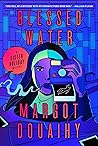
2026 #32 Blessed Water (Sister Holiday #2) - Douaihy


Blessed Water (Sister Holiday Mystery #2)Blessed Water by Margot Douaihy
My rating: 3 of 5 stars

3.75 stars
While I'm still invested in the series, Blessed Water didn't quite work for me as well as its predecessor Scorched Grace. With the first book, I noted that everything seemed to accelerate at the end for the sake of resolution, and that was also the case here. But the main issue I had is that the elements of the story seemed to be uneven in how they popped up. Sister Holiday's brother makes a weird appearance, which is welcome if he's going to stick around, but seemed quite extraneous to the mystery. We don't really get any more reveals about her shady past, although "Nina" comes through a bit more.
There are some subtle clues that I got only after reflecting on the story, so I enjoyed that. Sister Holiday's foul mouth is fine, but her penchant for violent thoughts, particularly against Detective Grogan and the purposeless Alex, got a bit tiresome (just overdone, I would say). Her relationship with Riveaux develops nicely, and holds a lot of promise.
You don't need to have read the first one (there are plenty of references to it), but I'd recommend it before launching into this one. A good installment, and I look forward to seeing where this goes.

View all my reviews

2026 Reading Goals 32/60

Wednesday, September 2, 2026

2026 #31 Artificial Condition - Murderbot Diaries #2 (Wells)


Artificial Condition (The Murderbot Diaries, #2)Artificial Condition by Martha Wells
My rating: 3 of 5 stars

I listened to the Graphic Audio version, and unlike others, I didn't care for it. The underscoring felt very gratuitous, although some of the foley and fight sequences reminded me of old radio shows (in a charming way).

Murderbot seeks out the mysteries of its past and finds a friend-bot ("ART"). I liked the premise, and the human characters are more dimensional. We also finally get to meet a "Comfort Unit" (aka sexbot). Definitely a bit more culture-building in this one, so I'm in. There's a lot of techno-speak, which I found tiresome in certain places and probably would have skipped over pages had I been reading it in hard copy.

While I did not enjoy the reading as much, I thought the story overall was more interesting and we certainly get a better sense of all that Murderbot is negotiating as it tries to hone its own identity and autonomy. 3. 75 stars


View all my reviews

2026 Reading Goals 31/60
#192030 Challenge: 2018

Tuesday, September 1, 2026

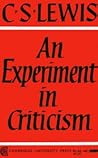
2026 #30 An Experiment in Criticism (Lewis)


An Experiment in CriticismAn Experiment in Criticism by C.S. Lewis
My rating: 5 of 5 stars


"In reading great literature I become a thousand men and yet remain myself," C.S. Lewis offers after 140 pages of the most wonderfully vexing postulations regarding that which is "literary" and "unliterary." This is definitely a "MBF" -- a "must-be-finished" book. I've read too many reviews that seem to have bristled at the beginning and either stopped reading closely or just stopped reading altogether. To be sure, Lewis's tone befits his Oxford professorship, but there are so many moments when his tongue is planted firmly (but elegantly) in his cheek, and his provocations are intended to prove perhaps his largest point: literature is to be received, not used.

"Using", he says, is "inferior to 'reception' because art, if used rather than received, merely facilitates, brights, relieves or palliates our life, and does not add to it." (88). Lewis advocates deep reading, a "resting" in the literature, rather than using it as an opportunity for "castle-building" as he calls it. A good book coexists in a rather symbiotic relationship with good reading. The work should work on us, rather than the other way around. He writes, "In good reading there ought to be 'no problem of belief' meaning we should be able to receive that with which we do not agree, thereby possibly entertaining a time and space otherwise when we might agree.

I think he loses people with his attempts to parse "literary" from "unliterary" in the first few chapters. But he offers nuance: "Let us be quite clear that the unliterary are unliterary not because they enjoy stories in these ways, but because they enjoy them in no other." (38) Here he refers to a desire for excitement and an arousal of certain emotions, which he is not condemning, as I understand it, but offering that it is only part of literary engagement.

Lewis has one moment that I felt was truly classist: he decides that grocers and gardeners will have read few books, but perhaps have seen more films (76). It is an unfortunate moment in a book that otherwise seems to have a fair amount of equanimity, versus a critique (in the negative sense). "The literary," he notes, "sometimes 'use' poetry instead of receiving it. They differ from the unliterary because they know very well what they are doing and are prepared to defend it." (100). But he also, supporting his "good reader" theory, offers that there are really, at the end of the day, no so-called "guilty pleasures": "If ... we found even one reader to whom the cheap little book with its double columns and the lurid daub on its cover had been a lifelong delight, who had read and reread it, who would notice, and object, if a single word were changed, then, however little we could see in it ourselves and however it was despised by our friends and colleagues, we should not dare to put it beyond the pale." (108)

If you are a reader (whatever that means to you), it is worth spending some time with what Lewis had to say. It has made me re-evaluate why I have a numeric reading goal every year. I know part of that is there is SO MUCH I wish to read and I am extrinsically motivated when my time is not always my own. But Lewis has given me a lot to think about in terms of the reading experience. If he irks you at the beginning, read more slowly. Underline. Receive what he is actually saying. You may come away from it still irritated and thinking he's a pretentious prig, but you might find some value there too.

View all my reviews

2026 Reading Goals 30/60
#192030 Challenge: 1961
TYPTBR 15/18


Saturday, August 29, 2026

#2026 #29 All Systems Red - Murderbot Diaries #1 (Wells)


All Systems Red (The Murderbot Diaries, #1)All Systems Red by Martha Wells
My rating: 3 of 5 stars

I absolutely see why this popped up in my algorithms after I finished (and LOVED) Andy Weir's Project Hail Mary. I'd heard good things about this series outside of that, so I figured I'd give it a try here at the end of when I actually have a life before school begins. I won't judge it against PHM, especially since it is a novella. Both do share a similar sense of humor.

It is entertaining! I was disappointed in the ending only because I was enjoying what developed between the bot and the crew. The short length was a bit of a let down in that regard. It is a very interesting negotiation of non-human sentience, and I applaud that. Kevin R. Free's reading was quite excellent, and Dr. Mensah became my favorite character. I definitely enjoyed it enough that I've already started no. 2 Artificial Condition, but the only one available via Libby was the Graphic Audio production and I'm already not excited about the abundance of underscoring...

View all my reviews

2026 Reading Goals 29/60
#192030 Challenge: 2017

2026 #28 Small Things Like These (Keegan)


Small Things Like TheseSmall Things Like These by Claire Keegan
My rating: 4 of 5 stars

The writing here is beautiful. Keegan manages to do so much with just a few words. There's little in the way of hyberbole or superlatives, but there is a clean rhythm that is almost poetic and draws you in. It is a touching story, but also relatable in how most of us face moral quandaries at one point or another. Bill Furlong is just a coal merchant delivering fuel to a Magdalene convent laundry in Ireland during the 1980s. But over just a few pages (it is a novella), we start to walk with him. We feel what he feels, and we see what he sees. You can almost feel the knotted tension forming in the pit of his stomach as he grapples with what he's witnessed at the convent. This is a very good book about the "small things" that can be opportunities to test or own moral courage.

View all my reviews

Challenges 
2026 Reading Goals 28/60

Tuesday, August 25, 2026

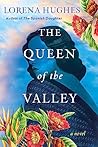
2026 #27 The Queen of the Valley (Hughes)


The Queen of the ValleyThe Queen of the Valley by Lorena Hughes
My rating: 3 of 5 stars (3.5)

I picked this book somewhat at random for the Read Around the World Challenge. This historical backdrop is the 1925 earthquake in Cali, Colombia, so starting it just two days after the awful earthquake in Colombia on August 10th this year felt rather eerie. The book is engaging with a reasonably interesting story/mystery, but I wonder if I would have connected better if I had read the first book, The Spanish Daughter, which introduces the character Puri (short for Purificación). Reading this one without the first didn't thwart enjoyment, but the (minimal) references to the first book would have been more meaningful. How Puri winds up "as a nun" might have been more believable, as well.

The other major context for the story is a cholera outbreak, and Hughes deftly handles descriptions in the cholera ward without sensationalizing the misery. The female characters are particularly strong, and Lucas is nicely complex. Martin is known mostly through the lens of those in his orbit, and I wish that Farid had his own chapters too. There's a web of entanglements that at times was hard to keep track of (Angélica, in particular, felt a bit happenstance and underdeveloped), but keeping the main narrative focused on just three characters (Lucas, Puri, Camila) helped. The circumstances of the disappearance of a certain character also felt a bit patched together near the end.

Overall, a solid read and good piece of historical fiction.

View all my reviews

Challenges 
2026 Reading Goals 27/60
Read Around the World: Ecuador (4/14 for South America)

Wednesday, August 12, 2026

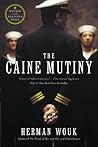
2026 #25 The Caine Mutiny (Wouk)


The Caine MutinyThe Caine Mutiny by Herman Wouk
My rating: 4 of 5 stars


One of the remarkable things about this book is that it isn't really about a mutiny. Yes, there is mutinous behavior, but I'd almost classify it more as a coming-of-age story of Willie Keith. It isn't your average war novel either, although it takes place during WWII. Wouk manages to focus on the world of the USS Caine, a clunky older minesweeper, commanded by various characters through whom we get to see Willie grow. There's also a love interest, but even there, the complexity and nuance sets this novel apart. The
The only thing that keeps it half a star away from 5 for me is the Navy jargon. If you aren't familiar with the various nautical and military terms applied to ships and the like, some of it can feel like a slog. But I'll also say that it was interesting enough that I looked up a good bunch of information on minesweepers and was happy to learn. Lieutenant Commander Queeg (played by Humphrey Bogart in the film), is an excellent character in that he navigates that in-between space between villain and flawed human--something Willie has to reckon with, alongside some of his shipmates.
For those interested in the real-life inspirations: https://www.usni.org/magazines/naval-...

View all my reviews

View all my reviews
Challenges 
2026 Reading Goals 25/60
#192030 Challenge:1951
Pulitzer Winners: 18

Saturday, August 8, 2026

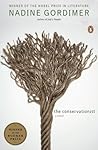
2026 #24 The Conservationist (Gordimer)


The Conservationist: Booker Prize Winner (A Novel)The Conservationist: Booker Prize Winner by Nadine Gordimer
My rating: 3 of 5 stars

I wanted to like this, and in theory, I did. I've heard that this is Gordimer's most poetic book and the language is undoubtedly that. I prefer it in straightforward poetry, however, rather than omniscient third person narration. Stylistic considerations aside (which I think are truly about personal preference), the book is artful in its illumination of white male privilege in the form of Mehring, a wealthy industrialist who buys a farm in South Africa (as a "getaway") that he is ill-equipped to run (leaving most of the management to his Black workers headed by Jacobus). Divorced and with an estranged son, Mehring wanders through life with little regard for relationships (platonic and romantic), and whose self-absorption fuels the evils of apartheid. The book opens with a murdered unidentified Black man being found on the farm, and Gordimer artfully allows that body to "surface" throughout the novel in various ways.

The book is very literary, with little distinction between dialogue and narrative, and some beautiful descriptive language. If you are somehow new to apartheid and colonialism in fiction, well this wouldn't be my first recommendation to introduce those topics, but otherwise it is an experience to read this Booker prize-winning book.

View all my reviews
Challenges on Storygraph (@rebcamuse):
2026 Reading Goals 24/60
#192030 Challenge:1974

2026 #23 The Modigliani Scandal (Follett)


The Modigliani ScandalThe Modigliani Scandal by Ken Follett
My rating: 3 of 5 stars

Published under a pseudonym (Zachary Stone) in the 1970s before Follett reached his fame, The Modigliani Scandal is an entertaining look at the follies of the art world, and a reasonably good "mystery" of sorts. The back-of-the-book blurb would have it: "A high-speed, high-stakes caper from the grand master of international action and suspense." High-speed is pushing it a bit--the plot only really picks up speed in Part III, "Figures in the Foreground," but it is good fun. None of the characters are particularly likeable, although I daresay I was originally rooting for Dee, since she needs the "lost Modigliani" for her thesis. Certainly there is intrigue, but as stakes go, they aren't that relatable unless you happen to be in the art world running a gallery. The best part for me is how Follett sets up the denouement at a pub, but then steps back from it before revealing what happens inside that pub. That kept me reading and made for an entertaining ending.

View all my reviews

Challenges on Storygraph (@rebcamuse):
2026 Reading Goals 23/60
#192030 Challenge:1976
Tackle Your Physical TBR 2026 challenge: 14/18

Sunday, July 26, 2026

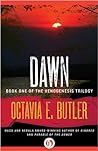
2026 #22 Dawn - Xenogenesis #1 (Butler)


Dawn (Xenogenesis, #1)Dawn by Octavia E. Butler
My rating: 3 of 5 stars

In contrast to the Patternmaster series (and certainly also the Earthseed books), this falls into the category of what I would call more generic science-fiction. That isn't a criticism, but reading this made me realize that I'm less drawn in by aliens vs. humans than her books that bring in more socio-political commentary or dystopia. (I make an exception for Andy Weir's Project Hail Mary which is my favorite book that features an alien. Blame the fact that I'm of the E.T. generation, I guess.)
In Dawn, there's little in the way of world-building, but a lot of species-building (one might guess, with the name of the series). Lilith is an interesting character, but I found her hard to place because she is both an observer of humanity and an actor of humanity. Butler doesn't give us a lot of time to adjust to the other human characters in the book, so I had trouble feeling much toward them other than viewing them as archetypes of different foibles. Maybe that was the point.
Did I enjoy it enough to read the rest of the trilogy? Maybe, but those will go on the back-burner "to read" list.

View all my reviews

Challenges on Storygraph (@rebcamuse):
2026 Reading Goals 22/60
#192030 Challenge:1987

Tuesday, July 21, 2026

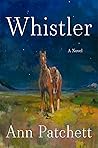
2026 #21 Whistler (Patchett)


WhistlerWhistler by Ann Patchett
My rating: 5 of 5 stars

Well, my streak of crying at some point during an Ann Patchett novel continues unabated. This one, however, snuck up on me. It is what I would call a "quiet book." There's a plot, but it comes in pieces as a recollected narrative. There's also a very mild plot that takes place in the present, but as plots go, it is less important. I would also like to say God Bless Ann Patchett for NOT giving us an epilogue. Some readers will want one, and the book sets it up, but we get instead, what to my mind was the perfect ending.

If you've read any blurbs or reviews, you know that the book is not about a horse, but don't worry -- the horse is significant as a metaphor. There were a few places where I felt the narrative dragged a bit and the relationship between Daphne and Eddie seemed strange and maybe even questionable, initially, until the backstory starts filling in. As a character, Daphne seemed a bit idealized to me at times, but I also think I'm slightly envious of her hardiness (both as a child and as an adult).

Like most of Ann Patchett's novels, this is a very human story, and the author gets out of the way of her characters and let's them tell us what we need to know, when we need to know it. I highly recommend it for those favoring reflection and character growth. If you are lucky enough (as I am) to have a beautiful relationship with a step-parent, you will probably very much enjoy this book. If, however, you've had a troubled or terrible relationship with a step-parent (particularly a stepfather), I'd recommend passing on this one if that relationship has traumatized you.


View all my reviews

Challenges on Storygraph (@rebcamuse):
2026 Reading Goals 21/60
#192030 Challenge:2026

Saturday, July 18, 2026

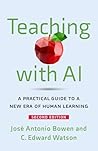
2026 #20 Teaching With AI (Bowen/Watson)


Teaching with AI: A Practical Guide to a New Era of Human LearningTeaching with AI: A Practical Guide to a New Era of Human Learning by José Antonio Bowen
My rating: 4 of 5 stars

If you are an educator, no matter where you land on the topic of AI, you should, as Louis Epstein said in a review of the first edition in the Journal of Music History Pedagogy*, “read this book.” Epstein also notes the authors’ “almost gleeful boosterism,” and indeed, there is no real doubt that they assume AI as a given. In the epilogue to the second edition, the authors generously allow: “Faculty are the ultimate decision-maker, arbiter of quality, and content expert within their own classroom” (319). But make no mistake, the book is unapologetically prescriptive: “You need to start playing and working with AI” (319); “Our curriculum and classroom discussions also need immediately to include AI topics around ethics, data privacy, civics, environmental and energy costs, labor, discrimination and bias” (321). On those latter fronts, if you are looking for advice on how to approach those topics, this is not the book for that (it will only tell you that you need to, not necessarily HOW to). Most of the book is focused on better prompt writing, because, as the authors claim: “All assignments are now AI assignments” (245). In his aforementioned review, Epstein notes that the “unspoken thesis” of the book is that student and faculty are now forced “to decide what really matters to us in our teaching and learning”. I don’t disagree, actually, but I have a feeling my human-generated SWOT analysis of AI and that of the authors would differ greatly.

Bowen and Watson offer: “The new goal of any assignment, especially a writing assignment, is to emphasize the important human contribution while recognizing the realities presented by AI” (250). I like the use of the word “realities” here, but the book is instead heavily focused on “opportunities”, with a strong belief that if we invest the time, students can integrate AI in meaningful ways. What isn’t clear (yet), is how this will really play out, given students’ various motivations for “efficiency.” There are good select studies on issues such as human agency in creative problem solving in AI collaboration, but the full-scale adoption of AI as our “thought partner” in higher ed has not yet come to pass in such a way that we have large-scale data on the impact. But we are probably getting there.

There are some seeming contradictions. Some of the examples and prompts offered by the authors mention how AI can be used to alter/experiment with “voice” in a piece of writing. I’ll be transparent and say that this, along with a new interpretation on the role of citation in writing, is one my biggest issues with AI. If I go full-on “the Borg are coming,” this is where I see a real abdication of human-ness. So, I found it odd to offer guidance on including “voice” in prompts for AI (p.59), but then in Chapter 8, on “Cheating and Detection”, the authors advocate starting a conversation with a student who you suspect might have used AI with “I don’t really hear your voice as much as I would like” (161). I happen to think that’s a GREAT way to start the conversation (and I have), but I also don’t encourage them to use AI with thorough prompts that include directions to “respond as if you were x” or write “like an engineer.” The conflation of “language” and “voice” I find problematic as well.

There is also a lack of acknowledgement of potential tokenism and essentialism in prompting AI in the ways the authors describe. For example, as a faculty member, the authors promote doing a practice conversation with AI wherein it is prompted to be “my student Jeff, who is a nineteen-year-old from Wisconsin majoring in biology and taking my course pass/fail” and then directed: “Please respond as if you were Jeff.” (133) While only a “practice conversation” and not a script, it posits poor Jeff as some sort of archetype of whatever identities we’ve given the AI. It isn’t to say that our experience of Jeff IRL is complete, but one hopes that we might have a better sense of Jeff as a student than an AI combing known character traits of nineteen-year-olds, biology majors, and folks from Wisconsin. More problematic (perhaps) is the counsel: “Perhaps you simply ask the AI to be an under-represented voice in the room (225).” On the same page, an author might ask an AI to “reimagine” their work with the lead character as “an Asian American and identify what plot lines might need to be changed.” I note that it does say “might”, but the idea that we would ask AI to represent “an Asian American” doesn’t seem any better than asking an Asian American to speak for all Asian Americans.

My critique of the authors’ suggestions for citation goes far beyond the confines of their book. There seems to have been a large-scale shift in discussion about “checking citations” without highlighting the point of citation in the first place. I carefully say “seems” here, because this is a baseline perception, not a carefully researched thesis. But the authors tell me that I might, as a scholar writing an article, prompt an AI with “Who are the other major figures in this field, who might be reviewers of this article? What work of theirs should I cite?” (114). I understand the pragmatism there, but why not instead: “What work of theirs should I read?” I don’t think that’s a pedantic distinction.

In the chapter on “Reimagining Creativity”, the authors supply a cartoonish image created with Gemini-2.5 via a prompt that prescribed “style of a Renaissance woodcut with seventeenth-century London in the background” and features Genghis Khan on the left with his face merged into a strawberry, and Queen Victoria is on the right with her face hybridized with a cauliflower (Figure 4.1, 81). Both figures then have a thought bubble (as directed in the prompt) that asks “Will anyone care if we are AI generated?” The image is an answer to the question the authors pose: “What if AI makes the art itself?...Humans still need to think of the ideas, but does it matter whether AI was used to realize the actual image?” (80) Bowen and Watson don’t have the answer, but only offer “There are important personal, social, economic, and ethical issues that deserve a place for discussion in society and in our revised curricula.” (80). These discussions have long been part of artistic and creative production (think digital photography), so they aren’t wrong, but I’m growing tired of the “just because we can” advocacy when it comes to AI. I'm reminded of an AI demo on my campus wherein we were shown how one might create a "nature documentary" using AI generated images. I was alarmed that the irony was not acknowledged.

Ultimately, however, the book backs a lot of what is just good pedagogy. For example, there’s an excellent suggested exercise for a class on defining values, teamwork and accountability (180 – 181), something that mirrors the “Community Agreements” I facilitate for all my classes. Whether that discussion needs to be in service of using AI or not might be challenged, but it is good that it is offered in the book. Table 12.1, an “Assignment template combining motivation, task clarity, and success criteria” is another useful example both in and outside of AI contexts. And while I have not yet embraced intentional integration of AI into my own teaching/course content, I might get behind allowing specific prompts such as “Identify which ideas and arguments in this essay are common, flawed, repetitive, heteronormative, or culturally limited”(268). I see this as a bit different than the prompt I mentioned above that essentializes Asian Americans, but I’d have to run it on several examples for myself to see what a given AI calls “culturally limited.”

And that’s probably the biggest problem. One takeaway from the book is that converting core critical thinking skills into AI prompts is no simple task, and it isn’t until the Epilogue that Bowen and Watson seem to vaguely acknowledge the immense amounts of labor being placed on faculty: “Much of the AI-fueled pedagogical revision on college campuses has emerged as another unfunded mandate for faculty and their time.” (325) Even if I entertain sharing just the basic information of this book regarding how to prompt, I cannot imagine doing so at the sacrifice of things I find just as (or more) important for my particular course. And I certainly do not have the time to teach them “how to be expert prompters” AND music history. It isn’t to say that I can’t incorporate “relevant” examples and creative projects, but I certainly cannot afford the time to invest in the type of nuanced prompting the authors promote. So, who will? That remains to be seen.

So yes, my colleague Louis is right. Read this book. It features excellent and recent sources, and it will either strengthen your resolve, confirm your intentions, or move the needle to the middle, depending on your starting point.

*Now called The Journal of Musicology Pedagogy  


View all my reviews

Sunday, July 12, 2026

2026 #19 Water for Elephants (Gruen)


Water for ElephantsWater for Elephants by Sara Gruen
My rating: 4 of 5 stars

I typically read "hyped" books well after the hype calms down so I can resist the noise and form my own opinion. I was given Water for Elephants as a gift back in 2007, so in this case, the waiting period has been a *bit* longer than I intended. I enjoy my engagement with lit-social media, but in this case, it may not have been a good thing. One of the "bookTokers" I follow half-heartedly (because I find his "reviews" rather ego-swollen, even though I mostly agree with him) did a quick video about the biggest "plot twists," based on his audience's feedback. He mentioned that he didn't really feel this one had a plot twist, but it was more just a part of the plot. What bothers me is that I now had this in mind the ENTIRE time I was reading the book.

Plot twist or no, I'll say that I think I would have preferred to do without the part of the book that enables the so-called plot twist at the end. I don't think it added much, and the real story was gritty enough. I don't like to use the spoiler tag, so I'm hoping that's vague enough for those who haven't read it, and will make sense to those who have.

It is a great read -- I sped through it basically in two days when I had a chunk of time to read. The characters are vivid and the story is compelling as is the historical context of a depression-era circus. The shifts between time periods work (not an easy move to do well), and there are some really beautiful and human moments. I was prepared for more of a tear-jerker given what I've heard over the years, so I was surprised to have had only two moments of deep sadness, and one of them I saw coming, so I braced myself for it. What I suspected would be the tragedy of the novel was not, so I guess on that front I was pleasantly surprised.

I personally did not need what I call the "catch-up" chapter (Chapter 25), but I can also see that it would be necessary for some. I'm usually happy to have some loose ends left to weave together in my imagination. All in all, however, this is worthy of a lot of the acclaim it received and I'm glad I (finally) read it!

View all my reviews

Challenges on Storygraph (@rebcamuse):
2026 Reading Goals 19/60
Tackle your Physical TBR 2026: no. 13
#192030 Challenge:2006

Thursday, July 9, 2026

2026 #18 Cosmicomics (Calvino)


CosmicomicsCosmicomics by Italo Calvino
My rating: 3 of 5 stars

Oh, the wacky world of Calvino, for whom history and science are playthings. Here in Cosmicomics Calvino takes on origins of the universe, manifesting in twelve creation myths of a sort. Most of the stories feature a narrative told by Qfwfq, and aged something-or-other that seems to have born witness to origins ranging from the universe itself to the development of the conch shell. This latter narrative is "The Spiral" and was the story I enjoyed the most. Each story begins with a italicized blurb of real science, which is then the springboard for Qfwfq's fanciful narratives. One of the most clever aspects is the anthropomorphizing of pre-anthro existence, and Calvino occasionally meditates on the value of "signs" before there were, "signs." This reflects, no doubt, the influence of Saussure, the Swiss semiotician who, along with Roland Barthes, had a significant impact on Calvino's literature. Calvino's imagination is boundless, and the stories are as much of love, unrequited and not, and microexistence, as they are of the actual devices that serve as the foci of each story.

I'm not sure this book will land well with everyone. I had started it almost sixteen years ago, and put it aside. I picked it up again because I knew I could start again and it is a digestible 153 pages. I'm glad I did, especially for the dry and quirky humor that is a trademark of Calvino. It must be noted that William Weaver's gifts as a translator are on full display (if you find yourself under-appreciating translation, I strongly recommend the wonderful Experiences in translation by Umberto Eco). Calvino asks for some investment, but if you walk through the door he opens, you'll likely be glad that you did.

View all my reviews
Challenges on Storygraph (@rebcamuse):
2026 Reading Goals 18/60
Tackle your Physical TBR 2026: no. 12
#192030 Challenge:1965

Tuesday, July 7, 2026

2026 #17 The Anthropocene Reviewed (Green)


The Anthropocene Reviewed: Essays on a Human-Centered PlanetThe Anthropocene Reviewed: Essays on a Human-Centered Planet by John Green
My rating: 5 of 5 stars

"Making conclusions about a book's quality from a 175-review is hard work for artificial intelligences, whereas star ratings are ideal for them." (3). Nothing quite like an introduction that dissects the act of reviewing to make one feel self-conscious in reviewing, but I shall make an attempt.

First, a prescription: take your time in reading these essays. Keep the book on your nightstand and read one or two at a time, when you need to remember that to err is human, but also so is to love, hope, dream, etc... Quite seriously: my only criticism of the book is that Green employs a rhetorical device that, while effective, starts to lose its punch when you read essay after essay. And Green is a good enough writer to nod to that in his "Postscript" (271 - 274). That's all I'll say about that, because there's far more weight that gives the book "five stars" for me. The scare quotes there are in homage to the book's m.0.

Green is a superb writer, and that's basically a requirement when analyzing the Anthropocene through lenses as diverse as Dr. Pepper, teddy bears, staph infections, invisible rabbits (or movies about them), the Indy 500, wintry mix, CNN...and...(here "etcetera" doesn't suffice because "the rest" you can't possibly guess). Each essay drew in my interest, even when I came pre-loaded with disinterest. In most of them, Green manages to do in four to five pages what CNN cannot do in a 24-hr. news cycle (his criticism of lack-of-context in journalism in the essay "CNN" (pp. 127 - 132) is spot on). But of course he isn't trying to provide "news" per se, but you will certainly learn about facets of humanity and history (and about Green himself) in surprising and fresh ways. The essays "Harvey" (pp. 133 - 138) and Auld Lang Syne" (pp. 145 - 152) are particularly excellent if you are in the mood for feeling and sentiment. Green, who is often hilarious and somewhat self-effacing, drops sentences like this as well:

"I'll never again speak to many of the people who loved me into this moment, just as you will never speak to many of the people who loved you into your now." (148)

Did your eyes well up with tears, or did that knot form in your throat? If so, you've probably known loss. I had to put the book down to give some heartspace over to the people who I've lost who have loved me into my now.

If you like art, as Green does, open up "Hiroyuki Doi's Circle Drawings" (191 - 194), which, if it isn't obvious from the above, is about a lot more than the drawings themselves. When it comes to grief, Green finds meaning in art by an octogenarian Japanese chef-turned-artist, but also, the "World's Largest Ball of Paint" (245-249), which, if you weren't aware, is in Alexandria, Indiana.

Even with the heterogeneity of topics, we never lose sight that it is indeed the Anthropocene under review. "For humans," Green writes, "being in uncharted territory is often good news, because our charted territory is so riddled with disease, injustice, and violence." ("Viral Meningitis, 206). The paperback edition includes two additional essays: "The Orbital Sunrise" (279-286) and "The Gingko Tree" (287 - 295), both of which imply that Green probably has a ten-volume set of essays brewing inside of him.

I can't think of a person to whom I would not recommend this book, because I think everyone can benefit from thinking about hot dog eating contests and the Bonneville Salt Flats in ways they did not imagine. If you are looking for "feminist" lit (and there the quotes are because I think it really is just about caring about humans), Green's "Air Conditioning" (73-78) makes a really great point about the determination of "room temperature" in offices and how that came about. If you thought Charles Darrow invented the game Monopoly, you'll want to read his essay on the game (175-179). And C.S. Lewis gets to be "the widower" of American poet Joy Davidman, quoted in the essay on viral meningitis. But if you don't know what you are looking for at all? Pick up this book.

View all my reviews
Challenges on Storygraph (@rebcamuse):
2026 Reading Goals 17/60
Tackle your Physical TBR 2026: no. 11
#192030 Challenge: 2021

Tuesday, June 30, 2026

2026 #16 State of Wonder (Patchett)


State of WonderState of Wonder by Ann Patchett
My rating: 4 of 5 stars

"There was no clear point of loss. It happened over and over again in a thousand small ways and the only truth there was to learn was that there was no getting used to it." (269)

Patchett is one of my favorite writers because she drops lines like this that carry heartfelt truths that transcend the specific narrative of the story. State of Wonder explores ethics, love, and what drives us as humans. The protagonist, Marina Singh, is on a hero's journey into the heart of the Amazon, but her return, and indeed her journey, morphs as the book progresses, making this an engaging adventure on top of a deeper character study. I do love endings that are happy, yet not ("bittersweet" doesn't really work here), but I could have done without the "comfort sex."

The moral high ground is a series of shifting tectonic plates in this novel, and that's what makes it such a wonderful read.

View all my reviews
Challenges on Storygraph (@rebcamuse):
2026 Reading Goals 16/60
Tackle your Physical TBR 2026: no. 10
#192030 Challenge: 2011