Monday, December 8, 2008

50BC08 #24: America's Musical Life

America's Musical Life: A HistoryAmerica's Musical Life: A History by Richard Crawford

rating: 4.5 of 5 stars

I took a chance and used this book as a course text for an American music course for non-majors. Crawford's writing is engaging and geared toward a more general audience, but informed by top-notch scholarship. His three-sphere model of American music (cultivated, vernacular and traditional spheres) made a useful and multi-dimensional lens through which to trace the development of musical styles and genres. I appreciated the performer-based approach rather than the standard "a history of dead white men" approach so prevalent in the literature. He substantiates this model for American music history in his introduction.
Some of my students, accustomed to "textbooks" may have found the book too verbose for test preparation purposes, I hope that the prose engaged them enough to look beyond the grades and into the rich and diverse musical landscape cultivated in this country.

50BC08 #23: Fundraising Fundamentals

Fundraising Fundamentals: A Guide to Annual Giving for Professionals and Volunteers Fundraising Fundamentals: A Guide to Annual Giving for Professionals and Volunteers by Greenfield

rating: 4 of 5 stars

This book is an indispensable reference for working or running an Annual Fund. It covers all the basics including mail testing,direct mail, cultivation events, etc. The sample letters are very helpful. My only criticism is the use of fake case-studies which aside from being cheesy, are not nearly as convincing as actual anecdotal and experiential information from real organizations.

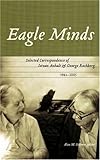
50 Book Challenge #22: Eagle Minds

Eagle Minds: Selected Correspondence of Istvan Anhalt and George Rochberg (1961-2005) Eagle Minds: Selected Correspondence of Istvan Anhalt and George Rochberg by Alan M. Gillmor

rating: 4 of 5 stars

The title of this compendium of letters comes from Yeats, who wrote: "...A mind Michael Angelo knew/That can pierce the clouds,/Or inspired by frenzy/Shake the dead in their shrouds;/Forgotten else by mankind,/An old man's eagle mind." In offering this quote to Canadian composer Istvan Anhalt, George Rochberg expressed his relationship to the world and the critical reception of his work. Although their music differed greatly in style, particularly after 1965, these two composers found over forty years worth of common bonds, intellectual musings, and a committed passion for their craft which are all recorded in Alan Gillmor's excellent compendium of correspondence.

Rochberg worked hard to understand Anhalt's aesthetic, and the latter likewise supported Rochberg's various stylistic experiments. Fundamentally, however, they understood what it meant to compose. They also shared a critical engagement with the world, although Anhalt focused on Kabbalah studies and a distrust of popular culture, while Rochberg found solace in the words of Wordsworth, Yeats,and Milan Kundera and eschewed all forms of organized religion.

Rochberg, who died in 2005, has long been known for his strident opposition to the avant-garde (after 1964), both in his musical style and his public writings. While his letters to Anhalt do not negate this, they do give the reader a sense that there was a willingness to accept more than his published writings would suggest. He also felt misunderstood as the "neo-Romantic" label came to be applied to his music.

Anhalt, whose gentler prose provides a balm to Rochberg's occasional bouts of ranting, seems to be more conscious that the two men are moving toward the end, and thus feels more inclined to pick his battles carefully. His study of the Kabbalah helped develop a personal philosophy that came to fruition is his 1994 work, Traces/Tikkun.

These letters provide a rich look into the perceptive and engaging minds of two of North America's most intellectual thinkers. The book is an indispensable tool for research into their works and biography, and is an encouragement to other modern composers to make their correspondence available for publication.


Friday, September 19, 2008

50BC08 #21: Rilke's Letters to a Young Poet

Letters to a Young Poet Letters to a Young Poet by Rainer Maria Rilke


rating: 5 of 5 stars
50 Book Challenge #21
pages: 66 (Dover, 2002)


There are works that surface time and time again in cultural circles: film, literature, music, etc. One of these is Rainer Maria Rilke's Letters to a Young Poet. The young poet, Franz Xaver Kappus, is unremarkable in this set of letters as we never see the poems he sent to Rilke, nor do we see his end of the correspondence. Yet, what Kappus realizes, and so too the reader, is that his offerings are absolutely unnecessary because we see them through Rilke's eyes. Rilke readily assumes the mantle of humble mentor, dispensing pearls of wisdom in a language that teaches the young Kappus that not all poetry is written in stanzas.

One wonders if Rilke was indeed writing to the world. His replies to Kappus are lofty but sincere, and filled with passages that seem destined for quotation:

"Do not search now for the answers which cannot be given you because you could not live them. It is a matter of living everything. Live the questions now. Perhaps you will then gradually, without noticing it, one distant day live right into the answer."

For Rilke, bite-size gifts of mature sophistry (in the Classical sense of the word) will not suffice. In these letters to Kappus, Rilke seizes the opportunity to work out his own philosophy through provocative and probing questions. We learn that Kappus, during the course of his military service, has lost faith in God, and Rilke asks him, "Is it not much rather the case that you have never yet possessed him? ... Do you believe a child can hold him, him whom men bear only with difficulty, whose weight bows down on the aged?" Rilke is ready to be not only a literary mentor, but a theological counselor.

No subject is taboo for Rilke, who quite readily addresses sexual intimacy as he does some rather unconventional thoughts about women:

"Surely women, in whom life tarries and dwells more immediately, fruitfully and confidently, must have become fundamentally more mature human beings, more human human beings, than light man, whom the weight of no body's fruit pulls down beneath the surface of life, who, conceited and rash as he is, underrates what he thinks he loves."

Even in his criticisms of Kappus (both of his work and his character) he is ever gentle, crafting his words with the care of both poet and teacher. He is self-effacing, but sure in his prose. He tells the young Kappus: "And your doubt can become a good quality if you train it. It must become aware, it must become criticism." However, in the four year gap between the letter that contained those words and what would be his last letter to Kappus, we see that his final offering is tinged by reality and somewhat removed from the more romantic musings of his earlier letters:

"Art too is only a way of living, and one can prepare for it, living somehow, without knowing it; in everything real one is a closer, nearer neighbour to it than in the unreal semi-artistic professions which, while they make show of a relatedness to art, in practice deny and attack the existence of all art, as for instance the whole of journalism does, and almost all criticism and three quarters of what calls itself and likes to be called literature. I am glad, in a word, that you have overcome the danger of ending up there, and remain solitary and courageous somewhere in a raw reality."

As the translator comments, Kappus did indeed end up "there," publishing several "cheap popular novels." But in the end, the debt to Kappus is greater than his debt to, or at least reverence for, Rilke. The letters capture the spirit of a man, not yet old, but weathered by experience. In Kappus' military station Rilke saw much of himself, having been pressured to enter a military academy at a young age. We get a sense that Rilke is writing to a younger version of himself, encouraging the hope and youth that inspired him to write in his poem, "To Celebrate Myself":

I long to be a garden at whose fountains
my thronging dreams would pluck themselves new blooms.


A reader of Rilke's letters will indeed be ready to grasp a garden full of blooms.

Wednesday, September 3, 2008

Reading for a Cause: Darfur

Natasha, at Maw Books is kicking off a month-long Reading & Blogging for Darfur campaign. For each book you read or video you view, she will donate 50 cents to an organization for aid in Darfur. If you review said book or video on your blog, she'll donate 50 cents more. But wait! There's a whole lot of other ways you can help too! See here for the details.

With lecture prep a priority, I don't know how much I can get done this month, but I'm going to head over to the library to see what they have. I've already read What Is the What (goodness, a YEAR ago!), but there's much more to be done.

I hope you'll consider doing this!

Friday, August 22, 2008

50BC08 #19 Standing Room Only & #20 The Curious Incident of the Dog in Night-Time (Haddon)

50 BOOK CHALLENGE #19 TITLE: Standing Room Only: Strategies for Marketing the Performing Arts AUTHORS: Philip Kotler and Anne Scheff YEAR: 1997, Harvard Business School Press PAGES: 560 GENRE: non-fiction, marketing, textbook, arts management RATING: 4 out of 5 stars Kotler and Scheff have managed to write a textbook that is relevant, well-organized AND interesting! While the style is characteristically dry, the prose is peppered with plenty of real-life case studies that help elucidate both the marketing concepts themselves and the application thereof. The chapters are helpfully broken into sub-categories which makes for easy note-taking and comprehension. I can see why this has been the Arts Marketing bible for so long. The only thing we need is an updated version with more intense focus on internet marketing, etc. 50 BOOK CHALLENGE (2008): #20 TITLE: The Curious Incident of the Dog in the Night-Time AUTHORS: Mark Haddon YEAR: 2003, Vintage Books (Random House) PAGES: 226 GENRE: fiction RATING 4.5 out of 5 stars The Boston Globe called this book, "gloriously eccentric..." which is an inaccurate way to represent this story by Mark Haddon. If anything, Haddon enters the world of autism and demystifies it, making it less eccentric. We see the world through the eyes of fifteen year-old Christopher Boone, who abhors the color yellow, but calms himself by solving complicated math problems in his head. The reader learns to re-calibrate his or her own emotional responses a la Christopher, for whom things hurt according to their logical content or lack thereof. This book has many strengths, and Christopher's father is perhaps one of the best examples of a sympathetic but highly flawed character. While Christopher is undoubtedly the book's protagonist, the non-autistic reader will more likely empathize with Christopher's father, who is capable of both great love and great destruction. Aside from Christopher's discussions with his therapist Siobhan, the book wisely veers away from preachy explanations about autism. Even the therapy sessions are more about interpersonal connection than outlining the intricacies of autism, and it is this that helps the reader to connect to Christopher in something other than sympathy. We engage with Christopher's world, not the world of autism...and this is right as autism spectrum disorders defy generalizations or easy categories. The end result, if anything, is that the eccentricity of general humanity is exposed. We become conscious of our everyday lack of logic. The novel is just as much about the human condition as the autistic condition.

50BC08 #18: Divine Intervention

It has been awhile. I didn't quite get through all my nun reads. I guess I hit my saturation point, so I need a break. So what could be farther from nuns than extraterrestrial machine-gods?

Divine Intervention (World Realities Series) Divine Intervention by Ken Wharton


rating: 3 of 5 stars


I will preface this review by admitting that when it comes to science-fiction, I tend to favor the fictional elements over the scientific ones. I don't mind a book that is science heavy, but I'm pretty particular about how that science is communicated. I'm not fond of the model that has two characters casually chatting about quantum physics (much in the same way I hate commercials that show women sitting around talking about their feminine supplies).

Wharton, when he does this, does manage to give it good context (most of the time), so it doesn't get tiresome. The book is reminiscent of C.S. Lewis' Space Trilogy in its attempts to address science and theology, but Wharton's aim is different. His crafting of the Randall family is really well-done, and we come to appreciate them for their individual strengths and foibles. Daddy Randall is a preacher and believes in "God" but not the "God" of his son, Drew. Drew, who is a deaf-mute and communicates through a transmitter, has regular talks with God. Mommy Randall is an atheist, but turns out to be far more-open minded than Daddy Randall.


This would be an interesting premise by itself, but Wharton successfully places the Randalls on Mandala, a long-standing colonized planet. In fact, the whole theology of Mandalans is based around a "Journal" kept by the Captain (capital "C" intentional) of the original ship that colonized the planet, the Walt Disney. But they have become their own planet, and the news that a ship containing thousands of cryogenically frozen Earthlings is on its way to Mandala isn't received as happy news by everyone.

Where the book fails, is the Epilogue. I would like to see a law against Epilogues (I'm looking at you Harry Potter and the Deathly Hallows). I much prefer to leave things hanging than a quick tie-up of all loose ends in 3 to 10 pages. Wharton's Epilogue, especially after all the complex relationships he has introduced, comes off as trite.

Epilogue aside, it is a good read. The scientific reasoning is mixed with personality differences and theology which makes for much more interesting reading than your standard dialogue about semi-conductive materials.