Thursday, April 9, 2009

50BC09 #7: The Student Conductor

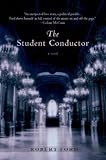
Student Conductor Student Conductor by Robert Ford


rating: 4 of 5 stars

I'm often very skeptical of novels with music as a centerpiece for their story line. I find the musical descriptions contrived and overwrought, as if the author is trying to convince the reader that he/she is an expert in all things musical. One of the benefits of this first novel by Robert Ford is that the author has the skills and experience to write convincingly about music without the pedantic, over-researched feel so present in other works.

Ford successfully creates vivid characters who are bound together not only by their relationship to music, but by their secrets. The author sensitively weaves historical elements (the fall of the Berlin Wall, for example) into a multi-layered narrative. The main protagonist, thirty-year-old American conductor Cooper Barrow, embarks on a quest to face his fears by studying with a master conductor in Germany. What he finds is a Germany built on secrets and fears, trying to demolish and rebuild at the same time. In the middle of it all is the enigmatic oboist Petra Vogel, whose own dark past comforts Barrow with its refreshing relativism.

These characters dance together to a soundtrack of Brahms, a composer who is subject to their idolatry, historicism, and emotional baggage. Ford unapologetically navigates through the conducting and orchestra worlds, framing the shades of the human soul with the best of its potential.

Saturday, April 4, 2009

50BC09 #6: Making It All Work

50BC09 #6: Making It All Work: Winning At The Game of Work and the Business of Life
Author: David Allen
Pages: 305
Year: Viking, 2008
Making It All Work: Winning at the Game of Work and Business of Life
rating: 3 of 5 stars

For those who have read and/or familiar with Allen's Getting Things Done, this is a great follow-up. If you like Allen's strategies for organization and general productivity, but occasionally find yourself "falling off the wagon," this book will help.


The book elucidates the major mindsets crucial to GTD, but sometimes gets too wrapped up in its philosophical approach. The "horizons of focus" will cloud your system if you worry about implementing them as actual components, rather than a way to encapsulate the entire GTD process. If you are interested in GTD as a system, I recommend that you start with the book of the same title, rather than this one.

The book contains some very helpful appendices, including a "project planning trigger list" to make sure that your mind dumps are complete, leaving no stone unturned.

Allen uses this book to address his critics, and does an admirable job. Much of the criticism of GTD has been aimed at purists or those who take Allen's ideas to an extreme. Allen allows for a certain amount of flexibility and custom-tailoring (indeed, mandates it) and this book will help you do that.


View all my reviews.

50BC09 #5: The Rest is Noise: Listening to the Twentieth Century

50BC09 #5: The Rest Is Noise: Listening to the Twentieth Century
Author: Alex Ross
Pages: 684
Press: Picador, 2008 (ppbck ed.)
genre: non-fiction, music criticism

The Rest Is Noise: Listening to the Twentieth Century

rating: 5 of 5 stars

I was skeptical going in...not because I haven't enjoyed Alex Ross' writing in the New Yorker, but because good music criticism does not a music historian make. My doubts were unfounded. I took a risk and used this book as the text for my Music in the Twentieth Century course (for non-majors) and I'm never looking back.

Ross keeps a general chronological outline, but centers a century's worth of music around a political and artistic narrative. One of the more intriguing aspects is his use of Thomas Mann's Doctor Faustus as a recurring presence, drawing an inexorable link between compositional history and Faustian endeavors. However, in most cases, we see composers who battle with the Mephistopheles of totalitarianism not as raving lunatics, but as artists torn between their commitment to art and general survival.

The author is unafraid to talk about the actual music, painting vivid descriptions, and unfettering important musical concepts for a general audience. His free online audio guide is a beautiful supplement to his discussions in the book (and serves to fill in some of the necessary "gaps" ). Ross makes intriguing choices that run counter to traditional histories of twentieth century music (entire chapters devoted to Sibelius and Britten, for example), but makes a strong case for a socio-political approach rather than a canonical, or "great master" approach. Composers like Richard Strauss and Arnold Schoenberg are not confined to time frames, but reappear out of the tapestry when their music echoes in the ears of compositional trends.The twentieth century appears as a pre-existent soundscape, whose tones, rhythms, and harmonies are manipulated by the various composers traversing the various hills and streams of modernity.

Wednesday, March 25, 2009

50BC09 #4: Shadows on the Ivy

Shadows on the Ivy: An Antique Print Mystery (Antique Print Mysteries) Shadows on the Ivy: An Antique Print Mystery by Lea Wait

rating: 4 of 5 stars
genre: mystery (series)
pages: 247


Like a Jane Langton mystery, this book is an intellectual's mystery, packed with facts regarding Currier & Ives prints, nineteenth century depictions of African-Americans, and miscellaneous background on a variety of artists and lithographs. However, with the exception of one classroom scenario, author Lea Watt manages to seamlessly blend historical information and mystery. A classic whodunit, complete with multiple motives and false trails. Maggie Summer is a conflicted and interesting protagonist-sleuth, who I look forward getting to know better in the rest of the series.

Sunday, February 15, 2009

50BC09 #3: Wheat That Springeth Green

Wheat That Springeth Green Wheat That Springeth Green by J. F. Powers


1988, Washington Square Press, 335 pages
rating: 3 of 5 stars
I wanted to feel less ambivalent about this book. It is indeed humorous, but sometimes the characters are caricatures, so much so that the humor becomes less witty. Joe's early days in seminary are a study in the comedy of youthful bravado, poking fun at the earnestness of a sometimes misplaced faith.

While the comedy does at times seem forced, Powers' satirical observations are unmistakable and unapologetic. Ironies come out of hiding, like the dustbunnies underneath Joe's Barcalounger.


View all my reviews.

50BC09 #2: How To Write A Lot

How to Write a Lot: A Practical Guide to Productive Academic Writing How to Write a Lot: A Practical Guide to Productive Academic Writing by Paul J. Silvia


rating: 3 of 5 stars


Paul Silvia's book is a humorous bit of sound advice on how to produce plentiful bits of academic writing. His basic premise centers around the creation of a writing schedule that is immutable and permanent. Whether you spend four weekly hours or ten, Silvia contends that the consistency will produce results far faster than if you should wait for inspiration to strike.

It wasn't without some guilty recognition that I read Chapter 2, "Specious Barriers to Writing a Lot". However, Silvia keeps the tone pragmatic, rather than condemnatory, and suggests various methods of tracking one's progress and "carrot-on-a-stick" rewards.


While I am sure Silvia's methods will work (I've had success thus far), I do wonder about academics who have children. The needs of children do not often fall into a schedule, and I can see that parents might find maintaining a strict writing schedule more difficult. I do know a few colleagues who would find Silvia's approach an oversimplification of what it takes to write.


I recommend this book because it is a quick read and contains some valuable and consolidated insights into writing productively. I think he is overly negative about the act of writing (some of us DO enjoy writing), but addresses it as a necessary evil for those who may not be so inclined. While it is geared toward post-graduates and faculty, it certainly would help anyone engaged in writing a dissertation, particularly in the humanities or social sciences.

Sunday, January 25, 2009

50BC09 #1: The Leper's Bell (Tremayne) - Sister Fidelma #14

The Leper's Bell (Sister Fidelma Mysteries) The Leper's Bell by Peter Tremayne rating: 3 of 5 stars While the Sister Fidelma series does not have to be read in series order, I do recommend it. I clearly skipped some major biographical details between Leper's Bell and the last one I read, and it detached me from the main character more than if this has been my first Sister Fidelma book. I'd also recommend ignoring the list of "Principal Characters" that prefaces the book, unless you want some clues very early on in the story. That said, Tremayne is masterful enough to throw a curve ball just when you think you've figured it out. In a way, this particular book seems more a Brother Eadulf mystery than a Sister Fidelma mystery, as we are given much more insight into his character and he propels the plot forward. Fidelma is weakened by the tragic kidnapping of her own son, but Eadulf is at odds with seemingly just about everyone as he is an outsider, a Saxon. Tremayne tries to use these weaknesses to develop his characters, but there is something missing, particularly when it comes to Fidelma. We never actually see her during her time of mourning, but instead only hear of it from Eadulf. When she does appear, she is the stoic, logical Sister Fidelma of the series, but given the story line, she seems mismatched. She wonders (somewhat obtusely) about the fiery outbursts of Eadulf and has only glimmers of introspection at her own excessive reliance upon logic. That aside, the book is full of intrigue, duplicity, and all the other essential ingredients of a good mystery. Readers familiar with the series may find the religious-political historical commentary a bit redundant, but in this book we get a better glimpse of Eadulf's theology, rather than Fidelma's. In that sense, this is one of the more engaging books in the series, as Brother Eadulf's religious views challenge some of Sister Fidelma's, making for much more interesting interaction between the characters.