Sunday, May 10, 2020

2020 #2: Revelation (Makah Island Mysteries, Bk. 1) - Drayer

Revelation: Makah Island Mysteries Book OneRevelation: Makah Island Mysteries Book One by Amy Drayer
My rating: 4 of 5 stars

This was enjoyable from start to finish. I love Jo as the flawed protagonist because she's real. Within this mystery, Drayer weaves in a potent commentary about the importance of place, community, and the choices we make. The characters are vivid and multi-dimensional, full of individual mysteries both large and small. The Pacific Northwest is more than a backdrop here --the landscape comes alive with every plot point and narrative detail. This is no clichéd good vs. bad mystery novel, but instead a complex tapestry of characters and environments.

Monday, February 24, 2020

2020 #1: Art On My Mind (bell hooks)

Art on My Mind: Visual PoliticsArt on My Mind: Visual Politics by bell hooks
My rating: 4 of 5 stars

"To transgress, I must move past boundaries..." ('Being the Subject of Art, 133). This is what bell hooks does in this 1995 collection of essays that is part historical survey, part critique, part manifesto. Artists (and artworks by) Alison Saar, Carrie Mae Weems, Emma Amos, Jean-Michel Basquiat, Lorna Simpson, and others are interviewed and interrogated in the best sense of the word. hooks amplifies intersectionality and lays bare the importance of "constructive critical interrogation" and how essential it is to creating a more authentic understanding. One can, in hooks's mind, celebrate contributions without having to offer wholesale acceptance, especially if there is an absence of understanding of one own's hegemonic role (her basic criticism of Robert Farris Thompson, for example). In essays like 'In our Glory: Photography and Black Life' she digs past both aesthetic and political dichotomies of "good" and "bad". She acknowledges that cultural critique is connected to capitalism and other societal structures:
Certainly a distinction must be made between having access to art and being willing to engage the visual on an experiential level--to be moved and touched be art. Many of us see art every day without allowing it to be anything more than decorative. The way art moves in the marketplace also changes our relationship to it. Often individuals who collect art spend more time engaged with issues of market value rather than experiencing the visual. ('Critical Genealogies: Writing Black Art', 108)

Roughly at the center of the collection is hooks's most personal (in some ways) essay, 'Women Artists: The Creative Process'. It is this short essay where we learn most about hooks as an artist and writer, and where some of her boldest statements appear:
Women have yet to create the context, both politically and socially, where our understanding of the politics of difference not only transforms our individual lives (and we have yet to really speak about those transformations) but also alters how we work with others in public, in institutions, in galleries, etc. For example: When will white female art historians and cultural critics who structure their careers focusing on work by women and men of color share how this cultural practice changes who they are in the world in a way that extends beyond the making of individual professional success? (131).
It is a more than fair question. And when we consider that this collection is from a quarter of a century ago, it is telling that I find these questions still very relevant--at least in my field of music history/musicology. I can't speak to the situation in art history, but I'd venture that not much has changed.

The only drawback of the book is that the reproduction of the artwork is not very good, and in some cases, the lack of color undermines some of hooks's most biting and salient points. The book warrants a new edition with color plates, but in lieu of that, the Internet does come to the rescue in most cases. It is worthwhile to take the time to look up the works featured in the book--some of them can be found on Phillips contemporary art and auction site, others on the artists's personal website (such as Carrie Mae Weems's personal website). Others, like Emma Amos's The Overseer, seem inaccessible. But hooks's prose throws many of these works into high relief through description and critique. But look for them---seek them out. Do the work. The rewards will be there.

This was an important book for me to read, especially because so many of its lessons are directly applicable to music history. It asked me to look at my own "wokeness" and wonder if I have ever been, as Emma Amos put it, "the white critic [who] feels safe focusing on the blackness and otherness of the artist instead of learning to look at the art" ('Straighten up and fly right: Talking Art with Emma Amos,' 188). How much has identity politics shaped by own understanding of music? Am I working against silence and erasure? I'm not sure. But I do know that spending time with these essays has helped me consider the boundaries that I have yet to transgress.


Monday, January 6, 2020

2019 #14: The Medium is the Massage (McLuhan/Fiore)

The Medium is the MassageThe Medium is the Massage by Marshall McLuhan
My rating: 4 of 5 stars

It is difficult to remember that this book was first published in 1967, as the message of the "massage" is as relevant today as it was then. The use of images to make its point should not detract from the prose, even though it is minimal. McLuhan's "allatonceness" and "global village" take on new resonance in the Internet age. Where it diverges is in thinking we privilege acoustic space--I don't believe that is true. I think we are still largely beholden to the visual, and when in 1967 McLuhan writes:
At the high speeds of electric communication, purely visual means of apprehending the world are no longer possible; they are just too slow to be relevant or effective.

we know that he could not have foreseen social media. But as many have noted, much of what McLuhan says holds up in our age.

This edition is wonderful and beautifully produced, from the Shepard Fairey cover (probably the most apt choice), to the self-referential New Yorker cartoon on the last page. It is both a (brief) history of media, and a harbinger of the future. Quentin Fiore's contributions are stunning, particularly in retrospect, and seem far less counter-culture now than they did in the 1960s. The use of visual images, creative typesetting, and lack of regular pagination help drive home McLuhan's point in this "inventory of effects." We get pulled into the "electrically-configured whirl" no less now than we did then, even if the medium has changed. One wonders if we aren't still "march[ing] backwards into the future." Media continue to be "extensions of some human faculty"--and in that, we see both the frailty and fecundity of our ideas.

Friday, January 3, 2020

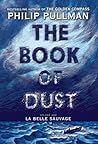
2019 #13: La Belle Sauvage (Pullman) - The Book of Dust #1

La Belle Sauvage (The Book of Dust, #1)La Belle Sauvage by Philip Pullman
My rating: 5 of 5 stars

The last time I "devoured" a book this fast (one day) it was Pullman's The Golden Compass. This first installment of the The Book of Dust trilogy is a remarkable prequel! It digs into Lyra's world anew, through the eyes of Malcolm, a stunningly well-written character. Pullman has such a gift for writing characters who are children, and this book is no exception. If I have to be critical, I'd say there are a few twists and turns that seemed a bit superfluous (and that is an intended pun given the major event that runs through the book), although they will resonate more for those who have read the His Dark Materials trilogy. There are a few characters of whom we only get a glimpse that I hope return in The Secret Commonwealth, which was just published last October.

There are some very intense and violent scenes, so while some would classify this as YA, I think it would need some debriefing with younger teens. Aside from that, however, I could not be happier to once again venture into this world of daemons, choices, and parallelisms. Truly a stunning book.


Thursday, December 26, 2019

2019 #12: What W.H. Auden Can Do For You (McCall Smith)

What W. H. Auden Can Do for YouWhat W. H. Auden Can Do for You by Alexander McCall Smith


It is true that this book is somewhat self-indulgent, but if you are one of those people, like me, who enjoys what one might call conversational erudition, this book is a fantasy fulfilled. In reading McCall
Smith's book, we imagine ourselves not in a classroom, but sitting in the Russian Tea Room, as the author did with Edward Mendelson (108-11). This evokes an older mode of teaching, and reminded me specifically of my Doktorvater, who could recall specific measures of a Brahms intermezzo, the structure of a medieval motet, or the specific page of a citation in an issue of the Journal of the American Musicological Society with authority based, first and foremost, in his pure love of--and engagement with--music. This is truly the "life of the mind," when we move past the hierarchical corporate machine of academia. That said, the book rests in privilege, without doubt -- both in the fact it exists, and that it banks on a readership of well-established fans. But I've been astonished by some of the criticism claiming that McCall Smith is not a good enough author to deserve to write a book on Auden. These same reviews call him out for his "ego" in producing the book in the first place. There's a quiet irony here which I won't harp on, to avoid a review of a review. For me, McCall Smith's stream-of-consciouness sidebars are refreshing and he wrote this book in the way that I read most books. If you are looking for an academic tome about Auden, or a biography-- this isn't it, which the author tells us on p. 3:
This small book does not purport to be a work of criticism. It does not claim to shed new light on a body of work that has already been extensively examined. It is simply an attempt to share an enthusiasm with others who may not have yet discovered, or may not have given much thought to the work of Wystan Hugh Auden.
Those familiar with McCall Smith's Isabel Dalhousie series may take extra delight in this volume, particularly in that the real Edward Mendelson, whom McCall Smith extolls as "no better guardian and exponent of [Auden's] work," makes an appearance in several of those novels.


Wednesday, December 4, 2019

2019 #11: Time's Convert (Harkness)

Time's ConvertTime's Convert by Deborah Harkness
My rating: 3 of 5 stars

This was disappointing in some respects. It fills in some of the lore and we do get a better sense of what it is to be a vampire. The backstory for Marcus is well done, and Harkness is at her strongest when she's writing historical fiction. After a trilogy centered around Diana and Matthew, their presence in this book seemed superfluous--as if the author felt those characters had to be there. I would have preferred a sequel that waited a bit longer, delved more into the development of the twins OR gave us Marcus/Phoebe's story--trying to do both here didn't work for me.


Friday, November 29, 2019

2019 #10: Children of Blood and Bone (Tomi Adeyemi)

Children of Blood and Bone (Legacy of Orïsha, #1)Children of Blood and Bone by Tomi Adeyemi
My rating: 4 of 5 stars

Let me start with: this is a very important, very violent, and wonderful book. And I'm going to read the next book in hopes that it rids me of my one real criticism of the book.

It is very intense for any book--not just for a ya book--but that intensity is the point. Anyone who pays attention to the news and who cares should understand the metaphors laced throughout this book. Sadly, there are those that will need to read the Author's Note to "get it." It can't really be critiqued as a standard ya/fantasy novel because that isn't its purpose. This story is more and it digs into the complexity of conviction, of faith, of heritage, and of legacy. The characters are amazing---flawed, multi-dimensional, ever-growing, ever changing. Life is about choices--some of which are made in an instant, some of which are made for us, and some of which blossom slowly along with our own growth. It is a "fantasy" epic, yes---but it doesn't rest upon all the tired clichés of the genre. Our alliances with the characters split and rejoin as much as their own.

I was so entrenched in it all and then...the end. And an epilogue that obviously throws the door open for part two, but did an insufficient job of closing out this book as a novel. There's so much more to say---not just in terms of the narrative, but in 523 pages leading up to the real point of the sacrifices, the page of Epilogue really doesn't do it justice. I will say that in the brief paragraphs of the epilogue, the end result was exactly what I had hoped for, except that the final sentence left me wondering. I wanted to give it five stars, but there's an imbalance toward character development here--which is a criticism I almost NEVER have. The book has a great rhythm of narration and characterization, with the bigger picture undergirding it at all times. But then the final few pages of the book renders them all basically irrelevant, which I can't think was the point. This is a small criticism, at the end of the day, but I will say that were it not for the greater importance of this book, I might be tempted to set the continuation of the story aside.

Overall, however, I want to know more. I love the use of African religions and my own limited exposure to some West African theologies resonated. This is a book worth reading--hands down. It is an important book and one that deserves to be on reading lists for young adults and probably older adults. Maybe especially older adults.

My review of Book 2 Children of Virtue and Vengeance