Showing posts with label fiction. Show all posts

Sunday, October 11, 2026

2026 #36 The Yellow Wallpaper and Other Stories (Gilman)


The Yellow Wallpaper and Other StoriesThe Yellow Wallpaper and Other Stories by Charlotte Perkins Gilman
My rating: 5 of 5 stars

I remember reading "The Yellow Wallpaper" in high school, and now I'm wondering why on earth they let me read it in HIGH SCHOOL? I somehow had forgotten how dark it is OR the darkness registers with me in a more meaningful way now that I'm an adult. What a brilliant piece though for its use of metaphor and "horror" of the psyche. The other stories in the collection are lighter, albeit no less feminist. I particularly enjoyed Mrs. Morrison in "Three Thanksgivings" as she refuses to let either her children or the appropriately named "Mr. Butts" commandeer her life. "The Cottagette" didn't really resonate with me, but I am mindful in considering when Gilman was writing (this particular story was first published in 1910). "Turned" has a narrative that for 1911, when it was first published, would have have been very bold. Gerta is taken advantage of in the worst way but finds perhaps an unlikely ally (I venture that while this narrative has become rather common, Gilman may have been one of the first to offer it in this way). "Making a Change" is another one that is very ahead of its time (again published in 1911), and I love the mild humor in which Gilman offers it. Here, an enterprising spirit takes on new meaning. "If I were a man" tiptoes into speculative fiction and doesn't rest in the clichés that it might. The final offering, "Mr. Peebles' Heart" was one of the most intriguing, featuring a female doctor who plays a rather significant role in saving her sister's marriage, or at least rescuing it from the doldrums of convention.

View all my reviews
2026 Reading Goals 36/60
TYPTBR 16/18

2026 #35 The Paris Express (Donoghue)


The Paris ExpressThe Paris Express by Emma Donoghue
My rating: 4 of 5 stars

An enjoyable read! It felt a bit slow for me in the beginning, and if you don't know the historical event upon which it is based, it does give you a false sense of anticipation. Donoghue does a really great job of portraying class stratification through the different cars on the train (although this felt a bit too transparent at times). Most of the characters are vivid and multi-dimensional and there's enough of a "plot" to keep things moving (along with the train).

View all my reviews

2026 Reading Goals 35/60

Wednesday, September 30, 2026

2026 #34 The Mirror of Her Dreams - Mordant's Need #1 (Donaldson)


The Mirror of Her Dreams (Mordant's Need, #1)The Mirror of Her Dreams by Stephen R. Donaldson
My rating: 3 of 5 stars

It is rather epic world building, but I just didn't love Terisa (late 1980s sensibilities or lack thereof notwithstanding). I wanted to see Geraden through someone else's eyes, and I came away not really understanding King Joyse's motivations. And "spice" is fine, but older creepy womanizers "claiming" young women (while they sleep, no less) is not sexy and pretty gross. For me, the most interesting character was Adept Havelock. The premise of mirrors and "translation" is terrific, but I'm not sure I was engaged enough to read the second in the series. If I happen upon it, I probably will read it, because I am curious and the first book ends without conclusion.

View all my reviews

2026 Reading Goals 34/60
#192030 Challenge: 1986
TYPTBR 16/18

Friday, September 25, 2026

2026 #33 The Guest Lecture (Riker)


The Guest LectureThe Guest Lecture by Martin Riker
My rating: 5 of 5 stars

Given that I assume Martin Riker is not a middle-aged perimenopausal female academic, I'm not quite sure how he so perfectly nailed my insomniac anxieties, but wow! I'm going to guess that the premise--the middle-of-the-night mental meanderings of a recently-denied-tenure economics professor--isn't going to appeal to everyone, but the book is fascinating. "Meanderings" isn't quite accurate either. Abigail starts out with the best of intentions to practice using "loci" as she directs her imagination to move through each room of her house as she consults John Maynard Keynes (the topic of her talk the next day) on each part of the talk she is to deliver. These conversations with the imaginary Keynes are absolutely delightful. Even with such a wise and thoughtful companion, however, Abigail's life-worries start to creep in, disrupting her focus and derailing her ability to compartmentalize (literally, in terms of the "loci" practice).

What was not expected and ended up feeling rather eerie given its top-tier relevance to my own profession, was an abundance of references to contemporary music! And not just the usual headliners either (John Cage, etc), but Susie Ibarra, Pamela Z, Mary Jane Leach...and many more. I can't remember how I learned about this book, but now I'm thinking one of my music colleagues must have recommended it. I even wrote down some names new to me! Riker's name-dropping is partially to fill out Evelyn, one of the characters we meet as Abigail's insomniac journey expands backward into her past, but it still came as a total surprise in a book I figured would be fairly economics-centric.

A side effect of all of this is that my long-sleeping interests in International Relations (when I briefly toyed with the idea of double majoring in college) were awakened, at least inasmuch as Riker (through Abigail) illuminates Keynes as both "creative improvisational human" and "institutional symbol of unchecked government expenditure that history has made him." (22%) At one point, Abigail beautifully captures the joy of reading Keynes's essays:

"...but I read them despite wrongness, despite datedness, for the voice of the person writing. His voice, his astuteness and humor, his crabbiness, the life in his voice, his way of seeing and thinking about the world that was not just in the ideas or claims or arguments but in the way the voice thought, the way the thought turned..." (58% Chapter 9)

Take THAT ChatGPT summaries! Be still my historian's primary-source-loving heart.

Part III is when Abigail's mind really lets loose--not so much as a hamster spinning on a wheel, but more like a rat running through a maze. She knows she needs to find the exit, but she takes the most circuitous route possible in getting there. While I enjoyed some of it, at times it started to feel a bit tedious.

I cannot say that I've read any book like this, and if you tried to summarize the "plot" for me, I probably wouldn't have picked it up. It seems quirky, but then you realize it really isn't (unless you are some rare soul who has never laid awake at night with your anxieties keeping you company). Mileage will definitely vary with this one, but for me, it was one of the best reading experiences I've had this year.


View all my reviews

Monday, September 7, 2026

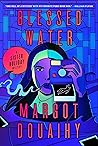
2026 #32 Blessed Water (Sister Holiday #2) - Douaihy


Blessed Water (Sister Holiday Mystery #2)Blessed Water by Margot Douaihy
My rating: 3 of 5 stars

3.75 stars
While I'm still invested in the series, Blessed Water didn't quite work for me as well as its predecessor Scorched Grace. With the first book, I noted that everything seemed to accelerate at the end for the sake of resolution, and that was also the case here. But the main issue I had is that the elements of the story seemed to be uneven in how they popped up. Sister Holiday's brother makes a weird appearance, which is welcome if he's going to stick around, but seemed quite extraneous to the mystery. We don't really get any more reveals about her shady past, although "Nina" comes through a bit more.
There are some subtle clues that I got only after reflecting on the story, so I enjoyed that. Sister Holiday's foul mouth is fine, but her penchant for violent thoughts, particularly against Detective Grogan and the purposeless Alex, got a bit tiresome (just overdone, I would say). Her relationship with Riveaux develops nicely, and holds a lot of promise.
You don't need to have read the first one (there are plenty of references to it), but I'd recommend it before launching into this one. A good installment, and I look forward to seeing where this goes.

View all my reviews

2026 Reading Goals 32/60

Wednesday, September 2, 2026

2026 #31 Artificial Condition - Murderbot Diaries #2 (Wells)


Artificial Condition (The Murderbot Diaries, #2)Artificial Condition by Martha Wells
My rating: 3 of 5 stars

I listened to the Graphic Audio version, and unlike others, I didn't care for it. The underscoring felt very gratuitous, although some of the foley and fight sequences reminded me of old radio shows (in a charming way).

Murderbot seeks out the mysteries of its past and finds a friend-bot ("ART"). I liked the premise, and the human characters are more dimensional. We also finally get to meet a "Comfort Unit" (aka sexbot). Definitely a bit more culture-building in this one, so I'm in. There's a lot of techno-speak, which I found tiresome in certain places and probably would have skipped over pages had I been reading it in hard copy.

While I did not enjoy the reading as much, I thought the story overall was more interesting and we certainly get a better sense of all that Murderbot is negotiating as it tries to hone its own identity and autonomy. 3. 75 stars


View all my reviews

2026 Reading Goals 31/60
#192030 Challenge: 2018

Saturday, August 29, 2026

#2026 #29 All Systems Red - Murderbot Diaries #1 (Wells)


All Systems Red (The Murderbot Diaries, #1)All Systems Red by Martha Wells
My rating: 3 of 5 stars

I absolutely see why this popped up in my algorithms after I finished (and LOVED) Andy Weir's Project Hail Mary. I'd heard good things about this series outside of that, so I figured I'd give it a try here at the end of when I actually have a life before school begins. I won't judge it against PHM, especially since it is a novella. Both do share a similar sense of humor.

It is entertaining! I was disappointed in the ending only because I was enjoying what developed between the bot and the crew. The short length was a bit of a let down in that regard. It is a very interesting negotiation of non-human sentience, and I applaud that. Kevin R. Free's reading was quite excellent, and Dr. Mensah became my favorite character. I definitely enjoyed it enough that I've already started no. 2 Artificial Condition, but the only one available via Libby was the Graphic Audio production and I'm already not excited about the abundance of underscoring...

View all my reviews

2026 Reading Goals 29/60
#192030 Challenge: 2017

2026 #28 Small Things Like These (Keegan)


Small Things Like TheseSmall Things Like These by Claire Keegan
My rating: 4 of 5 stars

The writing here is beautiful. Keegan manages to do so much with just a few words. There's little in the way of hyberbole or superlatives, but there is a clean rhythm that is almost poetic and draws you in. It is a touching story, but also relatable in how most of us face moral quandaries at one point or another. Bill Furlong is just a coal merchant delivering fuel to a Magdalene convent laundry in Ireland during the 1980s. But over just a few pages (it is a novella), we start to walk with him. We feel what he feels, and we see what he sees. You can almost feel the knotted tension forming in the pit of his stomach as he grapples with what he's witnessed at the convent. This is a very good book about the "small things" that can be opportunities to test or own moral courage.

View all my reviews

Challenges 
2026 Reading Goals 28/60

Tuesday, August 25, 2026

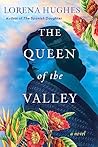
2026 #27 The Queen of the Valley (Hughes)


The Queen of the ValleyThe Queen of the Valley by Lorena Hughes
My rating: 3 of 5 stars (3.5)

I picked this book somewhat at random for the Read Around the World Challenge. This historical backdrop is the 1925 earthquake in Cali, Colombia, so starting it just two days after the awful earthquake in Colombia on August 10th this year felt rather eerie. The book is engaging with a reasonably interesting story/mystery, but I wonder if I would have connected better if I had read the first book, The Spanish Daughter, which introduces the character Puri (short for Purificación). Reading this one without the first didn't thwart enjoyment, but the (minimal) references to the first book would have been more meaningful. How Puri winds up "as a nun" might have been more believable, as well.

The other major context for the story is a cholera outbreak, and Hughes deftly handles descriptions in the cholera ward without sensationalizing the misery. The female characters are particularly strong, and Lucas is nicely complex. Martin is known mostly through the lens of those in his orbit, and I wish that Farid had his own chapters too. There's a web of entanglements that at times was hard to keep track of (Angélica, in particular, felt a bit happenstance and underdeveloped), but keeping the main narrative focused on just three characters (Lucas, Puri, Camila) helped. The circumstances of the disappearance of a certain character also felt a bit patched together near the end.

Overall, a solid read and good piece of historical fiction.

View all my reviews

Challenges 
2026 Reading Goals 27/60
Read Around the World: Ecuador (4/14 for South America)

Wednesday, August 12, 2026

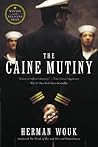
2026 #25 The Caine Mutiny (Wouk)


The Caine MutinyThe Caine Mutiny by Herman Wouk
My rating: 4 of 5 stars


One of the remarkable things about this book is that it isn't really about a mutiny. Yes, there is mutinous behavior, but I'd almost classify it more as a coming-of-age story of Willie Keith. It isn't your average war novel either, although it takes place during WWII. Wouk manages to focus on the world of the USS Caine, a clunky older minesweeper, commanded by various characters through whom we get to see Willie grow. There's also a love interest, but even there, the complexity and nuance sets this novel apart. The
The only thing that keeps it half a star away from 5 for me is the Navy jargon. If you aren't familiar with the various nautical and military terms applied to ships and the like, some of it can feel like a slog. But I'll also say that it was interesting enough that I looked up a good bunch of information on minesweepers and was happy to learn. Lieutenant Commander Queeg (played by Humphrey Bogart in the film), is an excellent character in that he navigates that in-between space between villain and flawed human--something Willie has to reckon with, alongside some of his shipmates.
For those interested in the real-life inspirations: https://www.usni.org/magazines/naval-...

View all my reviews

View all my reviews
Challenges 
2026 Reading Goals 25/60
#192030 Challenge:1951
Pulitzer Winners: 18

Saturday, August 8, 2026

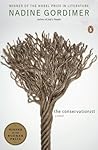
2026 #24 The Conservationist (Gordimer)


The Conservationist: Booker Prize Winner (A Novel)The Conservationist: Booker Prize Winner by Nadine Gordimer
My rating: 3 of 5 stars

I wanted to like this, and in theory, I did. I've heard that this is Gordimer's most poetic book and the language is undoubtedly that. I prefer it in straightforward poetry, however, rather than omniscient third person narration. Stylistic considerations aside (which I think are truly about personal preference), the book is artful in its illumination of white male privilege in the form of Mehring, a wealthy industrialist who buys a farm in South Africa (as a "getaway") that he is ill-equipped to run (leaving most of the management to his Black workers headed by Jacobus). Divorced and with an estranged son, Mehring wanders through life with little regard for relationships (platonic and romantic), and whose self-absorption fuels the evils of apartheid. The book opens with a murdered unidentified Black man being found on the farm, and Gordimer artfully allows that body to "surface" throughout the novel in various ways.

The book is very literary, with little distinction between dialogue and narrative, and some beautiful descriptive language. If you are somehow new to apartheid and colonialism in fiction, well this wouldn't be my first recommendation to introduce those topics, but otherwise it is an experience to read this Booker prize-winning book.

View all my reviews
Challenges on Storygraph (@rebcamuse):
2026 Reading Goals 24/60
#192030 Challenge:1974

2026 #23 The Modigliani Scandal (Follett)


The Modigliani ScandalThe Modigliani Scandal by Ken Follett
My rating: 3 of 5 stars

Published under a pseudonym (Zachary Stone) in the 1970s before Follett reached his fame, The Modigliani Scandal is an entertaining look at the follies of the art world, and a reasonably good "mystery" of sorts. The back-of-the-book blurb would have it: "A high-speed, high-stakes caper from the grand master of international action and suspense." High-speed is pushing it a bit--the plot only really picks up speed in Part III, "Figures in the Foreground," but it is good fun. None of the characters are particularly likeable, although I daresay I was originally rooting for Dee, since she needs the "lost Modigliani" for her thesis. Certainly there is intrigue, but as stakes go, they aren't that relatable unless you happen to be in the art world running a gallery. The best part for me is how Follett sets up the denouement at a pub, but then steps back from it before revealing what happens inside that pub. That kept me reading and made for an entertaining ending.

View all my reviews

Challenges on Storygraph (@rebcamuse):
2026 Reading Goals 23/60
#192030 Challenge:1976
Tackle Your Physical TBR 2026 challenge: 14/18

Sunday, July 26, 2026

2026 #22 Dawn - Xenogenesis #1 (Butler)


Dawn (Xenogenesis, #1)Dawn by Octavia E. Butler
My rating: 3 of 5 stars

In contrast to the Patternmaster series (and certainly also the Earthseed books), this falls into the category of what I would call more generic science-fiction. That isn't a criticism, but reading this made me realize that I'm less drawn in by aliens vs. humans than her books that bring in more socio-political commentary or dystopia. (I make an exception for Andy Weir's Project Hail Mary which is my favorite book that features an alien. Blame the fact that I'm of the E.T. generation, I guess.)
In Dawn, there's little in the way of world-building, but a lot of species-building (one might guess, with the name of the series). Lilith is an interesting character, but I found her hard to place because she is both an observer of humanity and an actor of humanity. Butler doesn't give us a lot of time to adjust to the other human characters in the book, so I had trouble feeling much toward them other than viewing them as archetypes of different foibles. Maybe that was the point.
Did I enjoy it enough to read the rest of the trilogy? Maybe, but those will go on the back-burner "to read" list.

View all my reviews

Challenges on Storygraph (@rebcamuse):
2026 Reading Goals 22/60
#192030 Challenge:1987

Tuesday, July 21, 2026

2026 #21 Whistler (Patchett)


WhistlerWhistler by Ann Patchett
My rating: 5 of 5 stars

Well, my streak of crying at some point during an Ann Patchett novel continues unabated. This one, however, snuck up on me. It is what I would call a "quiet book." There's a plot, but it comes in pieces as a recollected narrative. There's also a very mild plot that takes place in the present, but as plots go, it is less important. I would also like to say God Bless Ann Patchett for NOT giving us an epilogue. Some readers will want one, and the book sets it up, but we get instead, what to my mind was the perfect ending.

If you've read any blurbs or reviews, you know that the book is not about a horse, but don't worry -- the horse is significant as a metaphor. There were a few places where I felt the narrative dragged a bit and the relationship between Daphne and Eddie seemed strange and maybe even questionable, initially, until the backstory starts filling in. As a character, Daphne seemed a bit idealized to me at times, but I also think I'm slightly envious of her hardiness (both as a child and as an adult).

Like most of Ann Patchett's novels, this is a very human story, and the author gets out of the way of her characters and let's them tell us what we need to know, when we need to know it. I highly recommend it for those favoring reflection and character growth. If you are lucky enough (as I am) to have a beautiful relationship with a step-parent, you will probably very much enjoy this book. If, however, you've had a troubled or terrible relationship with a step-parent (particularly a stepfather), I'd recommend passing on this one if that relationship has traumatized you.


View all my reviews

Challenges on Storygraph (@rebcamuse):
2026 Reading Goals 21/60
#192030 Challenge:2026

Sunday, July 12, 2026

2026 #19 Water for Elephants (Gruen)


Water for ElephantsWater for Elephants by Sara Gruen
My rating: 4 of 5 stars

I typically read "hyped" books well after the hype calms down so I can resist the noise and form my own opinion. I was given Water for Elephants as a gift back in 2007, so in this case, the waiting period has been a *bit* longer than I intended. I enjoy my engagement with lit-social media, but in this case, it may not have been a good thing. One of the "bookTokers" I follow half-heartedly (because I find his "reviews" rather ego-swollen, even though I mostly agree with him) did a quick video about the biggest "plot twists," based on his audience's feedback. He mentioned that he didn't really feel this one had a plot twist, but it was more just a part of the plot. What bothers me is that I now had this in mind the ENTIRE time I was reading the book.

Plot twist or no, I'll say that I think I would have preferred to do without the part of the book that enables the so-called plot twist at the end. I don't think it added much, and the real story was gritty enough. I don't like to use the spoiler tag, so I'm hoping that's vague enough for those who haven't read it, and will make sense to those who have.

It is a great read -- I sped through it basically in two days when I had a chunk of time to read. The characters are vivid and the story is compelling as is the historical context of a depression-era circus. The shifts between time periods work (not an easy move to do well), and there are some really beautiful and human moments. I was prepared for more of a tear-jerker given what I've heard over the years, so I was surprised to have had only two moments of deep sadness, and one of them I saw coming, so I braced myself for it. What I suspected would be the tragedy of the novel was not, so I guess on that front I was pleasantly surprised.

I personally did not need what I call the "catch-up" chapter (Chapter 25), but I can also see that it would be necessary for some. I'm usually happy to have some loose ends left to weave together in my imagination. All in all, however, this is worthy of a lot of the acclaim it received and I'm glad I (finally) read it!

View all my reviews

Challenges on Storygraph (@rebcamuse):
2026 Reading Goals 19/60
Tackle your Physical TBR 2026: no. 13
#192030 Challenge:2006

Thursday, July 9, 2026

2026 #18 Cosmicomics (Calvino)


CosmicomicsCosmicomics by Italo Calvino
My rating: 3 of 5 stars

Oh, the wacky world of Calvino, for whom history and science are playthings. Here in Cosmicomics Calvino takes on origins of the universe, manifesting in twelve creation myths of a sort. Most of the stories feature a narrative told by Qfwfq, and aged something-or-other that seems to have born witness to origins ranging from the universe itself to the development of the conch shell. This latter narrative is "The Spiral" and was the story I enjoyed the most. Each story begins with a italicized blurb of real science, which is then the springboard for Qfwfq's fanciful narratives. One of the most clever aspects is the anthropomorphizing of pre-anthro existence, and Calvino occasionally meditates on the value of "signs" before there were, "signs." This reflects, no doubt, the influence of Saussure, the Swiss semiotician who, along with Roland Barthes, had a significant impact on Calvino's literature. Calvino's imagination is boundless, and the stories are as much of love, unrequited and not, and microexistence, as they are of the actual devices that serve as the foci of each story.

I'm not sure this book will land well with everyone. I had started it almost sixteen years ago, and put it aside. I picked it up again because I knew I could start again and it is a digestible 153 pages. I'm glad I did, especially for the dry and quirky humor that is a trademark of Calvino. It must be noted that William Weaver's gifts as a translator are on full display (if you find yourself under-appreciating translation, I strongly recommend the wonderful Experiences in translation by Umberto Eco). Calvino asks for some investment, but if you walk through the door he opens, you'll likely be glad that you did.

View all my reviews
Challenges on Storygraph (@rebcamuse):
2026 Reading Goals 18/60
Tackle your Physical TBR 2026: no. 12
#192030 Challenge:1965

Tuesday, June 30, 2026

2026 #16 State of Wonder (Patchett)


State of WonderState of Wonder by Ann Patchett
My rating: 4 of 5 stars

"There was no clear point of loss. It happened over and over again in a thousand small ways and the only truth there was to learn was that there was no getting used to it." (269)

Patchett is one of my favorite writers because she drops lines like this that carry heartfelt truths that transcend the specific narrative of the story. State of Wonder explores ethics, love, and what drives us as humans. The protagonist, Marina Singh, is on a hero's journey into the heart of the Amazon, but her return, and indeed her journey, morphs as the book progresses, making this an engaging adventure on top of a deeper character study. I do love endings that are happy, yet not ("bittersweet" doesn't really work here), but I could have done without the "comfort sex."

The moral high ground is a series of shifting tectonic plates in this novel, and that's what makes it such a wonderful read.

View all my reviews
Challenges on Storygraph (@rebcamuse):
2026 Reading Goals 16/60
Tackle your Physical TBR 2026: no. 10
#192030 Challenge: 2011

Monday, June 22, 2026

2026 #15 Harlem Shuffle (Whitehead)


Harlem Shuffle (The Harlem Trilogy, #1)Harlem Shuffle by Colson Whitehead
My rating: 4 of 5 stars

For reasons not totally clear to me, it took me a LONG time to get into this book. In truth, it was only Part 3 that really engaged my interest, but I think that had a lot more to do with the fact I was traveling and unfocused. I loved The Underground Railroad so I had big hopes here, and when I sat down and read carefully, I felt much more connected to Ray Carney and the book. So I'm probably going to go back and read the first two parts at some point.

This historical backdrop isn't easy (partially because some of the same issues persist), but the wry narrative works really well, and Whitehead peppers in scenic references to this historical landscape: the recently completed Pan Am building (now MetLife), the partially completed Lincoln Center, the demolition and clearing that made way for the World Trade Center. That alone cast an eerie pall over the last few pages of the book. I also thought the 1964 Harlem Riot was integrated in a very real way--in how it impacted real folks "on the ground". As someone who marks the 1992 Los Angeles riots as a formative experience of my life, I recognized the complex and wide variety of feelings from the city's inhabitants. Like the emerging space for the WTC, the weight that history repeated/repeats itself makes this way more than a "suspenseful crime thriller" (NPR blurb in book).

The detachment from violence and the sort of "everyman" qualities of the protagonist are very effective in conveying a sense of realism rather than sensationalism. Strangely, Pepper became my favorite character -- or at least Pepper's later interactions with Ray.

And there are moments of absolutely spectacular dry humor -- Ray's noting of the furniture in the board room in the final showdown, his complete "payment" to Pepper, descriptions of Aunt Millie: "She could have kicked the ass of a druggie or the ne'er-do-well nephew of her upstairs neighbor--her mastery of her weapon of choice, the hairbrush, went unchallenged..." (246). I also loved the descriptions of some of the less scrupulous characters: "Miami Joe was not a law-abiding sort and had no love for its earthly muscle..." (96).

Whitehead's writing is so clever in how it packs character into description: "[Carney] ran like a kid convinced that the whole grown-up world with its entire grown-up might was going to beat him silly." (291)

Or another favorite:

"No, its best not to hear your grown friends talked to the way Ambrose Van Wyck addressed his son. The humiliation splashes everywhere. You'll get it on you and it'll become your own bad time, the bloody resurrection of your own childhood sadnesses." (270)

Despite the rough beginning, I'm sold enough to read Crook Manifesto and my four stars acknowledges my own fault in not engaging with the first two parts of the novel.

View all my reviews
Challenges on Storygraph (@rebcamuse):
2026 Reading Goals 15/60
Tackle your Physical TBR 2026: no. 9

Tuesday, June 16, 2026

2026 #14 1Q84 (Murakami)


1Q84 (1Q84, #1-3)1Q84 by Haruki Murakami
My rating: 3 of 5 stars

Ok, there's a lot to say here, but I'll try to keep it brief. Really this is 3.75 for me, and in places, a solid 4 stars. But for such a long book, I needed more consistency of those 4 star moments. I'm tenacious, which is why I stuck with it, but there were definite times that threatened a "DNF". This was my first Murakami, and I get the impression that it is probably not the best gateway drug (much in the way that Tristan und Isolde was NOT the best "first opera" for me to analyze in college). It was long in a way that I did not appreciate. I feel this way about Robert Schumann's music sometimes.

The premise is VERY intriguing and I will say, if you are not into magical realism or anything related, don't bother with this. I appreciated the lessons about cults. I loved the characters of the Dowager, as well as Tamaru, and weirdly enough, Ushikawa. Aomame had her moments for me, and Tengo, too, but not enough for me to feel satisfied by the ending (when I got there, after 6 renewals on Libby). I also loved Fuka-Eri's "usual style free of question marks."

I read some reviews because I was a bit mystified. Some extoll Murakami's pacing. I cannot agree. There were places that felt like an endurance test. The intertextual references kept things interesting and nerdy-- I need to put together a 1Q84 playlist (or find one that inevitably already exists). I will be forever indebted to being introduced to Janáček's Sinfonietta because of this book.

There seems to be a weird obsession with pubic hair--sometimes ACTUAL pubic hair, and sometimes used as a comparative for head hair (see: Tengo, Ushikawa). Perhaps there's some deeper significance of which I'm not aware -- if so, please let me know. I found the entire three volumes weird in the sex arena, and in some places downright disturbing. I am not titillated in the least by non-consensual sex, even in the service of acting as a spiritual conduit.

Is it imaginative? YES. There are places that felt like imagination for imagination's sake, but others that took me on a journey. The ending was a disappointment, although I understand the lack of resolution to be understood as "infinite possibilities." Is it a love story? Sort of. It lacks the maudlin sentimentality of "Somewhere in Time," but also didn't make me care enough about the two main protagonists.

It is certainly a down-the-rabbit-hole experience, but I feel I would have been happy with something a third of the total length. I've reached out to friends who are fans of Murakami because, as I said, I have the distinct impression that this may not have been the best choice of a "starter" in terms of his oeuvre. I'm definitely game for reading more of his work, but this was more of a marathon than I wished.

View all my reviews

Wednesday, April 15, 2026

2026 #12 The Correspondent (Evans)


The CorrespondentThe Correspondent by Virginia Evans
My rating: 5 of 5 stars

I did not expect to enjoy this book as much as I did, given that wholly epistolary narratives often bore me. I can see why some people don't love it, but anyone who outright dislikes it might lack a soul (I said what I said). It is a deeply human narrative, cast in the voice (mostly of) Sybil Van Antwerp, a septuagenarian former legal clerk, who writes letters (and the occasional email) unabashedly to everyone from Joan Didion (who responds!), her neighbor Mr. Lübeck, the customer service agent at a DNA genetics site, her lifelong best friend, and more. Sybil has secrets, but not of the Frieda McFadden variety...more of the deeply tragic variety that many more of us carry than we likely know. What makes the book so striking for me is how unsensationalized it is--Sybil runs against the grain in several ways, but she's ultimately very human and relatable. Certainly one might empathize with her innate need for connection, which she expresses (at times stubbornly) through her devotion to letter writing.

There is a semi-predictable (and not really hidden) sub-narrative, and if anything, I found that to be a distraction from amazing exchanges (particularly with Basam and Henry). Some threads get tied up in a nice bow, but some don't, and that's exactly as it should be. When Sybil does finally reveal her secret, for me it was about to WHOM and HOW she revealed it that was the most touching. But again, by the time we got there, I was really much too invested in all the connections she had in various ways to feel too stunned/upset. I guess I felt upset for her and it does help explain a lot.

The end did not make me cry, but the middle did -- on several occasions. And that's a book I love. And it made me want to write a few letters of my own.


View all my reviews
Challenges on Storygraph (@rebcamuse):
2026 Reading Goals 12/60
Tackle your Physical TBR 2026: no. 8
#192030 Challenge: 2025