Showing posts with label pedagogy. Show all posts

Monday, August 17, 2026

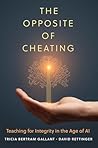
2026 #26 The Opposite of Cheating (Gallant/Rettinger)


The Opposite of Cheating: Teaching for Integrity in the Age of AIThe Opposite of Cheating: Teaching for Integrity in the Age of AI by Tricia Bertram Gallant
My rating: 4 of 5 stars

This book is particularly useful for early-career teachers (or on the flip side, late-career teachers who have upheld the status quo in their teaching for the last twenty years) but almost any teacher in higher ed can benefit from parts of this book. Despite the subtitle, it isn't particularly "AI" oriented, but this is somewhat understandable because it is very difficult to keep up with AI as a specific context.

The authors' primary aim is to advocate for a culture "accepting of errors." This framing of "cheating as error-making" can be a bit tough to embrace when we picture in our mind's eye the student who seems to cheat because they believe they can get away with it. Gallant and Rettinger offer that we should try, however, to bring nuance to our understanding of cheating and resist painting with too broad a brush.

To that end, the first chapter is a great overview of types of neutralizing behaviors and rationales for cheating, and looks into how "help" and "assistance" are tricky words in this world of AI (and also a variety of online "services" (legal and not)). Chapter Two's emphasis on communication is vital, underscoring that is our job to make a syllabus meaningful and relevant, and there's considerable emphasis on developing "actionable and measurable learning objectives." A later discussion of rubrics is particularly welcome: "Creating a full rubric can and should take time and effort" the authors opine, and I'm certainly glad to see this in an age of Khanmigo-generated rubrics being used by brand new faculty who aren't even sure what a rubric is. The authors do support using a ChatBot to (help) generate a rubric, but their Chapter Four should be required reading before anyone attempts using chatGPT or Khanmigo for making a rubric for the first time.

I was a bit surprised at the credit for Universal Design for Learning being given to Burgstahler and Cory rather than David Rose (and no mention of CAST's Guidelines), although their 2008 book certainly was a crucial contribution to UDL as it applies in higher ed. There is also not a whole lot about alternative grading, save for a brief discussion of mastery grading, specifications grading, and ungrading. That said, it isn't really within the scope of the book to dig in to how alt-grading might help deter cheating, but it is highly relevant to the general principles of integrity that the authors support.

I was surprised by the multiple references to "contract cheating" which made me consider that it may be more prevalent than I thought. But ultimately the book isn't about types of cheating as much as how to create a better culture within a class to discourage it, and this includes how to respond when it does happen. The authors encourage a balance between protecting assessment integrity (Chapter Six) and teaching ethical thinking to our students. I wished that the latter had more examples and case studies reaching across a broader spectrum of disciplines, but what is there is inspiring and offers interesting models to explore. Teaching ethical thinking is largely teaching critical thinking and offers a student an opportunity to examine the false dichotomy of good v. bad choice. Instead, borrowing from Rushworth Kidder, that choice is reframed into a "trilemma" and the consideration of what lies outside of the dichotomy is where the learning happens.

The book is well-researched, but more anecdotal in tone, which gives it an arguably more accessible voice, especially for those more interested in practice than theory. But the citations are there for further reading when needed.

Ultimately, the authors successfully frame academic integrity as something that needs to be injected into course design, assessment, pedagogy, institutional policy, etc. They do put some onus on institutions, and advocate that faculty should be proactive in impacting institutional policy, but there isn't a whole lot of guidance as to how to go about this. Even if an institution has "teeth" in their follow through of their academic integrity policies, the authors don't really address the very real economic motivations that are perhaps a stronger consideration at the institutional level and may be part of the issue of disconnect between academic integrity policies and what faculty try to uphold.

View all my reviews

Challenges 
2026 Reading Goals 26/60

Saturday, July 18, 2026

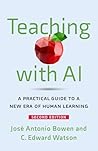
2026 #20 Teaching With AI (Bowen/Watson)


Teaching with AI: A Practical Guide to a New Era of Human LearningTeaching with AI: A Practical Guide to a New Era of Human Learning by José Antonio Bowen
My rating: 4 of 5 stars

If you are an educator, no matter where you land on the topic of AI, you should, as Louis Epstein said in a review of the first edition in the Journal of Music History Pedagogy*, “read this book.” Epstein also notes the authors’ “almost gleeful boosterism,” and indeed, there is no real doubt that they assume AI as a given. In the epilogue to the second edition, the authors generously allow: “Faculty are the ultimate decision-maker, arbiter of quality, and content expert within their own classroom” (319). But make no mistake, the book is unapologetically prescriptive: “You need to start playing and working with AI” (319); “Our curriculum and classroom discussions also need immediately to include AI topics around ethics, data privacy, civics, environmental and energy costs, labor, discrimination and bias” (321). On those latter fronts, if you are looking for advice on how to approach those topics, this is not the book for that (it will only tell you that you need to, not necessarily HOW to). Most of the book is focused on better prompt writing, because, as the authors claim: “All assignments are now AI assignments” (245). In his aforementioned review, Epstein notes that the “unspoken thesis” of the book is that student and faculty are now forced “to decide what really matters to us in our teaching and learning”. I don’t disagree, actually, but I have a feeling my human-generated SWOT analysis of AI and that of the authors would differ greatly.

Bowen and Watson offer: “The new goal of any assignment, especially a writing assignment, is to emphasize the important human contribution while recognizing the realities presented by AI” (250). I like the use of the word “realities” here, but the book is instead heavily focused on “opportunities”, with a strong belief that if we invest the time, students can integrate AI in meaningful ways. What isn’t clear (yet), is how this will really play out, given students’ various motivations for “efficiency.” There are good select studies on issues such as human agency in creative problem solving in AI collaboration, but the full-scale adoption of AI as our “thought partner” in higher ed has not yet come to pass in such a way that we have large-scale data on the impact. But we are probably getting there.

There are some seeming contradictions. Some of the examples and prompts offered by the authors mention how AI can be used to alter/experiment with “voice” in a piece of writing. I’ll be transparent and say that this, along with a new interpretation on the role of citation in writing, is one my biggest issues with AI. If I go full-on “the Borg are coming,” this is where I see a real abdication of human-ness. So, I found it odd to offer guidance on including “voice” in prompts for AI (p.59), but then in Chapter 8, on “Cheating and Detection”, the authors advocate starting a conversation with a student who you suspect might have used AI with “I don’t really hear your voice as much as I would like” (161). I happen to think that’s a GREAT way to start the conversation (and I have), but I also don’t encourage them to use AI with thorough prompts that include directions to “respond as if you were x” or write “like an engineer.” The conflation of “language” and “voice” I find problematic as well.

There is also a lack of acknowledgement of potential tokenism and essentialism in prompting AI in the ways the authors describe. For example, as a faculty member, the authors promote doing a practice conversation with AI wherein it is prompted to be “my student Jeff, who is a nineteen-year-old from Wisconsin majoring in biology and taking my course pass/fail” and then directed: “Please respond as if you were Jeff.” (133) While only a “practice conversation” and not a script, it posits poor Jeff as some sort of archetype of whatever identities we’ve given the AI. It isn’t to say that our experience of Jeff IRL is complete, but one hopes that we might have a better sense of Jeff as a student than an AI combing known character traits of nineteen-year-olds, biology majors, and folks from Wisconsin. More problematic (perhaps) is the counsel: “Perhaps you simply ask the AI to be an under-represented voice in the room (225).” On the same page, an author might ask an AI to “reimagine” their work with the lead character as “an Asian American and identify what plot lines might need to be changed.” I note that it does say “might”, but the idea that we would ask AI to represent “an Asian American” doesn’t seem any better than asking an Asian American to speak for all Asian Americans.

My critique of the authors’ suggestions for citation goes far beyond the confines of their book. There seems to have been a large-scale shift in discussion about “checking citations” without highlighting the point of citation in the first place. I carefully say “seems” here, because this is a baseline perception, not a carefully researched thesis. But the authors tell me that I might, as a scholar writing an article, prompt an AI with “Who are the other major figures in this field, who might be reviewers of this article? What work of theirs should I cite?” (114). I understand the pragmatism there, but why not instead: “What work of theirs should I read?” I don’t think that’s a pedantic distinction.

In the chapter on “Reimagining Creativity”, the authors supply a cartoonish image created with Gemini-2.5 via a prompt that prescribed “style of a Renaissance woodcut with seventeenth-century London in the background” and features Genghis Khan on the left with his face merged into a strawberry, and Queen Victoria is on the right with her face hybridized with a cauliflower (Figure 4.1, 81). Both figures then have a thought bubble (as directed in the prompt) that asks “Will anyone care if we are AI generated?” The image is an answer to the question the authors pose: “What if AI makes the art itself?...Humans still need to think of the ideas, but does it matter whether AI was used to realize the actual image?” (80) Bowen and Watson don’t have the answer, but only offer “There are important personal, social, economic, and ethical issues that deserve a place for discussion in society and in our revised curricula.” (80). These discussions have long been part of artistic and creative production (think digital photography), so they aren’t wrong, but I’m growing tired of the “just because we can” advocacy when it comes to AI. I'm reminded of an AI demo on my campus wherein we were shown how one might create a "nature documentary" using AI generated images. I was alarmed that the irony was not acknowledged.

Ultimately, however, the book backs a lot of what is just good pedagogy. For example, there’s an excellent suggested exercise for a class on defining values, teamwork and accountability (180 – 181), something that mirrors the “Community Agreements” I facilitate for all my classes. Whether that discussion needs to be in service of using AI or not might be challenged, but it is good that it is offered in the book. Table 12.1, an “Assignment template combining motivation, task clarity, and success criteria” is another useful example both in and outside of AI contexts. And while I have not yet embraced intentional integration of AI into my own teaching/course content, I might get behind allowing specific prompts such as “Identify which ideas and arguments in this essay are common, flawed, repetitive, heteronormative, or culturally limited”(268). I see this as a bit different than the prompt I mentioned above that essentializes Asian Americans, but I’d have to run it on several examples for myself to see what a given AI calls “culturally limited.”

And that’s probably the biggest problem. One takeaway from the book is that converting core critical thinking skills into AI prompts is no simple task, and it isn’t until the Epilogue that Bowen and Watson seem to vaguely acknowledge the immense amounts of labor being placed on faculty: “Much of the AI-fueled pedagogical revision on college campuses has emerged as another unfunded mandate for faculty and their time.” (325) Even if I entertain sharing just the basic information of this book regarding how to prompt, I cannot imagine doing so at the sacrifice of things I find just as (or more) important for my particular course. And I certainly do not have the time to teach them “how to be expert prompters” AND music history. It isn’t to say that I can’t incorporate “relevant” examples and creative projects, but I certainly cannot afford the time to invest in the type of nuanced prompting the authors promote. So, who will? That remains to be seen.

So yes, my colleague Louis is right. Read this book. It features excellent and recent sources, and it will either strengthen your resolve, confirm your intentions, or move the needle to the middle, depending on your starting point.
*Now called The Journal of Musicology Pedagogy  


View all my reviews

Wednesday, January 21, 2026

2026 #2 Ungrading (Blum, ed.)


Ungrading: Why Rating Students Undermines Learning (and What to Do Instead) (Teaching and Learning in Higher Education)Ungrading: Why Rating Students Undermines Learning (and What to Do Instead) by Susan D. Blum
My rating: 4 of 5 stars

Another excellent tome in the Teaching and Learning in Higher Education series from West Virginia University Press, Blum's Ungrading is probably one of the most often cited sources on the topic. The essays in the book provide "solutions in the plural" as Blum puts it, recognizing that capacity and agency will vary across faculty and different contexts, and that ultimately "Ungrading" can mean a lot of different things. Jessie Stommel's "How to Ungrade" offers a fairly extreme form of ungrading (no grades until the course grade, only feedback), while others provide more moderated approaches. Always as entertaining as he is erudite, John Warner gives us "Wile E. Coyote, The Hero of Ungrading" milking an extended metaphor in service of understanding the challenges of ungrading (for both learner and teacher/facilitator). I appreciated Marcus Shultz-Bergin's reflections, "Grade Anarchy in the Philosophy Classroom" which reminds us that we should be prepared for (some) things to perhaps not work as well as we thought they might. In other words --- stay humble. Celebrate your victories, learn from your mistakes. For those interested in a diving in a bit more deeply to pedagogical theory, Christopher Riesbeck's "Critique-Driven Learning and Assessment" gives good information about how to mix the quantitative and the narrative when it comes to assessment.

The mix of approaches and perspectives is generally an asset, although I found some of the essays less relevant and/or robust. As a whole, however, a very worthy read and a great place to start if you want to know about alternative grading.

View all my reviews

Challenges on Storygraph (@rebcamuse):
2026 Reading Goals: 2/60
Tackle Your Physical TBR 2/18

Wednesday, December 31, 2025

2025 #58 Undoing the Grade (Stommel)


Undoing the Grade: Why We Grade, and How to StopUndoing the Grade: Why We Grade, and How to Stop by Jesse Stommel
My rating: 4 of 5 stars

Jesse Stommel is (and has been) one of the most important voices in "ungrading" as a practice. His insights shared on social media, various blogs, and in previous publications have done much to foster the important dialogue(s) that have multiplied over the last decade or so. There's a lot in this tiny volume that is great for excerpting, but the manifesto-like tone and compilation of previous writings (which is more of what it is rather than a book) frustrated me occasionally, especially as someone who is not new to these topics.

Stommel makes a convincing case for "why" we shouldn't grade, for the most part, but the "how to stop" part could be a bit more robust in terms of nuance and detail. That said, there are some really important take-aways, even for those who might not want to adopt a complete "ungrading" approach. Stommel writes, "My goal in eschewing grades has been to more honestly engage student work rather than simply evaluate it" (2). This is a key factor and should be an overarching pedagogical objective for anyone looking into alternative assessments (I use the term in acknowledgement of its problematic aspects). There are also some really wonderful pithy quotes: "Grades are the bureaucratic ouroboros of education" (11) sums up the raison d'etre for Stommel's work, in that it isn't just about grading/not grading/ungrading, etc..., but looking at the larger structural failings of education. "Ungrading" (broadly interpreted) is one way to fight back, and it can be done without necessarily jeopardizing one's gainful employment, especially if it is grounded in sound pedagogy and includes student dialogue and buy-in. That's not to say everyone will have the academic freedom to do so, but as more and more educators make "plus 1" changes (to borrow from Behling and Tobin's Reach Everyone, Teach Everyone: Universal Design for Learning in Higher Education), the tide may eventually turn.
 
Stommel's indictment of relegating "pedagogy" to the LMS is spot-on, although I'd push back a bit at his disdain for rubrics. I appreciate and agree with his criticism of "overly mechanistic" rubrics that are more focused on "efficiency in evaluation" (29), but I gently part company with him when he says: "...when rubrics are given in advance to students, they are likely to close down possibility by encouraging students to work toward a prescribed notion of excellence." (30). While I can see that, I would offer that the right rubric can be an excellent tool for transparency of expectations (especially if those expectations are cultivated through dialogue with the students, as Stommel advocates). With LMS incorporating AI more frequently to assist with things like making rubrics, I fear rubrics are being defined, especially for new faculty, as mechanistic tools for evaluation rather than realizing a fuller potential that they could have as a pedagogical implement for engagement and transparency.
 
In "How to Ungrade" Stommel says, "If you're a teacher and you hate grading, stop doing so much of it." (68). He helpfully differentiates the conversation from one about "efficiency" (a word I'd like to see removed from pedagogical spaces, at least until we regain some balance as far as AI is concerned). I think there's a lot of joy to be had from engaging with student work, and this might shift the conversation a bit: rather than aiming for "less grading" it might be about spending that energy cultivating relationships and I think Stommel makes a strong and impassioned case for doing just that . Overworked and underpaid teachers are (rightfully so) often leaning into "easier said than done" because they are exhausted. So, I'd encourage those who are new to the ideas of people like Paulo Freire and bell hooks to use Stommel's book as a starting point for inspiration, and try out some of the concrete examples for alternative assessment in Chapter 8.

View all my reviews

Tuesday, December 30, 2025

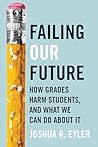
2025 #57 Failing Our Future (Eyler)


Failing Our Future: How Grades Harm Students, and What We Can Do about ItFailing Our Future: How Grades Harm Students, and What We Can Do about It by Joshua R. Eyler
My rating: 4 of 5 stars

This is a great primer for those uninitiated to the idea of alternative grading, or those who need a baseline rationale. Beautifully researched and convincingly argued, Eyler demonstrates, on multiple levels, the actual harm of grading as a system, without resorting to heavy-handed rhetoric or sanctimonious finger-wagging. Eyler's audience should be parents, educators, and administrators, and there is wisdom here for both K-12 and higher ed. For the purposes of this particular book, his grouping of several alternative grading models under "Standards Based Grading" (SBG) makes sense, but it means that this is not the book if you are looking for nuanced explanations of the differences between, for example, SBG and Specifications (or "Specs") Grading. For that I recommend Grading for Growth by David Clark and Robert Talbert -- a book Eyler cites. Some of the stats and case studies make for tough reading, so consider this a content warning as he does briefly mention suicides at particular institutions (hopefully that doesn't shock anyone working for more than a few years in higher ed). Eyler covers a lot of ground in terms of providing both background and practical advice, and the rich bibliography is a fruitful place for further exploration.

View all my reviews

Monday, July 21, 2025

2025 #30: More Than Words: How to Think About Writing in the Age of AI (Warner)


More Than Words: How to Think About Writing in the Age of AIMore Than Words: How to Think About Writing in the Age of AI by John Warner
My rating: 5 of 5 stars

One might draw parentheses around "in the Age of AI" when it comes to John Warner's excellent book. If there is one thing that is certain, generative AI has made it necessary to think about writing in general, as the assumed ubiquity of AI has implied definitions of writing that are certainly unsatisfactory from a pedagogical standpoint, and stand as evidence of the marketplace's power to (try to) shape our destiny. But this isn't just another example of capitalism's dominion. Many uses of AI ask us how much of our humanity we are willing to relinquish? The answer is demoralizing for many of us, yet Warner does provide a framework which he details in the last section of the book: Resist. Renew. Explore.

Warner starts, however, at the "beginning". He eschews "intelligence" as a synonym for "automation" --the real function of AI. I'll admit to a strong confirmation bias, but Warner puts AI through its paces to offer a well-considered and informative critique that I found incredibly helpful in quieting the bile that rises in my throat when it seems everyone has just obeyed our AI overlords in advance. He begins with an accessible explanation of what ChatGPT is and what it is doing when activated. While it is informative, it also serves to remind us that, at some level, we must understand how technology works rather than just allow ourselves to be uniformly awed (or galled) by its "magic." He is openly critical of the propaganda put forth by AI advocates who stand to gain financially (e.g. Sam Altman), but carefully debunks their claims rather than resorting to panicked invective.

Some of the chapter titles read like tongue-in-cheek clickbait, but it adds to Warner's overall sense of humor, which pops up throughout the narrative. To be sure, we are reading a very human writer.

Chapters 3 to 9 offer a more personalized view--almost a mini-memoir of Warner's own life as a writer-- but peppered with rather significant points about semiotics and rhetoric that are a heckuva lot more reader-friendly than most of what is written about semiotics and rhetoric. On a personal level, Chapter 6, "Writing is Feeling" touched me the most, and I think mileage will vary on that depending on the life experiences of the reader. I wasn't quite prepared for tears in encountering one of the most perfect meditations on grief I've ever read. I won't quote it here, but it is on p. 84 (hardcover). It underscores that this is very much a book about being human.

Chapter 7, "Writing as a Practice" felt a bit less useful and more of a (gentle) mouthing-off against the "one key thing" mentality that prompts us to enthusiastically adopt the shiny thing du jour. His diplomatic takedown of Gladwell and Duckworth's themes felt more gratuitous than other parts of the book, but that may be because I needed no convincing at the outset.

Writing teachers (and teachers that use writing) will find chapters 11 to 14 particularly useful, especially if they are interested in having conversations with their students about AI--or rather, about writing. The title for Chapter 16 privileges an anecdote that Warner uses to address one of the most important points of all: writing as intention.

Importantly, Warner encourages constant education, but measured by our own specialities and areas of focus. We cannot possibly read all the things about AI (my Substack feed overwhelms me every day), but it is important to push back at our own confirmation bias as well. I appreciated that Warner notes that he is almost "more obligated to read [Ethan Mollick] because I disagree with him.' (275). There's hope if we engage with thoughtful voices like Mollick, Marc Watkins, and others. Warner says we must foster community:

"Our communities inevitably must contain both those with whom we agree and those with whom we differ. As long as they are willing to see themselves as a member of the community with the well-being of the community in mind, they should be welcome." (275).

I'd like to print that out banner-size and hang it in a few places...

From the morally questionable beginnings of the founding of AI, the degradation of labor (and human-ness), to the careless implementation of automated grading, Warner is clear that we are leaning toward a Faustian bargain when it comes to AI. As a teacher, I was particularly struck by this:

"Writing is meant to be read. Having something that cannot read [AI] generate responses to writing is wrong. It is a moral betrayal of our responsibilities to students." (240) Far too often in discussions of AI I have heard "efficiency" used as a synonym for "pedagogy" and they are certainly not the same thing.

But Warner is also pragmatic: "There is no wishing away AI at this point, meaning it must be grappled with and done so in a way that preserves our humanity." (128) He allows for the limited use of LLMs in processing text (not reading, not writing): "Only humans can read. Only humans can write. Don't let anyone tell you otherwise.." (123)

AI has made it necessary (possible?) to critique our values when it comes to a lot of things, but especially writing. Most educational systems are founded on valuing product over process, so we can't be that surprised when we find that students are using ChatGPT to "cheat." Efficiency is key in the systems we uphold. If we want to truly have our students embrace the "messiness of learning", we have to stop honoring that which privileges standardization and the mechanization of education. The second part of Warner's framework is "renew" and he makes a more-than-convincing case that we can refuse to assimilate into some sort of algorithmic Borg, and instead embrace the human processes of reacting, observing, analyzing, and synthesizing as cause for celebration, rather than erasing them in the name of efficiency.


View all my reviews

Saturday, January 11, 2025

2025 #3 Grading for Growth (Clark/Talbert)


Grading for GrowthGrading for Growth by David Clark
My rating: 5 of 5 stars

David Clark and Robert Talbert's Grading for Growth is a truly useful book for anyone designing a course, full stop. Even those who may wish to stick to traditional grading structures (or have to, due to mandates), can benefit from thinking about the four pillars (as defined by the authors) of alternative grading: 1) clearly defined standards, 2) helpful feedback, 3) marks indicate progress, 4) reassessment without penalty. The challenge comes in fighting the pre-conceived notions of what letter grades stand for and their import.

The book offers some background on alternative grading: SBG (standards-based grading), specifications (specs) grading, and ungrading, although SBG gets pride of place in the authors' own assessment strategies. Because of this, sometimes it can be a bit blurry when they are talking "standards" as a pillar, or SBG as a specific system--especially later in the book. Chapter 5 does address standards-based grading quite specifically, and chapter 6 is devoted to specs grading, so the frameworks are fairly clear, but those new to these systems might benefit from additional reading, such as Linda B. Nilson's Specifications Grading.

The most significant part of the book (for me) was the Chapter 11 Workbook. I'm reminded of a wonderful professor I had for Macroeconomics in college. I was on the verge of failing her class--a first for me, and I came to her office in tears, one or two days before the final exam. She wrote out a schedule for my next 24 hours, specified exactly which carrel in the library I was going to sit in, when I would be taking breaks, eating, and sleeping. That list held my hand through studying for this final exam I thought I would surely fail. I didn't fail, and I passed the class with a very low grade, but I passed. What does this have to do with Chapter 11?

Well, it is truly a step-by-step guide to course design. It says it is a workbook for alternative grading, and certainly that is the focus, but the process the authors lead us through is a beautiful example of backward design. Now many teachers I know (myself included) always think that our learning outcomes are tied to our assignments, but I fully admit that my intentionality in making sure that's the case hasn't always been optimal. Administrative mandates about "phrasing" rather than helping faculty make the connections between outcomes and assessments haven't always helped either. About two years ago, I started numbering my course's learning outcomes and placing that number next to the various assignments. This was just something that made sense to me as I started to feel like LOs were becoming frivolous rhetoric--at least for the students. I didn't know that I was starting the process that undergirds alternative grading. Each of the 9 steps is clearly explained, with a time estimate for each step, as well as a continuous case study featuring "Professor Alice" and her "First Year Seminar" course that you review before working with your own course. Again, some of what's included might seem like basic common sense, but I suspect many instructors skip some steps here and there, and I know that I've certainly come up with coping strategies when I've not thought something through as well as I might. Steps 1-8 are doable in an entire day (and that's suggested), but I found it more effective (given my cognitive load preferences) to spread it out over several days, which allowed me to be fresh. The authors stress that one shouldn't spend TOO much time because essentially everything is fundamentally a draft. Most helpful to me were Step 3: Make A Prototype of the Marking Methods and What the A and C (D in my case) represent and Step 5: Build one Assessment and rehearse the Feedback Loop. Given my time constraints and the way I tend to think, I did sort of mush steps 6-8 together a bit, but perhaps those more disciplined can compartmentalize better. Whether one is designing a brand new course (which I think added to my inability to isolate those latter steps) or redesigning an existing one, this chapter is invaluable.

Chapter 12, "How to Do it," is also very useful, taking us out of the grade book and into reality, and reminding us of the big picture, e.g. building trust and promoting buy-in. The book can be used somewhat piecemeal, I suppose, although I think there is much to be gained by reading the chapters on large classes and lab classes, even if those scenarios are not directly applicable to one's own courses.

The authors, who have an absolutely terrific Substack of the same name (Grading for Growth), are humble and intentional. There is no smug grandstanding, or hyperbolic claims. Well-balanced in theory and practical advice, the book is one of the best I've read about teaching (in general). It models the collegiality that should be encouraging instructors to invest intentionally in their course assessment. While the authors don't specifically address UDL (Universal Design for Learning), the four pillars certainly intersect with the concept of building "expert learners" (old UDL guidelines), and "learner agency" (UDL 3.0 guidelines). Iterative work and feedback loops are at the heart of it all, and the spirit of the book is in keeping with the "plus-one" approach in Tobin/Behling's Reach Everyone, Teach Everyone (West Virginia University Press, 2018). If you are a teacher who has been feeling a bit "meh" about your courses, read this book. You'll find something to take with you. And do you yourself a favor, start reading it a month prior to your course (or at least get to Chapter 11). Learn from my mistakes.

View all my reviews

Monday, December 30, 2024

2024 #55 Specifications Grading (Nilson)


Specifications GradingSpecifications Grading by Linda B. Nilson
My rating: 4 of 5 stars

This is a great intro to specs grading, albeit maybe a bit dated. I would love to see an update that integrates UDL (Universal Design for Learning) in an overt way. Some of it is implicit, especially in the models that offer options/choice of assignments in learning bundles. I would have liked a better representation of counterargument literature, particularly as I still have questions about those students who sell themselves short already due to things like internalized racism. I'm also questioning the fairness of the specific model wherein "more work" = A, because students have different socio-economic circumstances and it may not be an option for some students to devote the extra time. I suppose it is then incumbent upon the professor to make sure that the "more work" levels are attainable by students just as they would (we hope) in traditional grading. It is a tricky business, on the other hand, because some students have to work so much just to pay their tuition and the cost comes at not being able to fully engage in that which they are paying for. I realize that issue goes beyond specs grading, but I do think it is part of the larger conversation.

Those questions aside, however, there are plentiful examples of application and syllabus language that are very helpful. Nilson explains relevant terms and makes the text very accessible. The index makes the book helpful as a reference.

View all my reviews

Monday, March 27, 2023

2023 #11: Small Teaching Online (Darby/Lang)


Small Teaching Online: Applying Learning Science in Online ClassesSmall Teaching Online: Applying Learning Science in Online Classes by Flower Darby
My rating: 4 of 5 stars

This is a useful book, packed full of good tips, but could have been a bit more concise in places. I found myself wishing for a bit more empirical evidence that these things work, but I understand not all of them are tried and true (yet). For skeptics, some of it may seem idealized, but one can push past the sunny language and see the point Darby makes. For example: "When they see the relevance of coursework, the thread that ties everything together, students are more wiling to complete activities and assessments in a way that promotes meaningful learning. (23)" Well, we know that's not always the case, but Darby pushes us to honor the highest potential. I very much appreciated the application of "small teaching" approaches and the advocacy that online teaching can be (and should be) meaningful and interactive. At this point, even those who had to "emergency pivot" to online teaching during the pandemic should have figured out that it requires pedagogical considerations and isn't just a 1:1 transition. From that perspective, I found some of the cheerleading excessive, but not to the detriment of the book's value as a whole. Darby offers specific ways to implement UDL (Universal Design for Learning) practices (i.e. "Provide multiple topics and questions in online discussion prompts" and "Let students sign up for groups based on a topic they want to delve into"). There's a lot of general wisdom as well, that isn't just applicable to online teaching: "Giving the students something to do while watching a mini-lecture video, for example, encourages active listening and attentive processing of new information." (187). That seems obvious, perhaps, but I think there are times in my own teaching when I've just dialed in the lecture or the listening assignment, without really connecting it to its own specific learning outcomes. To be sure, it can be tough to give that extra 10% sometimes, but the idea of "small teaching" is based upon making these small changes, one at a time, for greater cumulative effect down the road. Darby makes sure to reiterate this in the final pages when discussing how we approach challenges. And perhaps the most important question Darby asks is: "How will you keep yourself motivated? How do you plan to assess the impact of your efforts? (225)". THIS is the missing piece. Teachers can read books and attend conferences, filling their hearts and minds with myriad exciting ideas...but what happens when those experiments fail? Do we just assign "x idea" to the scrap heap, or do we sit down and assess what went wrong and what are the adjustments that need to be made? That's where the space/time is really needed, and perhaps institutions of higher ed would be wise to consider pedagogy-specific guided sabbaticals, increased PRODUCTIVE and CONSTRUCTIVE faculty reviews, and mandatory (and compensated) faculty peer groups. Darby's offerings are helpful for the already-motivated teacher, but should also be embraced by administrators.

View all my reviews

Sunday, July 24, 2022

2022 #20 Reach Everyone, Teach Everyone: Universal Design for Learning in Higher Education (Tobin/Behling)


Reach Everyone, Teach Everyone: Universal Design for Learning in Higher EducationReach Everyone, Teach Everyone: Universal Design for Learning in Higher Education by Thomas J. Tobin
My rating: 4 of 5 stars

This is an engaging and informative (yes!) basic introduction to implementing the core principles of UDL (Universal Design for Learning) into higher education. What is particularly useful (and sets it apart from other books on the topic) is the "multiple paths" through the book. A useful "Suggested first-read chart" outlines the various readerships that might benefit from the book and which chapters might be most relevant, making it an excellent resource for small-group reading circles of administrators, staff, and faculty. Chapter 1 is a great primer on concepts such as learner variability, Universal Design (overall) and basic tenets of accessibility in higher education. Chapter 2 is a useful overview of some of the lawmaking surrounding accessibility, and is an important read for those who may need to make a case to administrators. The most compelling point is that the UDL framework can "reduce the need for individuals to have to ask for special treatment." The strange land that lies between accessibility and accommodations is one that is just now being more deeply explored as differences between "inclusion" and "belonging" are also being better understood.

Part 2, Reframing UDL, includes chapters on Mobile Learners and Digital Learners, but it is Chapter 5 that will resonate the most for faculty who may want to make changes but don't know where to start. The UDL framework, as fully presented by CAST, can be daunting. Tobin and Behling advocate for a "plus-one" approach that promotes a pre-emptive, responsive, and iterative process to designing assignments, syllabi, and/or assessment. This is a manageable strategy that can both temper the workload that may seem required to integrate UDL into a course, and it very well may bring skeptics on board, who might benefit from how to make "one assignment" more accessible (rather than "how to make YOUR TEACHING more accessible").

Chapter Six seems to widen the ambition, telling us that "UDL is too big to do alone," and while the point is well-taken, this would be one of those chapters that would be less useful to the skeptical faculty member. It will, however, motivate the faculty member who doesn't need to be convinced and is looking for allyship and teamwork in implementing UDL on a more curricular level. The greater point here is that UDL has the greatest impact on an institutional culture when supported across departments and at all levels.

Having prepared the reader for that concept/endeavor, Part 3 is devoted to "Adopt UDL on Your Campus" which provides solid guidance for moving from the individual "plus-one" to the institutional level. The final chapter "Engage! The UDL Life Cycle" is most useful for the condensing of information and review in a digestible format.

The book is beautifully researched and referenced, yet written in an inclusive and accessible tone. There are places that get rather heavy-laden with acronyms (other than UDL) , and while they are mostly cross-referenced, I would have loved to see more regular footnoting or parenthetical reminders of what they stand for. I was also a bit concerned when reading about the instructor who taught two sections of the same course and changed the approach to design and studying in only one of them as an experiment. Students are always subject to our pedagogical experimentation in some sense, but it didn't sit well with me to suggest that multiple sections of the same course (taught by the same instructor) should be drastically different to benefit our own learning as professors. While the data this professor received was valuable to implementing UDL more widely (and that was the point of including the anecdote), I do think we have to be careful about "experimenting" with inclusion in a way that can put others at a clear disadvantage.

The index makes it a great reference and resource, and the book is definitely one of the first I would recommend to faculty members who are interested in creating more inclusive spaces or who feel that "accommodations" are not supported. The book unapologetically subscribes to UDL as a framework, but even for those who prefer to pick-and-choose some of the ideas from UDL, it is a meaningful read. I'd also recommend that chairs, deans, VPs, provosts, and anyone in higher education read this book, especially if the institution is one that draws a strong line of demarcation between faculty and admin. Joint learning would go a long way to smoothing that divide and changing campus climate for the better.

View all my reviews

Thursday, June 3, 2021

2021 #8: Radical Hope -- A Teaching Manifesto (Gannon)


Radical Hope: A Teaching ManifestoRadical Hope: A Teaching Manifesto by Kevin M. Gannon
My rating: 5 of 5 stars

I first became aware of this book via a UDL (Universal Design for Learning) podcast. Kevin Gannon seemed to balance the feel-good hopefulness with both pragmatic and practical information, and this proved to be true in this teaching "manifesto." In truth, the "manifesto-ish" parts could use a sharper editorial pen in places, but there are so many worthwhile pull quotes, I can forgive the bits of er...emphatic repetition. The real overarching concept here is that education should be transformational, not transactional. Is that revolutionary thought? No, of course not. But what Gannon so skillfully achieves is helping the interested teacher remember WHY that's important and to help that teacher feel motivated to make it happen--otherwise known as HOPE.

There is a lot of radical hope in this book--for students, for teachers, for education as a field. But it isn't all about inspiration. Gannon substantively brings in pedagogical theory, addresses praxis (a la Paolo Freire, and offers opportunities for reflection (freewriting, journaling) as well as suggestions for real-life application. Chapter 1, dramatically titled "Classrooms of Death" (I may have rolled my eyes), explains that a pedagogy of radical hope includes a "moral imperative to create the type of inclusive and equitable learning spaces in which our students become critically conscious and actively engaged in their own education"(23). I always cringe when I see the words "moral imperative" because as most of us know, that is hardly a monolithic concept for us humans. But I think Gannon's use of such weighty language here serves its purpose--this isn't just headwork, but instead also very much heart-work. This is work that asks for a reinvestment and a revitalization of student-centered pedagogy. Middle chapters provide information about UDL and how to implement it, as well as constructing "a syllabus worth reading" (Chapter 7). Chapter 8, however, is where I really started to connect. Even just the chapter's title -- "Pedagogy is not a weapon"--really grabbed me in some visceral way. It isn't that I should need a reminder of that, but it did drive home how easily weaponized pedagogy can become. The chapter focuses on the purpose and value of the transformative work. Particularly helpful is Gannon's discussion of "Safe Spaces and Trigger Warnings", which he more aptly advocates as brave spaces and content warnings. He invites the reader to consider these things as "pedagogical tools that allow for genuine engagement and confrontation with ideas and material" (113) and posits that they are a necessity in providing the required structure and support for that engagement and confrontation. One of my favorite quotes? "You may think you're being clever by utilizing shock value as a teaching tool, but more likely you're just being an asshole" (113).

We all seem to collectively agree that being an asshole is not sound pedagogy, yet--there's a lot of asshole moves out there in the teaching world. Sometimes it is a lack of recognizing the immense privilege we might hold in teaching spaces. Sometimes it is brought on by the "performative aspect of academic conversations" (133) and severe cases of imposter syndrome. But whatever it is, ultimately Gannon says teachers must see themselves as collaborators, rather than occupying "opposite points of some academic spectrum" (146).

The pandemic has many teachers feeling beaten down after what has inarguably been an extremely challenging and tiring year. Exhaustion rarely leads to active and inspired change. But Gannon manages--in a mere 152 (small) pages--to not only light the spark, but offers ways to take steps forward. "Manifesto" is perhaps a disservice here because what Gannon really provides is a hand, a ready assist for those who may feel a bit lost when charged to "decolonize" or "diversify" or "unlearn". These are valuable aspects of the work, yes, but all too often radicalized to the point of becoming just another academic, performative contest. The real radical idea, it turns out, is in the hope that "eschews despair, but does so in a way that often relies upon the faith that our current thinking and actions will create a better future--even without understanding what that future will look like" (4). Radical hope means we see teaching as a lively, dynamic commitment to the ongoing and sustained work of student-centered praxis, naming and demolishing systems of inequity, and employing an "emancipatory pedagogical vision" (150) in what is routine and mundane, as well as that which is unexpected and extraordinary.


Friday, May 21, 2021

2021 #6: Best Practices for Teaching with Emerging Technologies (Packansky-Brock)


Best Practices for Teaching with Emerging TechnologiesBest Practices for Teaching with Emerging Technologies by Michelle Pacansky-brock
My rating: 4 of 5 stars

This book is highly informative, engaging, and also balanced--even for skeptics like myself. If you are a teacher adamantly opposed to social networking or any web-based and public applications, you may want to skip this one. However, even those who are cynical about good old Web 2.0 might find value in the broader take-aways regarding student engagement. As Pacansky-Brock stresses in the introduction: "The point here is that "online" is a culture to young people. Yet to most colleges, it is a delivery method" (7). It will be interesting to see what impact the pandemic has on the third edition of this book. Indeed, a "next edition" there must be, because not all technologies can be still considered emergent, and some, of course, have probably faded away into the ether of "cool and awesome" apps. This second edition is from 2017, and while I have not conducted an audit of all the sites and apps she mentions, I'm reasonably confident not all of them are available anymore.

Pacansky-Brock most strongly advocates for using VoiceThread, and to be sure, she is at an advantage teaching art history, which is easily curated and viewed by students online. Her aim is true -- these are tools to help build community, and to that end, they should be used thoughtfully and carefully, without burdening students.

The other big piece of this is accessibility. Pacansky-Brock's work has been touted by UDL (Universal Design for Learning) advocates, and as many of these emerging technologies do allow for greater access and different modalities, it is easy to see why. I struggle sometimes with the concept that using multiple modalities is ALWAYS a road to greater accessibility, particularly if they are engaged simultaneously (for example, I have a very difficult time listening in a Zoom meeting AND reading what shows up in the chat). She advocates for a "backchannel" (e.g. live Tweeting) as a form of participation and as Derek Bruff would have it, a form of "active" listening. My own experience is different --- I find that I listen perhaps more selectively (rather than actively), hoping to have a good sound byte to comment on or share with the world at large. Other suggestions for participatory learning activities I've found to be very useful, such as collaborative slide decks. And it is this spirit of collaboration that seems to drive most of Pacansky-Brock's suggestions: "...these learning activities in Voice Thread are peer-to-peer, so the students are doing more than submitting an assignment; they are working together to create content from which the group learns" (129).

What was one of the more compelling and interesting ideas for me was connected to DS106, an open online course through the University of Mary Washington. Evidently the course includes an "Assignment Bank" to which students submit ideas for assignments and class participants may rate the difficulty of the assignment by giving it one to five stars. Then, for a particular section of the course, participants are asked to complete x number of stars-worth of web assignments. I'd really love to know more about how this works out in terms of equity in workload --are ten 1-star activities truly equal to two 5-star activities? (152 -153). Are the learning objectives balanced out? I have lots of questions and Pacansky-Brock does not necessarily provide answers.

Ultimately that's ok, but it does get tricky to "experiment" with these emergent technologies if one wants to also build a solid foundation (the guidance of Chapter 1). My sense is that Pacansky-Brock would recommend only trying one or two tools for a class at a time and she does recognize that packing a course with these participatory activities can have the exact opposite effect. The book hovers between a survey of technologies and a "best practices" manual, the latter of which needs to be extracted a bit with a step back from the myriad apps and case studies that the book offers. Chapter 2 is probably the most valuable in this regard ("Toward Participatory Pedagogy") as it highlights theoretical foundations that can be applied in moving from a general "Instruction Paradigm" to a "Learning Paradigm" which borrows from the work of Barr and Tagg in a 1995 article published in Change Magazine. Generally speaking, Pacansky-Brock's work is balanced in terms of experiential and theoretical knowledge, and some instructors may find it possible to skim through basics of the "essential toolkit" and the like. While I remain skeptical of technological saturation, I do feel it is responsible pedagogy to know what tools are out there, and Pacansky-Brock's work helps provide a glimpse into possibilities for both online and blended learning.

View all my reviews

Saturday, May 16, 2020

2020 #4 Learning Across Cultures (Eds. Mikk/Steglitz)

Learning Across Cultures Locally and GloballyLearning Across Cultures Locally and Globally by Barbara Kappler Mikk
My rating: 4 of 5 stars

While this book is geared toward international and study-abroad programs, there are many essays within that will be helpful for anyone who teaches international students. There are places where the prose could have been curtailed and occasionally the boos seems like a thinly veiled advertisement for NAFSA (Association of International Educators--and the publisher of the book).

Depending on the needs of the reader, mileage will vary in terms of the relevance of each chapter. Jeremy Geller's "Terminology and Intersections" is a good primer for those new to the concept of interculturalism. Geller's parsing of "international" vs. "global" is a useful mindset for considering approaches to curriculum and pedagogy. Shanton Chang and Catherine Gomes offer valuable insights in their contribution, "International Student Identity and the Digital Environment." In addition to an overarching application of "mobile" and "interesecting" identities, the authors make several sound recommendations for how best to approach integration and use of digital platforms with a student cohort. This particular essay has immediate relevance to our current situation in 2020. Most importantly, the authors remind us that a student's self-identification in terms of culture (broadly defined) is central, and that even seemingly innocuous terms like "international student" can mean something different to the student than those who use the terms most frequently. Katherine Punteney introduces the concept of "intercultural competence" and continues some of the threads implied in the previous essay. As with the Shang/Gomes essay, Punteney's "Social Psychology in Intercultural Contexts" offers strategies and recommendations, notably four "essential strategies for creating safe and inclusive learning environments" (based upon Marcia Baxter Magolda's work).

While Yuliya Kartoshkina's "Neuroscience Behind Intercultural Learning" is interesting, it does seem to be a bit of an outlier in the collection. She takes a pro-learning styles approach and advocates for an understanding of neuroplasticity as an educational goal. Also valuable is the note that people with a shared culture often display shared neurological patterns.

Tara Harvey's "Design and Pedagogy for Transformative Intercultural Learning" is one of the more robust essays of the book, both in its clear delineation of best practices, as well as a 7-step adaptation of Dee Fink's backward course design principles. This would be a valuable essay to share with anyone involved in a curricular review process, and would offer a clear-cut and specific approach to "reverse engineering" (or backward design) for instructors, rather than just a general philosophy of considering "learning outcomes when constructing your syllabus". Barbara Kappler Mikk and Thorunn Bjarnadottir's "Intercultural Facilitation" is likewise a very useful offering for teachers. There are also helpful ideas about facilitation that could be implemented by students themselves in discussion-based classes and seminars.

"Mindful Reflection in Intercultural Learning" by Linda Gross and Michael Goh presents a few helpful models, specifically IDEO/Tim Brown's "T-shaped" competencies model, and Ash and Clayton's 2009 DEAL model for critical reflection. The former needed a bit more contextualizing, particularly in terms of distinguishing between disciplines and systems. The essay, however, provides a meaningful prelude to the work of James Lucas and Scott Blair that follows. In "Learning Outcomes and Assessment" the authors clearly differentiate between assessment and evaluation--something that is often overlooked in higher education. The subtext here is that if "grading" is assessment, it deserves to be inextricably tied to learning outcomes but should also be done in such a way that the feedback is geared toward continuous improvement in the student. What the authors don't say, but is implied, is that instructors should consider their own ability to give *timely* feedback when considering what is assessed in a course. There's a clear intention to align Bloom's taxonomy levels in learning outcomes, assignments, types of evaluation, and types of assessments.

Lucas and Blair echo the work of the others in describing the features of a global (rather than "international") focus, and perhaps the most salient is that the global:
conceptualizes culture from multiple perspectives and layers, with culture becoming more than race or nationality and involving a knowledge of self, one's place in greater society, and the biases, privileges, and implications of that place. (208)

As a whole, the collection admirably keeps this larger understanding of culture as a thread throughout the essays and has a transparent agenda in that regard. Most of the readings are accessible to those who are not entrenched in pedagogical theory, and each essay offers extensive bibliographies. The Appendix condenses the "take-aways" from each chapter, which is helpful for future reference and potentially for sharing out the information in a concise way across faculties and other cohorts who might find it useful.


Friday, August 30, 2019

2019 #8: ESL Writers: A Guide for Writing Center Tutors (Bruce/Rafoth)

ESL Writers: A Guide for Writing Center TutorsESL Writers: A Guide for Writing Center Tutors by Ben Rafoth
My rating: 5 of 5 stars

This is an invaluable resources for ANYONE teaching L2 learners at the college level. I finished this book over a year ago, but have returned to it many times as a reference.

There are several essays that have been most helpful to me in my writing classes and as a writing center instructor. Leki's "Before the Conversation: A Sketch of Some Possible Backgrounds, Experiences, and Attitudes Among ESL Students Visiting a Writing Center" is invaluable reading for instructors who are working with L2 learners for the first time. The review of different types of second language acquisition in Tseng's "Theoretical Perspectives on Learning a Second Language" has helped me recognize individual challenges. Matsuda and Cox challenge instructors (readers/tutors) to be more aware of different reader stances: assimilationist, accommodationist, and separatist. The authors recognize that context can require some malleability and movement between the categories, but propose that the assimilationist stance is seldom helpful or effective. Staben and Nordhaus provide useful strategies for getting students to take a more holistic approach to the editing process (rather than "please fix my grammar"), and this pairs well with Linville's essay "Editing Line by Line" as well as Deckert's essay that both dig in to word- and sentence-level errors and how to explain them. Bouwman's contribution, "Raising Questions About Plagiarism," underscores the importance of *teaching* paraphrasing, and provides helpful questionnaires that can be used with ELLs.

Kevin Dvorak's "Writing Activities for ESL Writers" has been for me, the most valuable essay in the anthology. I use his "25-minute draft" exercise in my Writing About Music classes with my grad students, as well as in Writing Center. This has been invaluable in getting students over the hump of "getting started" with a term paper. I also occasionally use his "Alphabet Exercise" to help students think about topics for their papers.

Part 3 is dedicated more to writing centers and international experiences, but is a valuable read for anyone who wants to have a more global awareness of how language is used and taught.