Showing posts with label cookbooks. Show all posts

Saturday, February 21, 2026

2026 #6 Linger (McKinnon)


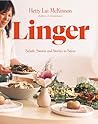
Linger: Salads, Sweets and Stories to SavorLinger: Salads, Sweets and Stories to Savor by Hetty Lui McKinnon
My rating: 5 of 5 stars

I think Hetty McKinnon gets full credit for my significant increase in vegetable intake. A huge fan of Tenderheart: A Cookbook About Vegetables and Unbreakable Family Bonds and To Asia, With Love: Everyday Asian Recipes and Stories From the Heart, I was very excited about Linger. The premise is essentially that almost anything can be a "salad" and "salad" is an opportunity to linger, to be in community with one another. McKinnon's prose is a treat to read--I love the ways that she acknowledges her past as part of her present. And I never review a cookbook until I've cooked at least three recipes. In this case, "Roasted Spiced Carrots and Crispy Tofu with Agrodolce" (138); "Spiced Chickpea and Lentil Salad" (136); and "Bibimbap-Style Gnocchi with Gochujang vinaigrette (115). The last is a favorite. Her flavors are inventive, but not so out there that you get confused. The agrodolce was terrific and now I'm thinking about other ways to use it. Honorable mention goes to "Green Beans, Caponata Style" (205), which is even better the next day! And I'm always down for a recipe that gets rid of the eggplant.

I've mentioned this before, but I also appreciate how well McKinnon's books are INDEXED. It makes it very easy to find a recipe with what I have on hand (especially shelf-stable stuff like Gochujang).
I look forward to cooking my way through most of this book.

View all my reviews

Tuesday, August 27, 2024

2024 #35 Peace, Love, and Fibre (Smith)


Peace, Love and Fibre: Over 100 Fibre-Rich Recipes for the Whole FamilyPeace, Love and Fibre: Over 100 Fibre-Rich Recipes for the Whole Family by Mairlyn Smith
My rating: 4 of 5 stars

Mairlyn Smith, who has recently gained traction for her #FartWalk initiative (yes, you read that right) making the rounds on social media, is a professional Home Economist and former member of the Second City Comedy Troupe. Her winsome personality, that shines through in her videos, is no less present in the text of this cookbook. More than just recipes, Smith offers a practical (and humorous) way to incorporate more fiber in your diet. She warns that an increase in fiber needs to be gradual, coupled with an increase (usually) in water intake.

She weighs in on sugar and salt too, reminding us that table salt is not such a bad thing when you look at iodine needs. Ultimately, she offers a gameplan for the "Big Picture" by offering 10 healthy habits (that range from diet, exercise, to emotional well-being), and suggests picking one a month. After 10 months, you can perhaps find two good habits of your own devising, and you'll have a year's journey toward a healthy lifestyle. And no, I'm not sharing which habit I'm starting with.

There's a pragmatism behind Smith's advice that makes it seem achievable and her joie de vivre leaps off the page, whether it is her prose, or a photo of one of her prized teacups.

Since it is a cookbook, I've done my standard "3 recipes before reviewing" practice, although I have to say it is really 2.5 in this case. I used her "Potato & Asparagus Salad with Basil & Arugula Pesto" as a base recipe to use up some frozen Fennel frond pesto (from Hetty McKinnon), so I can't comment on the pesto in the recipe. The salad itself, however, was terrifically easy to put together (steaming baby potatoes is a great option rather than boiling), and it seems like it would adapt to most green pestos.

Next I made the "Chorizo, Brown Rice, and Lentils" and wow...this was terrific. High quality chorizo from a local butcher and Rancho Gordo's French-Style Green Lentils shone through and the spices were beautiful. While not light, it was surprisingly not as heavy as you might think--which was good since for some reason I felt like August was a good time to make it. I'll be returning to it in the fall!

And then "Traditional Overnight Oats for the Steel-Cut Purists"--I'm new to the concept of cooking overnight oats the next morning (which absolutely makes sense with steel-cut rather than rolled oats), and once again Smith's practicality comes into play -- after a couple 1 minute cycles in the microwave, the concoction sits for 15 minutes while "you run around getting ready for your day."

Each recipe comes with truly helpful and informative nutrition data per serving (newsflash: overnight oats have a lot of calories!), including fat breakdown, cholesterol, sodium, sugars, protein, potassium, and of course... fiber! If you are looking to make healthy changes to your diet and life, Smith offers some really sage (and fun) advice in this book.

View all my reviews

(Crossposted to Lady of Shallots)

Sunday, March 17, 2024

2024 #11 Tenderheart (McKinnon)


Tenderheart: A Cookbook About Vegetables and Unbreakable Family BondsTenderheart: A Cookbook About Vegetables and Unbreakable Family Bonds by Hetty Lui McKinnon
My rating: 5 of 5 stars

For those that know me, the fact that I have pledged to try at least one of the eggplant recipes in this book if I try ALL the other recipes, is probably the most astounding review I could ever give a cookbook. But this is more than just a cookbook. It is a story of the way food both nurtures and cultivates memories and helps us work through our grief to find those tangible things in life that help us hold on in healthy ways. McKinnon writes beautifully about both her parents, but particularly her memories of her father. The book opens with a quote from Francis Weller's The Wild Edge of Sorrow: "Grief and love are sisters, woven together from the beginning. Their kinship reminds us that there is no love that does not contain loss and no loss that is not a reminder of the love we carry for what we once held close." McKinnon's father, Wai Keung Lui (Ken) worked at the then Flemington Markets (now Sydney Markets), the "largest wholesale fruit and vegetable market in Australia." (9) She narrates her childhood memories of a man who was "tenderhearted" and prepared food as an act of love and nourishment for his children, entertaining their whims and desires when he could. When Hetty wanted to try cheese, he brought home Kraft singles and then moved on to blocks of cheddar. And then there was the produce. Hetty McKinnon writes about vegetables with as much passion and interest as one might expect someone to detail a fine wine.

Organized alphabetically by vegetable, starting from "Asian greens" and ending with "Zucchini", McKinnon celebrates what vegetables have to offer, encouraging with a preface for each one, an investment in the pleasures of the vegetable itself, even before digging into the recipes. Since receiving this book a few months ago, I have cooked at least twenty of the recipes, with thirty or forty earmarked for "soon." Some are simple and easy stir fries, like "Stir-Fried Cauliflower with Capers, Chile and Parsley" while others are more involved and might require a visit to your local Asian grocery if you don't already go there regularly! While there is a definite Asian leaning toward many of the recipes, there are a wide variety of dishes represented: soups, loaves, salads, mains, sides, pickles, and even dessert (butternut squash tiramisu--I'm working up to it!)! Favorites thus far include "Seaweed, Tofu, and Sprout Soup"which was one of the best dashi-based soups I've ever made, and the "Cabbage and Kimchi Okonomiyaki," which I could eat every week and never tire of it. Dishes like "Ras el Hanout Cauliflower Wedges with Mashed Chickpeas" will help you make a list of spices to keep on hand as well as making sure you always have a can or two of chickpeas in your pantry. The "Red-Braised Brussels Sprouts and Tofu" reminded me so much of the red-cooked pork my mother used to make that my eyes filled with tears when I took my first bite. If you are new to cooking with seaweed, McKinnon's recipes really help illuminate the wide variety of seaweed and its different uses.

I praised McKinnon's To Asia, With Love: Everyday Asian Recipes and Stories From the Heart for this same thing, but it is important: the index! She indexes everything from breadcrumbs to za'atar. The only thing I couldn't find in the index is Maggi Seasoning sauce, which she seems to love, but I'm wondering if there's a copyright issue there. I went ahead and bought a bottle because I trust this woman--she's given me an even deeper love of vegetables and my dear departed mother is hopefully smiling down from Heaven to see it.

If you are trying to eat more vegetables and are happy with plant-based proteins, this book will give you an endless supply of ideas. If you are more omnivorous, many of the recipes can be used as accompaniments to meat. If you are someone who values meaningful words about food and love, read this book.

View all my reviews

Thursday, August 4, 2022

2022 #22: Japanese Farm Food (Hachisu)

 Cross-posted at the Lady of Shallots

Japanese Farm FoodJapanese Farm Food by Nancy Singleton Hachisu
My rating: 4 of 5 stars

I am working my way through two Japanese cookbooks right now, both of which are filled with insight and craft (my review of Sonoko Sakai's Japanese Home Cooking: Simple Meals, Authentic Flavors coming soon!).

Nancy Singleton Hachisu's Japanese Farm Food is, as advertised, very much about farm life in Japan and the food that grows there. For that reason, it resonates more as a narrative for me than a cookbook, as many of the ingredients are specific and connected to the life of the farm. She is not as free with the substitutions as Sonoko Sakai, but there are a few (blackstrap molasses for kuromitsu, for example). To call her a purist wouldn't seem totally correct, and that's largely because of the beautiful narrative she constructs about life on the farm and learning how to acculturate in meaningful ways. In truth it is inspiring, if somewhat a bit daunting at times.

In addition to spending massive amounts of time preparing food (most of it grown on the family farm), Hachisu also runs an English-immersion pre-school/kindergarten, adorably called "Sunny-Side Up!" Her anecdotes about the children and the photographs (by Kenji Miura) of their wonderful joy are one of the best parts of the book.

Originally from Northern California (Bay Area), Hachisu describes herself as a "town girl" (182), and one gets the sense that everything is indeed relative. She advocates buying local, and one might find themselves frustrated on that front if "local" isn't Japan. As with most cookbooks, the book suffers a bit from inconsistent cross-referencing and incomplete indexing: If a recipe calls for dashi, it often includes the page reference for making the dashi. However, I'm still waiting for the cookbook that indexes ALL the recipes that use dashi (or any other distinctive ingredient to that cuisine). Sometimes the recipes are helpfully grouped together, as is the case with the kaeshi on p. 310, which is necessary for flavoring the dashi of the following recipe, "noodle dipping sauce." But these are nitpicky quibbles. Many of the recipes, particularly some of the salads and vegetable dishes, are accessible for novices, and require only basic staples such as soy sauce and miso. The majority of the dessert recipes are for ice cream (mostly adapted from Lindsey Shere's Chez Panisse recipes), and you'll want to have an ice cream maker (although the patient internet searcher can likely come up with alternative methods). I am curious to try her method for making anko (the sweetened paste made with azuki beans) since I made Sonoko Sakai's version, which was wonderful, but time-intensive.

One of the most valuable parts of the book--and here I'm considering photocopying the pages and laminating them since I suspect I shall return to them often--are the charts and glossaries in the back. The "Vegetables by method" and "Fish and Seafood by Method" charts motivate the cook to actually understand, not just follow, the recipe. It is also very useful should one have to decide based on what's available/in season.

The whole book is beautifully produced, from the lovely "matte" finish of the photography, the easy-to-read font, and the overall design. Her stories--interspersed and as prefaces to recipes--are wonderful to read, and tinged here and there with the wistful and nostalgic, but also the pragmatic sensibility of living and eating in communion with the earth. As I explore the recipes I may make a substitution here or there that Hachisu might frown upon, but I will at least try to approach my cooking with the reverence and sincerity she seems to bring to her craft.


View all my reviews

Wednesday, June 8, 2022

2022 #5 Colu Cooks: Easy Fancy Food (Henry)

 Cross-posted at Lady of Shallots

Colu Cooks: Easy Fancy FoodColu Cooks: Easy Fancy Food by Colu Henry
My rating: 4.5  out of 5 stars

This is the cookbook I've been waiting for.
Easy, Fancy, Food. YES.

This lovely volume is filled with inviting and welcoming text that celebrates humanity as much as food, and in multiple contexts: when we need comfort, when we are on vacation, when we are coping (or not) with a pandemic (that's not a chapter, but it is in the narrative), when we are feeding a crowd, or enjoying the joy of re-imagined leftovers with close friends.

If you don't grow your own herbs, Colu Henry will make you want to start. Her recipes abound with fresh herbs and ingredients that are simple, but fancy in the right context. The Smoky and Spicy Shrimp with Anchovy Butter and Fregola (110) is a new favorite, and I'm here to tell you frozen shrimp works just fine and you should have a bag in your freezer at all times. Recipes like Cumin, Ginger, and Citrus Roasted Salmon with Cabbage, Dates, and Creamy Tahini Dressing pull together what is logical, but special enough that you needed someone to tell you when your own creativity stopped at "salmon and dill"...again. Roasted cauliflower seems to continue its internet popularity (unlike the cupcake, whose days of glory seem to have dimmed), and I will tell you that Henry's Cauliflower with Anchovy Oil and Crispy Capers is the first roasted cauliflower recipe I've actually been excited about--and I've tried most of them. (Also, splurge on some anchovies for your pantry). You can't sell me on the whole head roasted in the oven, no matter what you pour or rub on it--sorry. There are also recipes that can be made with small substitutions or things you might actually have on hand if you are a person with a standard-not-professional pantry (or one cupboard, as in my case). I will admit that my spice collection may be a bit non-standard, so the Fava Bean and Cucumber Salad with Feta & Sumac was a great way to use sumac (and I used edamame--again, something I usually have in my freezer). The Pan-Roasted Chicken Thighs with Asparagus and Charred Scallion-Sesame Salsa were fantastic on that night where my husband (who does the shopping) brought home some asparagus and chicken, with no thoughts about how to use it. Easy Fancy Food to the rescue!

The narrative is a joy to read, and I could really relate as, like Henry, I am not a dessert person. I respect that she included a dessert section full of other people's recipes. I am not a baker, and I loved reading: "..if you too do not bake or don't bake well, I suggest you feel no shame..." Like the recipes and the narrative, the photos are not overly "styled" and offer a sense of bright and wholesome everyday-ness. There are a few style elements I don't love (the italicized prepositions in the titles bugged me) and one small copyediting oversight, but these are truly nit-picky quibbles. But I have to include them so you don't think I work for the publisher (according to the laws of engagement on social media book review sites, evidently).

Truly -- this is a book for the person who likes to cook with interesting and fresh ingredients, but doesn't want to plan a month ahead to get the ingredients shipped from around the world. This is a book for the tired and overworked person for whom cooking is their one creative and artistic outlet, but the "tired and overworked" part means celebrating the "easy" part of "Easy Fancy Food". I plan to make every recipe in this book at some point, and I'm grateful for ease and the chance to make my food "fancy" -- just because. Every meal can celebrate something.

View all my reviews

Friday, June 18, 2021

2021 #10: The New Taste of Chocolate (Presilla)


The New Taste of Chocolate, Revised: A Cultural & Natural History of Cacao with RecipesThe New Taste of Chocolate, Revised: A Cultural & Natural History of Cacao with Recipes by Maricel E. Presilla
My rating: 5 of 5 stars

I bought this book several years ago, along with a molinillo at a (then) small and artisanal chocolate maker in Somerville, MA. I was drawn in by the cover, and didn't really engage with it much before buying it, assuming it would be a "coffee-table" book with recipes. Instead, this is an extraordinary account of the different historical and cultural contexts of cacao, with a clear explanation of the different types of plants, provenances, and uses by chocolate makers. The level of detail, particularly in the botanical section, is extensive, and Presilla manages to find a great tone that strikes a balance between journalism and historiography. This is not a book for chocolate snobs who have no interest in the beginning and end of the journey of cacao. The author offers nuanced advice for how to learn about and appreciate chocolate and is even-handed in her assessments: "...today even the largest commercial makers have hopped on the bandwagon for boutique-type labeling with identification of national origin. This information is helpful to a point, but it is not an infallible clue to quality. The fact that the cacao was grown in an exotic-sounding country says very little about the cacao itself--for instance, the variety or the particular region of origin within a country" (140). Presilla honors the rich traditions of using cacao amongst indigenous peoples in Mexico and South America and provides a very informed cultural understanding of the import of cacao in both anti-colonial and colonial contexts.

And then there are the recipes. Admittedly, one will likely need access to high quality chocolate, nibs, and or cacao beans, but Presilla offers some online sources for purchase (I have not checked these out). The photography is gorgeous, and indeed...it will not be long before I try Maya-Mediterranean Chocolate Rice Pudding of her "Imagined" Maya Turkey Soup-Stew with Cacao and Chiles.

This is a remarkable book-- "illustrated reference" is the description on the dust jacket, but I think that does not adequately describe what it offers. If you have interests in global cuisine and a cultural history of food, this should be part of your library. Definitely one of the most interesting books I have read in the genre.

View all my reviews

Thursday, December 31, 2020

2020 #16: Salt, Fat, Acid, Heat (Nosrat)


Salt, Fat, Acid, Heat: Mastering the Elements of Good CookingSalt, Fat, Acid, Heat: Mastering the Elements of Good Cooking by Samin Nosrat
My rating: 5 of 5 stars

If you loved the Netflix show, think of this as all the entertainment of that and twice the learning. I freely admit to referring to the author as "St. Samin of my Kitchen" and this book is my Kitchen bible. If you are a person who thinks they can't cook, read this book. But really read it--absorb it, take notes. Then PRACTICE. Eventually you will understand that those four elements: salt, fat, acid, heat are TRULY the keys to not just decent cooking, but great cooking. This book gave me a lot of confidence to go "off book" and start improvising more. A few of her recipes are now staples, like the Borani Esfanaj (Persian Spinach Yogurt), which takes me back to my childhood growing up in Los Angeles and frequenting Persian food restaurants with my dad. Also--that recipe alone is worth its weight in gold for this tip: placing cooked spinach on a parchment-paper lined cookie sheet to prevent overcooking and discoloration (see p. 372). I've only just begun to try the actual recipes (the first half of the book is a how-to guide to cooking), but I can also highly recommend the Glazed Five-Spice Chicken (338-9), which is well-worth the overnight marinade.

Nosrat's writing style is welcoming and humorous--Wendy MacNaughton's illustrations keep things light and whimsical but still informative. Nosrat is self-effacing in recounting tales of her own learning and even if you think you don't LIKE to cook--spend some time with this book. You may change your mind.

View all my reviews

Friday, December 25, 2020

2020 #14: Oh She Glows Everyday (Liddon)


Oh She Glows Every Day: Simply Satisfying Plant-Based Recipes to Keep You Glowing from the Inside OutOh She Glows Every Day: Simply Satisfying Plant-Based Recipes to Keep You Glowing from the Inside Out by Angela Liddon
My rating: 4 of 5 stars

Between this one and Liddon's first book, The Oh She Glows Cookbook: Over 100 Vegan Recipes to Glow from the Inside Out, it is this one I reach for more often. Having given a basic primer of pantry ingredients and techniques in the first one, she basically cuts to the chase and gets right to the recipes. The book has a more modern feel to it -- probably the lack of orange and green on the cover and the more elegant font. The cutesy titles persist, but I will tell you that the Green-Orange Creamsicle Smoothie does actually taste like a Creamsicle. My favorite recipe here is the Curried Chickpea Salad, which I could basically eat every day (and frankly, you'll skip the more boring chickpea salad in her first book once you try it). The Best Marinated Lentils are actually pretty spectacular and quite miraculously are single-handedly responsible for making me enjoy lentils. I was not that excited about the "Go-To Gazpacho". The Cast-Iron Tofu is very good, but a bit tedious to prepare. The Oh Em Gee Burgers were a lot of work without the return on investment that I would expect--stick with the burger recipe in the first book. The Comforting Red Lentil and Chickpea Curry is a showstopper and I recommend using the lentil-walnut filling for her "Green Taco Wraps" in actual tortillas, rather than lettuce leafs. I'm not much of a dessert person, so I haven't explored that section.

Overall the book is really useful and a lot of the recipes can be de-veganized (e.g. real cheese) if so desired. I think that smoothies take up too many pages because once you have an inspiration, you can really just improvise a smoothie, but that's a small complaint.


2020 #13: The Oh She Glows Cookbook (Liddon)


The Oh She Glows Cookbook: Over 100 Vegan Recipes to Glow from the Inside OutThe Oh She Glows Cookbook: Over 100 Vegan Recipes to Glow from the Inside Out by Angela Liddon
My rating: 4 of 5 stars

If you had told me a few years ago that I'd ever own a vegan cookbook, I might have laughed. It isn't that I have anything against veganism, but I am a fairly committed omnivore. But my best friend had been exploring moving increasingly toward a plant-based diet, so she got me this book for Christmas. As someone who actually does READ cookbooks, I feel confident in reviewing it here. Liddon has a very approachable, non-preachy style. She gives an overview to different types of oils, flours, and nuts, etc as well as techniques. I could do without some of the cutesy names for the recipes, but Liddon is also fairly self-aware of her tone: "I'm sure it sounds cliché coming from a vegan..." she tells us when she tells us how excited she is about the "Salads" section. The recipes are divided into sections: breakfast; smoothies, juice & tea; appetizers; salads; soup; entrées; sides; power snacks; desserts; and homemade staples. Very useful is the "basic cooking chart" which gives basic cooking times for lentils, quinoa and the like. The food photography is quite nice, and there are photos of Liddon and her husband peppered throughout the book. She does, in fact, seem to glow.

Of the recipes, strong standouts (that I tried) are: Healing rooibos tea, Sweet potato & Black bean enchiladas with avocado-cilantro "cream" sauce (scare quotes mine); Crowd-pleasing Tex Mex casserole, Our Favorite Veggie Burger. The Lentil Walnut loaf that some folks claim is "better than traditional meat loaf" is well...not better or worse, but definitely different. I felt it could have had better flavor, and I think I'd make the lentils in curry next time. I prefer more of the recipes in Oh She Glows Every Day: Simply Satisfying Plant-Based Recipes to Keep You Glowing from the Inside Out, Liddon's second book, but this is a solid cookbook for anyone looking to get into plant-based cookbook.

View all my reviews

Friday, September 11, 2020

2020 #10: Saha: A Chef's Journey through Lebanon and Syria (Greg & Lucy Malouf)


Saha: A Chef's Journey Through Lebanon and Syria [Middle Eastern Cookbook, 150 Recipes]Saha: A Chef's Journey Through Lebanon and Syria [Middle Eastern Cookbook, 150 Recipes] by Greg Malouf
My rating: 4 of 5 stars

Part coffee table book, part travel journal, part cookbook, Saha: A Chef's Journey Through Lebanon and Syria Middle Eastern Cookbook, 150 Recipes is truly a wonderful volume to own. Matt Harvey's photography transports us to Syria and Lebanon, something valued even more so in this travel-restricted time. The rich prose that accompanies the recipes is by Lucy--she recounts their meetings with Arak makers, pine nut growers, peasant bread-bakers, ice cream makers, and more. All of this against a backdrop of smells, images, and sounds that she describes with great beauty, but not romanticized hyperbole. There are good days and then there are the harder days--tales with which anyone who has traveled for an extended period of time will empathize. There are a few slight editorial issues--a misspelling here or there, a word defined after it has already appeared several times--but these are minor. The book is a compelling journey---not just of a "a chef" as the subtitle implies--but also of Lucy. We experience much of it through her eyes, ears, and taste.

Then there are the recipes. I tried the "Swiss Chard with Crisp Fried Onion and Tahini Sauce", "Zucchini and Mint Fritters", "Lebanese Nut Rice" and "Monk's Salad with Garlicky Dressing." Tomorrow I step up my game and make my first kibbeh! And not just any kibbeh: "Zghorta-style kibbeh patties stuffed with cinnamon and pine nut butter." I'm slightly terrified, which is why I am writing this review NOW. At the end of the day, I figure I love all the ingredients in the recipe so if my kibbeh lacks a certain je ne sais quoi, hopefully it will still taste good.

It is worth noting that reading through the recipes will likely make your mouth water. The combinations of flavors seem to bring Lucy's prose to life and you feel lucky to have this touchstone to their travels. Now, if you don't have access to good spice stores, you might feel a bit frustrated. It would seem Chef Malouf is not a fan of substitutes---that's not to say he's dogmatic in his recipes, but what is missing is a "resources" section. You aren't likely to find "pistachio halawa" (for example) or even orange blossom water in your standard American supermarket. Sometimes the harder-to-find (in the US) ingredients are marked "optional" so you can feel ok about making your Lebanese Lemonade Sorbet without Turkish apple tea. But I honestly don't know where to find katalfi pastry or even ground sumac -- that is not to say I won't try! There are also several recipes where you have to make a recipe on another page FIRST. There are times where this is appropriate, but others where if you haven't planned ahead, you will find you do not have time to make two recipes for the price of one.

Overall, however, this is definitely not a cookbook you would ever want in a "Kindle" version. It is a package: the sights and sounds of the the restaurants, shops, landscapes are nestled in between the beautiful recipes. The pages provide beautifully designed backdrops that recall the gorgeous Islamic mosaics and designs that graced their travels. It is an experience. Lucy leaves the reader with the image that helps us understand what is truly important about reading and sharing in this book and its food:

"One by one, people got to their feet and I saw a young man behind me brush a tear from his eye as, old and young, men and women, Muslim and Christian, they started to sing Lebanon's national anthem. And for a few precious moments it was as if the whole of Lebanon was united in one voice."


Monday, July 6, 2020

2020 #7: Jubilee: Recipes from Two Centuries of African American Cooking

Jubilee: Recipes from Two Centuries of African American Cooking: A CookbookJubilee: Recipes from Two Centuries of African American Cooking: A Cookbook by Toni Tipton-Martin
My rating: 5 of 5 stars

To categorize this solely as a cookbook would not even come close to capturing this work of art. It is an exquisitely-written history that intertwines a wealth of research, nostalgia (in the best way), and a "larger vision of African American culinary history" (311) that both embraces and expands beyond soul food and the standard narrative. Toni Tipton-Martin says:
And I have tried to end dependency on the labels "Southern" and "soul," and on the assumptions that limit my ancestors' contributions to mindlessly working the fields where the food was grown, stirring the pot where the food was cooked, and passively serving food in the homes of the master class. (13)
There is no clichéd history here. Instead, Tipton-Martin crafts a story of urban enclaves in Los Angeles, Louisiana kitchens, Civil War plantations, West African villages, "African botanical heritage" (15), segregated black towns in Kansas...all of it, she says, to "help you see some of the ways dishes and styles have evolved over time, spurring your imagination, broadening your perception of the black culinary experience." (17) She picks up the unfinished work of Arthur (Arturo) Schomburg, the Afro-Puerto Rican historian who started an outline that would celebrate "black cooking as an expression of black achievement." (14)

Tipton-Martin sees all the moving parts of history--the shifting narratives, the untold stories, and the hegemonic stereotypes (e.g. Aunt Jemima). I have not yet read her The Jemima Code: Two Centuries of African American Cookbooks, but that is absolutely going on the list of must reads. Jubilee is fully deserving of its awards on merit of the narrative alone, but then there are the recipes...

For the uninitiated (like myself), there are some surprises in store. Despite two lengthier trips to New Orleans, I learned that "'Barbecue shrimp' is just the name Louisiana Creole cooks assigned to shrimp braised in wine, beer, or a garlic-butter sauce." My Italian grandma would have recognized the recipe as what she called "scampi" with...Worcestershire sauce. There are several wonderful meat recipes I haven't tried yet, but I've dug into some of the veggie ones. The "Braised Summer Squash with Onions" pairs rosemary, bacon drippings, and patience for probably the only summer squash I've ever actually enjoyed. The "Broccoli and Cauliflower Salad with Curried Dressing" might make you rethink your dislike of raw vegetables (do make this one ahead, however, unless you like very sweet mayonnaise--the sugar needs time to dissolve and draw out the flavor from the veggies). There are "classics" too, including an absolutely terrific "Country-Style Potato Salad" that will be my "go-to" recipe henceforth. Split into sections on appetizers, beverages, breads, soups & salads, sides & vegetables, main dishes, and desserts, it is hard not to keep this book on the kitchen counter everyday.

What is also very striking is how Tipton-Martin steps back (unlike so many other cookbook authors), and amplifies ancestral voices, colleagues' voices, and steps back in just to put in her own twist here and there. The photos by Jerrelle Guy and Eric Harrison are stunning. The food and its history take center stage.

And back to the barbecue shrimp-meets-scampi. As with many of the sentences she writes, Tipton-Martin packs in a lot of punch that reminds those of us who are not part of the African diaspora why we need to read the book:
When I tied all these diasporic practices together, I observed a culinary IQ that is both African and American, the very definition of fusion cooking. You might think this intelligence is not all that different when compared to other world cuisines. And you would be right. But the idea that African Americans shared these qualities with the rest of society has been ignored for far too long. (italics mine) (15)
And as much as there are common threads, there is also a "distinct African American canon" (14) that celebrates the creative force of hard truths, ingenious spirit, and culinary artistry that is the tapestry of African American food.


Friday, January 4, 2019

2019 #1: Cookbook--Near and Far (Swanson)

Near & Far: Recipes Inspired by Home and Travel

Swanson's narrative is one of privilege, it is true. A lot of the reviews at Goodreads have mentioned this, with varying degrees of annoyance. The book, however, does not pretend. The minute you touch the embossed hard cover and look at the photos, you know that this is a chichi cookbook, not Betty Crocker's Cookbook or The Joy of Cooking. The subtitle does not lie: "Recipes Inspired by Home and Travel." And traveled she has: India, Japan, Morocco, France, and Italy. The photos of the destinations are sometimes so artsy as to feel contrived, but they anchor each section in its own ethos. I haven't yet made any of the recipes, but I am inspired. As a committed omnivore, vegetarian recipes rarely inspire me, but I find her approach to flavors intriguing.

If you are someone who likes hunting down interesting ingredients, you will likely enjoy this book. She isn't writing for someone who does not know anything about ethnic foods, so you will not find explanations and definitions for a lot of the ingredients. I think she could have done more in that regard, and it was a missed opportunity. Overall, however, this is a beautifully produced cookbook, with accessible-but-not-accommodating prose. I'm looking forward to digging in to the recipes.

Cross-posted to The Lady of Shallots


Saturday, June 18, 2016

2016 #3: Atelier Crenn: Metamorphosis of Taste

Atelier Crenn: Metamorphosis of TasteAtelier Crenn: Metamorphosis of Taste by Dominique Crenn
My rating: 5 of 5 stars

This is a gorgeous book from start to finish. Part cookbook, part autobiography, Dominique Crenn's Atelier Crenn: Metamorphosis of Taste is a feast for the eyes, with photography by Ed Anderson, and poetry for the soul (and here we must recognize also the work of Crenn's co-author Karen Leibowitz, whose Mission Street Food: Recipes and Ideas from an Improbable Restaurant (co-authored with her husband, chef Anthony Myint), is probably my favorite cookbook that I've ever "read."))

This is not a book of practical or convenient recipes. It is a book about art. One might classify Crenn's work as "molecular gastronomy" but that flattens the poetry of what Crenn achieves with her creations. Indeed, "poetry" isn't just a fancy overwrought description--Crenn actually offers a poem to accompany her Chef's Grand Tasting Menu at her restaurant, Atelier Crenn. She describes the meal --and the poem changes seasonally with the menu--with lines such as: "Here, the earth proffers its juicy, vermilion gifts/and above the half moon floats, silky and smoky/In summer's green dappled light/the forest radiant with possibility." Having food communicate on the deeper level where poetry can also touch us is what Crenn calls "poetic culinaria."

While the average kitchen may not be fully equipped to prepare the recipes in the book, they will serve as a fount of inspiration for flavor combinations, textures, and plating. Behind her dishes, there is a respect for sustainability and nature as well. She's a fully committed omnivore, but offers, "We must eat less meat, we must eat it more thoughtfully, and we must make it so delicious that our cooking becomes a way of showing respect for the animal that has given up its life for us." This last part echoes the thread that runs through the book--that of cooking as ritual. The compelling description of a day in the life of Atelier Crenn seems almost monastic--the cooks arrive beginning at 9:00 am and follow a liturgy of preparation, cleaning, and sharing a meal together.

The photography alone might make this a "coffee table" book, but it is well worth spending some time with the prose. Crenn and Leibowitz offer us an understanding of symbiosis between food and art. And maybe, just as the amateur painter might be inspired by a visit to the Louvre, a home chef who reads this book might venture into dehydrating quinoa, bringing different cultural flavors together, or simply arranging food in a way that honors both its origins and its possibilities.


Sunday, September 4, 2011

50BC2011 #10:Mission Street Food

Mission Street Food: Recipes and Ideas from an Improbable RestaurantMission Street Food: Recipes and Ideas from an Improbable Restaurant by Karen Leibowitz

My rating: 5 of 5 stars


“Cookbook” doesn’t begin to touch this amazingly honest, engaging, inspiring, and creative narrative about two people, their friends, their perseverance, their sheer luck, and the joy to be had in both dreams and realities.

From flatbreads on a food truck to a full-fledged restaurant, Mission Street Food is a tale told in the words of its two heroes, chef Anthony Myint and his wife, Karen Leibowitz. It is the story of a “start-up” like no other, set on the streets (mainly one street) of San Francisco, transforming a “mom-and-pop” Guatemalan snack cart into a thriving and charitable food experience. The authors aren’t shy about sharing the many bumps in the road, but both Myint and Leibowitz write with an enviable sense of humor in the face of each challenge. Leibowitz recalls opening night on the food truck, as a line of people formed down the block:

“It had never occurred to us that we might have more than a few customers at a time, so we had no system for organizing orders. On the fly, I decided to give each person a letter, which was a big mistake. A lot of letters sound the same, so I spent the night yelling things like “Order D! D as in Depeche Mode!” It was like taking a free-association test in front of a hundred people. I had no cash register, of course, so I kept ones and fives in my front pockets, tens and twenties in my back pockets—a regular carnie.”(p.31).

When Myint and Leibowitz found more permanent facilities for MSF at a “decrepit Chinese joint,” they continued to surmount obstacle after obstacle, all the while creating unique and inspired cuisine, at no profit. One gets a sense the venture was one part grassroots endeavor to two parts spontaneity that would rival 1960s “Happenings.” In amidst the entertaining tales of small victories and near-mishaps, Leibowitz tucks in what ultimately makes this book so very appealing:

“When we got home, I felt exhausted to the point of despondency, but I also felt a little bit sentimental. Anthony had become a chef. I had become a restaurant manager/dishwasher. Our friends were pulling for us. We were incompetent. We were successful. Nothing made any sense. I felt really lucky.” (p. 54).

And truly that’s what this book is about. You need not be a “foodie” or even remotely interested in starting a restaurant in order to enjoy this remarkable project. Myint and Leibowitz are testaments to the value of spirit, energy, friendship, and love. Their story is one of turning dreams into living one’s life to the fullest, rather than waiting for “something to happen.” It is hard not to be inspired by Mission Street Food, and you’ll find yourself smiling and laughing along with the authors. Along the way, you’ll also learn how portion your own steaks from a rib roast, how a CO2 charger might provide 30 seconds of pure joy for your dinner guests, and that jalapeños and snickerdoodles can make excellent bedfellows.

Read this book for the fantastic photographs. Read this book for the excellent writing and the entertaining story. Read this book for the comic strip on pages 37-44. Read this book for recipes that will challenge and inspire you. But most of all, read this book because chances are, at some point, you’ll need a reminder of your own aspirations and possibilities.

(Reposted at http://rebiscooking.blogspot.com)


Sunday, January 11, 2009

Review: Barefoot Contessa Back to Basics

Barefoot Contessa Back to Basics: How to Get Great Flavors from Simple Ingredients Barefoot Contessa Back to Basics: How to Get Great Flavors from Simple Ingredients by Ina Garten

rating: 5 of 5 stars
I've made three recipes from this book in the last week and have found them all OUTSTANDING: Tuscan Lemon Chicken, Pasta with Pecorino & Pepper, and Orange-Pecan Wild Rice. I like Garten's non-nonsense approach to cooking, relying on fresh, basic ingredients. She has several wonderful lists in her book, including "Top 10 Things NOT to serve at a Dinner Party" and "10 no-cook things to serve for Dessert." Her recipes are well-written, and include "tips" to fill in the blanks (e.g. HOW to toast pecans in a recipe that calls for toasted pecans).


This is a great book for anyone who likes to cook, or more importantly, likes to eat!