Showing posts with label scifi. Show all posts

Sunday, November 1, 2026

2026 #38 Psalm for the Wild Built - Monk and Robot #1 (Chambers)


A Psalm for the Wild-Built (Monk & Robot, #1)A Psalm for the Wild-Built by Becky Chambers
My rating: 4 of 5 stars

4.5 stars! Admittedly, this started slowly for me, but I think it is largely due to the fact that the only time I really give myself to read is right before bed. It was perhaps the perfect follow-up to my reading of _Siddhartha_ and strangely similar. Sibling Dex, a non-binary tea monk who may be having a bit of a crisis, is very much a seeker like Hesse's Siddhartha in that they feel a gap in the life they have chosen. Unlike Siddhartha, however, Dex has a companion--the robot Mosscap. I'm not giving anything away given the name of the series.

Once Mosscap entered the narrative I became much more invested. There's a tremendous beauty to this book. The theology and history that Chambers builds is very intriguing. We learn of the "Factory Age" that we might assume has some parallels to our current Anthropocene. Robot consciousness develops (as "an accident") and there is a climactic event/transition wherein robots decide to leave and humans revert to a more agricultural lifestyle, informed by a pantheistic (?) religion, that seems more akin to some indigenous understandings/approaches of/to religion. The world is not devoid of mechanics, but what exists is there in the service of recycling and renewing, such as Dex's greywater filter that they use in their mobile shower as they pedal across the land with their wares.

Oh could we ever use tea monks now. "Everybody needed a cup of tea sometimes. Just an hour or two to sit and do something nice, and then they could get back to whatever it was." (88%).

The book, largely through Mosscap, asks us to consider the purpose-driven life and how much of that defines our humanity. How much do we miss of the exhilaration of consciousness?

This is a book to read with intention, not as you drift off to sleep.

View all my reviews

2026 Reading Goals: 38/60

Wednesday, September 2, 2026

2026 #31 Artificial Condition - Murderbot Diaries #2 (Wells)


Artificial Condition (The Murderbot Diaries, #2)Artificial Condition by Martha Wells
My rating: 3 of 5 stars

I listened to the Graphic Audio version, and unlike others, I didn't care for it. The underscoring felt very gratuitous, although some of the foley and fight sequences reminded me of old radio shows (in a charming way).

Murderbot seeks out the mysteries of its past and finds a friend-bot ("ART"). I liked the premise, and the human characters are more dimensional. We also finally get to meet a "Comfort Unit" (aka sexbot). Definitely a bit more culture-building in this one, so I'm in. There's a lot of techno-speak, which I found tiresome in certain places and probably would have skipped over pages had I been reading it in hard copy.

While I did not enjoy the reading as much, I thought the story overall was more interesting and we certainly get a better sense of all that Murderbot is negotiating as it tries to hone its own identity and autonomy. 3. 75 stars


View all my reviews

2026 Reading Goals 31/60
#192030 Challenge: 2018

Saturday, August 29, 2026

#2026 #29 All Systems Red - Murderbot Diaries #1 (Wells)


All Systems Red (The Murderbot Diaries, #1)All Systems Red by Martha Wells
My rating: 3 of 5 stars

I absolutely see why this popped up in my algorithms after I finished (and LOVED) Andy Weir's Project Hail Mary. I'd heard good things about this series outside of that, so I figured I'd give it a try here at the end of when I actually have a life before school begins. I won't judge it against PHM, especially since it is a novella. Both do share a similar sense of humor.

It is entertaining! I was disappointed in the ending only because I was enjoying what developed between the bot and the crew. The short length was a bit of a let down in that regard. It is a very interesting negotiation of non-human sentience, and I applaud that. Kevin R. Free's reading was quite excellent, and Dr. Mensah became my favorite character. I definitely enjoyed it enough that I've already started no. 2 Artificial Condition, but the only one available via Libby was the Graphic Audio production and I'm already not excited about the abundance of underscoring...

View all my reviews

2026 Reading Goals 29/60
#192030 Challenge: 2017

Sunday, July 26, 2026

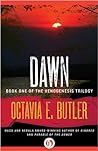
2026 #22 Dawn - Xenogenesis #1 (Butler)


Dawn (Xenogenesis, #1)Dawn by Octavia E. Butler
My rating: 3 of 5 stars

In contrast to the Patternmaster series (and certainly also the Earthseed books), this falls into the category of what I would call more generic science-fiction. That isn't a criticism, but reading this made me realize that I'm less drawn in by aliens vs. humans than her books that bring in more socio-political commentary or dystopia. (I make an exception for Andy Weir's Project Hail Mary which is my favorite book that features an alien. Blame the fact that I'm of the E.T. generation, I guess.)
In Dawn, there's little in the way of world-building, but a lot of species-building (one might guess, with the name of the series). Lilith is an interesting character, but I found her hard to place because she is both an observer of humanity and an actor of humanity. Butler doesn't give us a lot of time to adjust to the other human characters in the book, so I had trouble feeling much toward them other than viewing them as archetypes of different foibles. Maybe that was the point.
Did I enjoy it enough to read the rest of the trilogy? Maybe, but those will go on the back-burner "to read" list.

View all my reviews

Challenges on Storygraph (@rebcamuse):
2026 Reading Goals 22/60
#192030 Challenge:1987

Tuesday, June 16, 2026

2026 #14 1Q84 (Murakami)


1Q84 (1Q84, #1-3)1Q84 by Haruki Murakami
My rating: 3 of 5 stars

Ok, there's a lot to say here, but I'll try to keep it brief. Really this is 3.75 for me, and in places, a solid 4 stars. But for such a long book, I needed more consistency of those 4 star moments. I'm tenacious, which is why I stuck with it, but there were definite times that threatened a "DNF". This was my first Murakami, and I get the impression that it is probably not the best gateway drug (much in the way that Tristan und Isolde was NOT the best "first opera" for me to analyze in college). It was long in a way that I did not appreciate. I feel this way about Robert Schumann's music sometimes.

The premise is VERY intriguing and I will say, if you are not into magical realism or anything related, don't bother with this. I appreciated the lessons about cults. I loved the characters of the Dowager, as well as Tamaru, and weirdly enough, Ushikawa. Aomame had her moments for me, and Tengo, too, but not enough for me to feel satisfied by the ending (when I got there, after 6 renewals on Libby). I also loved Fuka-Eri's "usual style free of question marks."

I read some reviews because I was a bit mystified. Some extoll Murakami's pacing. I cannot agree. There were places that felt like an endurance test. The intertextual references kept things interesting and nerdy-- I need to put together a 1Q84 playlist (or find one that inevitably already exists). I will be forever indebted to being introduced to Janáček's Sinfonietta because of this book.

There seems to be a weird obsession with pubic hair--sometimes ACTUAL pubic hair, and sometimes used as a comparative for head hair (see: Tengo, Ushikawa). Perhaps there's some deeper significance of which I'm not aware -- if so, please let me know. I found the entire three volumes weird in the sex arena, and in some places downright disturbing. I am not titillated in the least by non-consensual sex, even in the service of acting as a spiritual conduit.

Is it imaginative? YES. There are places that felt like imagination for imagination's sake, but others that took me on a journey. The ending was a disappointment, although I understand the lack of resolution to be understood as "infinite possibilities." Is it a love story? Sort of. It lacks the maudlin sentimentality of "Somewhere in Time," but also didn't make me care enough about the two main protagonists.

It is certainly a down-the-rabbit-hole experience, but I feel I would have been happy with something a third of the total length. I've reached out to friends who are fans of Murakami because, as I said, I have the distinct impression that this may not have been the best choice of a "starter" in terms of his oeuvre. I'm definitely game for reading more of his work, but this was more of a marathon than I wished.

View all my reviews

Wednesday, November 5, 2025

2025 #47 The Glass Box (Rolli)

 No review for this one. Suffice it to say it was entertaining, but it needed more context and a better editor.  

Saturday, May 24, 2025

2025 #23 The Martian (Weir)


The MartianThe Martian by Andy Weir
My rating: 4 of 5 stars

I may be in the minority, but I actually enjoyed Project Hail Mary just a bit more than The Martian. I violated my general "rule" that I don't see movies before reading the book, but I barely remember seeing the movie (vague recollections of Matt Damon and a lot of potatoes), so it is almost as if I was tabula rasa.

The "sciency" monologue is far greater in The Martian and frankly, it is hard to beat Rocky from PHM. Mark Watney and Ryland Grace share a similar sense of humor, and while that was comforting in some respects, I had hoped the two protagonists would be more different. Still, the overarching theme of human endurance and the will-to-overcome makes both books great palate cleansers for our current state of affairs.

I'd like to recognize Mindy Park for best supporting character -- Weir does this really well. The strongest parts of the book for me were when characters were interacting with each other, and everyone loves the narrative of the "un-noticed" becoming a hero in their own way. So, cheers to Mindy, for sure. That she actually gets character development too, is a nice contrast to Mark, who joke-nerds his way through his predicament basically throughout the book, until we get the post-narrative diary entries.

And...as with PHM...yes, I cried, dear reader. Even having seen the movie, I cheered along at the parts worth cheering. The Martian and PHM are both studies in human isolation in their own way, and I think that the vastness of space invites this inward inquiry: when faced with an expanse beyond our complete comprehension, we indeed might question our life's purpose if we are just blips on the radar screen of the cosmos.

Wil Wheaton's reading is excellent, and to be fair, I'm sure its similarities with Ray Porter's delivery in PHM made the two books seem even more similar to me. I will say that Porter pulled me in to more of science, however, whereas Wheaton had more of a "yada yada yada" delivery for those of us not invested in the intricacies of surviving in space.

View all my reviews

Wednesday, April 16, 2025

2025 #17 The Last Town (Crouch) - Wayward Pines #3


The Last Town (The Wayward Pines, #3)The Last Town by Blake Crouch
My rating: 4 of 5 stars

This really swings back and forth between 3.75 and 4 stars for me.
No real spoilers here unless you haven't read the other two books in the trilogy, in which case you really shouldn't be reading reviews (any reviews) of this one.

--------------------
Surprisingly, I liked the ending. I even liked the epilogue---I never like epilogues. But, I have questions.

What happened to the solitaire-playing lady and the abbie? Maybe I missed it. I really thought we were going to go somewhere with that--maybe connect it back to Margaret. That was a welcome respite to the relentless violence. I would have rather than have been developed than the saccharine conversation between Ethan and Ben about an idealized future where they'd like to teach the world to sing in perfect harmony.

The first quarter of the book was rough --- much like the endless fugitive scene in the first book (or was it the second?) this one spent way too long with the gory details--and they are truly that, gory.

Teresa gets to join Mae Holland (Dave Eggers's The Circle) in my winner's circle of obnoxious protagonists. The only time I liked her in this book was when she found the chutzpah to tell Ethan the truth and then told him to shut it when he started going all entitled macho man on her. But absolutely cringeworthy was the discussion with Hassler in the jail cell with Ben sitting right there. Have some self-respect, people. I guess maybe some people find that language romantic (Teresa's note, that we learned of in the previous book), but I don't (it isn't that I find it offensive...just doesn't make me feel a strong bond of love between two people...not sure what I was supposed to feel). Also, big UGH on her reasons for staying with Ethan.

I rather loved Kate and Hassler meeting up on the cliff, even if it did feel a bit cliché. David Pilcher's god-complex wore me down a bit, but I have to say that Max Meyers created such a picture in my mind--fantastic voicing.

This was a fun series -- it doesn't have the depth and sophistication of Dark Matter, Recursion, or Upgrade (admittedly, I didn't love the latter)--but it has a pretty good sense of beginning, middle, and end and enough moving parts to hold interest when the story gets too wrapped up in being an action movie.

View all my reviews

Sunday, January 19, 2025

2025 #4 Wayward (Crouch) - Wayward Pines #2


Wayward (Wayward Pines, #2)Wayward by Blake Crouch
My rating: 4 of 5 stars

Really a 3.5 - 3.75 for me.
The second installment of the Wayward Pines trilogy is better than the first, as it is has more dimensions and sub-plots. While it is possible to read the second without the first, I don't advise it. The story is terrific, full stop. What isn't terrific is the weird amount of kink whenever it comes to most of the female characters (and their interaction with Ethan). The big "reveal" scene between Ethan and Teresa almost made me stop listening. Teresa's characterization is inconsistent, and Pam is WAY overwritten (the audiobook probably exacerbates this, but to no fault of Max Meyers, who does a great job).

The insertion of Adam Hassler as a character provides a lot of intrigue and tension, and Crouch deftly interwove that element into the book. I do have to say that I approach the third installment with some trepidation as I enjoyed the not-knowing when it came to Hassler, and I'm hoping that the third book does not rely on tired tropes.

The ending is an excellent cliffhanger and has the intended impact -- I will absolutely finish the series.

View all my reviews

Serious About Series Challenge 2025 - January

Monday, December 16, 2024

2024 #52 Pines (Crouch) - Wayward Pines #1


Pines (Wayward Pines, #1)Pines by Blake Crouch
My rating: 3 of 5 stars

The premise is great, typical of Blake Crouch. However, the chapters upon chapters of Ethan running and rock climbing I could have done without. I almost gave up, but luckily all is revealed and I'm in for the trilogy.

View all my reviews

Sunday, April 21, 2024

2024 #16 Klara and the Sun (Ishiguro)


Klara and the SunKlara and the Sun by Kazuo Ishiguro
My rating: 4 of 5 stars

It means something when the most empathetic character is the non-human one. Klara, as an AF (artificial friend), is even more observant than most, and the lesson is pretty clear (almost from the outset) that if we humans don't observe, don't listen? Then we become rather incapable of empathy.
The book muses upon faith, hope, and love. Klara's faith in the sun is based in hope, but also pragmatic observation and an innocent sense of causation. Josie's mother is hopeful about love, yet lacks faith. Ricky, Josie's pragmatic and "unlifted" friend, perhaps has the strongest faith in Klara as he is able to assist her without really knowing why. Josie is the most human of characters in her determination and courage, but also in her code-switching and mercurial teenagery-ness. Josie's father is a skeptical engineer, but he too has to take a leap of faith in Klara, for the love of Josie.

Ishiguro does not give us all the details. The AFs get only a store as a backstory context. We know there are the lifted and the unlifted children, but we only see the ramifications of that status, not the details regarding how it happens. In this sense, Ricky is one of the most interesting characters in that he represents the folly of societal categories (one is reminded of Dr. Seuss's Sneetches with the stars, and those without stars), as he's clearly one of the most intelligent characters in the novel.

Another lesson from Klara --if only we were all be able to carry the images of our memories and recall them to inform our present understanding. We do, actually, of course, but Ishiguro paints the process slowly and truly through Klara, inviting us to think about our own intentionality and how often we dismiss or suppress our memories because we are not just mere data collectors, but data manipulators.

The ending pushed this away from five stars for me...it felt too much like a saccharine epilogue. We get an explanation of Klara's REAL lesson from the store manager and it all smacked a bit too much of a Care Bears animated special for my taste. I found myself frustrated that the manager herself doesn't get much of a backstory, but Ishiguro has a way of making you accept what he gives you, despite your own desires. In her New York Times Review in 2021, Radhika Jones gets it:

"'Still, when Klara says, "I have my memories to go through and place in the right order," it strikes the quintessential Ishiguro chord. So what if a machine says it? There's no narrative instinct more essential, or more human."

View all my reviews

Saturday, March 16, 2024

2024 #10 Project Hail Mary (Weir)


Project Hail MaryProject Hail Mary by Andy Weir
My rating: 5 of 5 stars

I had very little idea what to expect going in, only that several people had recommended this book to me. I would not have guessed that a dad-joke telling protagonist who is a cross between Bill Nye the Science Guy and Liz Lemon from 30 Rock and his relationship with a spider-legged creature named Rocky would make me laugh and cry, as I rarely do with sci-fi.

The earth-is-in-danger storyline is simple enough, and yes, the unassuming science teacher saving the day might be a basic trope. However, Ryland Grace, a molecular biologist maligned by academia, now teaching junior high, is one of the better written characters I've come across in the genre. Yes, there are moments where his facepalms and self-effacement-in-order-to-explain-scientific-concepts thing got annoying, but his general sense of humor and interactions with other characters--most especially Eva Stratt and Rocky--make him absolutely loveable and engaging. There's a motley bunch joining the party as well -- an avid Beatles fan researcher from UBC whose development of "Beetle" probes named after the Fab 4 play a crucial role in the book, an not-so-much-ex convict who also happens to be an expert in solar energy, a French climatologist who serves as Weir's strongest and most obvious eco-preacher, and several other characters who bring conflict and questions in ways that make the book provocative, not preachy.

The back and forth timeline actually adds a lot to the plot and the character development as well, as does Grace's own recovery from what befalls him.

Ray Porter's reading in the audiobook is an absolute gem, and is largely responsible for why Ryland Grace will stick in my mind as one of my favorite protagonists ever. I know, if I'm honest, had I been reading it in print, I would have flipped past some of the lengthier scientific explanations. Porter manages to pull you in to listen because one gets the sense that while astrophage don't (yet) exist, and there's a lot in the book that requires one to suspend disbelief, there's also a lot of really critical scientific concepts explained in accessible ways. Rarely did I feel like it was just a gratuitous display of street cred (something I find so often in the genre)--instead I found myself wishing I could sit in Ryland Grace's classroom. I thought the melodic sound effects (vocorder? I wasn't sure) for Rocky's speech made a lot of sense in the audiobook (I hear the words are just italicized in the print edition?), and had I copious free time, I might even dig into it a bit more to test its lexicographic legitimacy.

There are several folks on the internet recommending the audiobook over the print, and I think people's mileage will vary on that, but I will say this is one of the best audiobook experiences I've had and the deeper questions of the book are still sitting with me, long after the glow of the sheer pleasure of the experience has dimmed in my memory.

View all my reviews

Thursday, February 15, 2024

2024 #7: Mind of My Mind (Patternist/Patternmaster #2) - Butler


Mind of My Mind (Patternmaster, #2)Mind of My Mind by Octavia E. Butler
My rating: 4 of 5 stars

In this second installment of Octavia Butler's Patternmaster/Patternist series (but written second after 1976's Patternmaster (#3 in the series)), we see that Doro's breeding/inbreeding program has continued, and his efforts are now focused on his daughter Mary, a biracial woman from a poor neighborhood whose telepathic ability surpasses even Doro's expectations. Doro has Mary wed Karl Larkin*, another telepath, whose abilities are strong, but don't quite equal Mary's. (*I'd be curious to know if there is any significance to Larkin being both this character's last name and the protagonist's daughter in Parable of the Talents.

After enjoying Wild Seed, I admit that the jump in time left me a bit disappointed because I really wanted to continue the story of Anyanwu and Doro, and while the former is present in this book, her story is no longer centered. However, there is a nice parallelism in how Mary gains the upper hand (NOT with the same ramifications) as Anyanwu does in the first book. Anyanwu compromised and interrogated Doro's status as the antagonist at times, and that happens less in Mind of My Mind, although the characters are have the trademark multidimensionality that Butler did so well. We briefly meet one of the characters who is a significant reference in the next book in the series, Clay's Ark, which I've already read.

Robin Miles's performance offers a certain even-handedness that serves the narrative well, as well as the characters of Mary and Doro. There were times where things felt a little too flat, but also underscored the amount of mind control happening at any given moment.

Overall it is a worthy sequel to Wild Seed and while I have not read the entire series, I think it is likely an important "origin story" that explains the "Patternists" who are one of the major groups featured in Patternmaster, the last book chronologically (though published first).

View all my reviews

Thursday, November 23, 2023

2023 #44 The Terraformers (Newitz)


The TerraformersThe Terraformers by Annalee Newitz
My rating: 5 of 5 stars

In all honesty there were long passages wherein I never thought I'd give this book five out of five stars, but the plusses definitely outweigh the minuses for me. This is an incredibly imaginative, yet very real, book. Newitz has a gift for world-making, but also weaves in extended metaphors that are occasionally heavy-handed, but too relevant to ignore. In some ways, there’s a sense that we are all part of some cosmic and cyclical raison d’etre to build and destroy and rebuild. On the other hand, there’s also a hope for taking two steps forward without the compulsory step back.

Fans of Octavia Butler's Earthseed series (e.g. Parable of the Sower ) will appreciate the "ERT" (Environmental Rescue Team) for its idealism in a dystopic context. The characters are diverse in shape, gender identity, hominid status, and Newitz challenges the idea of human vs. animal. Frustratingly, however, just as one gets attached to characters the story shifts forward in time. This is effective in demonstrating generational legacy, but leaves a hollow space, particularly in the case of the first protagonist, Destry, and her friends in La Ronge. This was a similar complaint I had of Olivia Wolfgang-Smith's Glassworks, but The Terraformers works better in terms of continuity as it serves a larger statement about some inevitabilities of humankind. Despite the darker conclusions, the book is hopeful in some ways as well, not completely reliant upon dystopic tropes of ecological demise.

The acknowledgments are an inspiration--Newitz did their homework. While I don't have the expertise to fact check every idea in the book, it is rich with vision and foresight. Newitz asks us "what if" with just enough verisimilitude that we want to seek out the answer.

View all my reviews

Tuesday, October 10, 2023

2023 #41: Landscape with Invisible Hand (Anderson)


Landscape with Invisible HandLandscape with Invisible Hand by M.T. Anderson
My rating: 5 of 5 stars

Full disclosure: I know the author.

If Salvador Dali and H.G. Wells birthed a novella together, this is what I imagine it might look like. It is a model of crafting dystopia, wherein humankind seemingly has welcomed our vuvv overlords, and "creativity" becomes the currency of survival--at least for a time. Seemingly very few stones are left unturned as the book takes aim at the climate crisis, capitalistic inequity, voyeurism of social media...just to name a few.

While marketed as a book for young adults, I think anyone who enjoys satirical dystopian fiction would enjoy this. My only issue was that it seemed too short--I didn't get to invest deeply in any of the characters, but as they are stand-ins for you, me, and possibility, I guess that makes sense.

View all my reviews

Sunday, August 20, 2023

2023 #30 Recursion (Crouch)


RecursionRecursion by Blake Crouch
My rating: 4 of 5 stars

Memory. Dreams. Reality. All are questioned in Recursion. If you had the opportunity to unmake a reality by entering a memory, would you?

As with Crouch's other books in the genre (Dark Matter, Upgrade), Recursion tests the limits of science and imagination as measured against our understanding of reality (and for some of us, science itself). In the background is always the suggestion of a truth--perhaps metaphorical--that drives our decisions as humans.

One might see this as a love story, as the focus is on two characters: Barry and Helena, and this becomes increasingly the case as the book progresses. There's a bit of a Twilight Zone phenomenon here, and fans of time loops will enjoy (note: the "time loop" here is more complex than your average, run-of-the-mill time loop, which saves the narrative). Even with the inventiveness in the narrative, the "recursion" aspect did start to wear thin, but there was no question of finishing the book. Readers who need/enjoy everything wrapped up in a bow at the end may be disappointed, but to answer all the questions would have undermined the major premise of the book.

View all my reviews

Wednesday, December 28, 2022

2022 #39 We Travel the Spaceways (Black Stars #6) - LaValle


We Travel the Spaceways (Black Stars, #6)We Travel the Spaceways by Victor LaValle
My rating: 4 of 5 stars

Of the Black Stars series, this might have been my favorite. More magical realism than sci-fi given the proportions of the story, it is easy to fall in love with "Grimace", the protagonist. There's a pretty essential "plot twist" that moves the story into a new world, and the only real regret is that we never get to see it play out. This is one story that could benefit from being the length of a novel. We don't have enough time to recover from the reveal to invest in its meaning. But that's a small criticism. This is a worthy listen, tinged with humor (both sardonic and not), and a story that will stay with me for awhile.

View all my reviews

Tuesday, December 13, 2022

2022 #36: Parable of the Talents (Butler) - Earthseed #2


Parable of the Talents (Earthseed, #2)Parable of the Talents by Octavia E. Butler
My rating: 5 of 5 stars

While there were aspects of this book that I did not enjoy as much as Parable of the Sower, in some ways this sequel is absolutely necessary. In it we discover the true costs paid by Lauren Olamina, and see multiple perspectives. As with Sower, it is a tough read and Butler does not sugar coat the violence and destruction. I found the voicing of Larkin on the audiobook left me rather unsympathetic to her character, although as Larkin's narrative becomes more balanced and experienced, this changed a bit. As with the first book, this one is frighteningly prescient--so much so that I double-checked to make sure the book was completed by Butler herself, not someone ghostwriting after 2016 (Butler died in 2006, and the book is from 1998). The character of Andrew Jarret will be familiar to many modern readers in the U.S--although again, this book was published in 1998.
Butler leans in to her descriptions of enslavement, and a lot of the hope of Earthseed seems replaced by a battle for survival. This is not altogether a bad thing and drives home a larger point about how hope can easily morph into something else. Butler isn't doing it for shock value, but instead to throw into high relief the tension between humanity and humanness. Everyone manipulates, and we as the readers are left to try to fathom the many reasons behind those manipulations.


View all my reviews

Thursday, September 15, 2022

2022 # 30 Clap Back (Hopkinson) - Black Stars #5


Clap Back (Black Stars #5)Clap Back by Nalo Hopkinson
My rating: 4 of 5 stars

This was a trip--and I mean that in the best of ways and not to imply it was frivolous, either. With a touch of Garcia Marquez-style magic realism, it occupies an interesting space that does not fully occupy sci-fi or fantasy. There is a bit of fragmentation that I found frustrating in such a short narrative, but the points are clear. I liked the clear familial connection and illumination of heritage and legacy, as well as the subtly acerbic humor. A performance artist facing off against a haute nanocouture fashion designer makes for all sorts of interesting subtexts. The next logical steps are brought into the plot, but here is where I wished it had been a novel instead of one story, because it seemed too hasty a retreat from the ramifications of it all.

View all my reviews

Saturday, September 10, 2022

2022 #27: These Alien Skies (Rwizi) - Black Stars #5


These Alien Skies (Black Stars #4)These Alien Skies by C.T. Rwizi
My rating: 4 of 5 stars

This started off a bit slowly for me, so I think I detached from some essential details at the beginning, as well as other less essential details (I didn't realize Msizi was he/him until three quarters of the way through). That said, it picked up speed and I very much enjoyed the plot twist, which opens the door for much deeper questions than could be contained in a short story. It is an interesting blend of disaster/stranded scenario, with an expansive look at technological evolution and mythologies that have deep connections to African spiritualities. I enjoyed it, but felt the flow was a bit uneven at the beginning--although I respect very much Rwizi's focus on character development through limited narration. Indya Moore's performance is solid, particularly in giving voice to Msizi's anguish, when it is finally fully revealed. As with other works in the Black Stars series, galactic Africa is a close reality, using themes of love, loss, and homeland, not to suspend our disbelief, but to speak truths if we choose to listen.

View all my reviews