Showing posts with label nuns. Show all posts

Monday, September 7, 2026

2026 #32 Blessed Water (Sister Holiday #2) - Douaihy


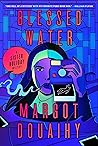
Blessed Water (Sister Holiday Mystery #2)Blessed Water by Margot Douaihy
My rating: 3 of 5 stars

3.75 stars
While I'm still invested in the series, Blessed Water didn't quite work for me as well as its predecessor Scorched Grace. With the first book, I noted that everything seemed to accelerate at the end for the sake of resolution, and that was also the case here. But the main issue I had is that the elements of the story seemed to be uneven in how they popped up. Sister Holiday's brother makes a weird appearance, which is welcome if he's going to stick around, but seemed quite extraneous to the mystery. We don't really get any more reveals about her shady past, although "Nina" comes through a bit more.
There are some subtle clues that I got only after reflecting on the story, so I enjoyed that. Sister Holiday's foul mouth is fine, but her penchant for violent thoughts, particularly against Detective Grogan and the purposeless Alex, got a bit tiresome (just overdone, I would say). Her relationship with Riveaux develops nicely, and holds a lot of promise.
You don't need to have read the first one (there are plenty of references to it), but I'd recommend it before launching into this one. A good installment, and I look forward to seeing where this goes.

View all my reviews

2026 Reading Goals 32/60

Saturday, August 29, 2026

2026 #28 Small Things Like These (Keegan)


Small Things Like TheseSmall Things Like These by Claire Keegan
My rating: 4 of 5 stars

The writing here is beautiful. Keegan manages to do so much with just a few words. There's little in the way of hyberbole or superlatives, but there is a clean rhythm that is almost poetic and draws you in. It is a touching story, but also relatable in how most of us face moral quandaries at one point or another. Bill Furlong is just a coal merchant delivering fuel to a Magdalene convent laundry in Ireland during the 1980s. But over just a few pages (it is a novella), we start to walk with him. We feel what he feels, and we see what he sees. You can almost feel the knotted tension forming in the pit of his stomach as he grapples with what he's witnessed at the convent. This is a very good book about the "small things" that can be opportunities to test or own moral courage.

View all my reviews

Challenges 
2026 Reading Goals 28/60

Monday, March 10, 2025

2025 #10 Council of the Cursed (Tremayne) - Sister Fidelma #19


The Council of the Cursed (Sister Fidelma, #19)The Council of the Cursed by Peter Tremayne
My rating: 4 of 5 stars

The historical backdrop for this installment is the Council of Autun (in present-day France)-- c. 670-- that was convened under Bishop Leodegarius (Leodegar) to regulate the implementation of Benedictine Rule. The Bishop is a character in the story. Most significantly, a central area of focus was banning the compatres (special companions/spouses) for monks, a practice we know from Fidelma was still accepted in Ireland (Hibernia), although not without challenge. In the historical note, Tremayne defends his interpolation of wives of clerics being sold into slavery, albeit citing much later actions by Popes Leo IX and Urban II.

Some of the characters felt a bit overwritten -- the imperious Abbess Audofleda and Lady Beretrude, especially. Valretrade, on the other hand, often faded into the scenery, which was unfortunate given her role in the story.

However, this particular volume excelled in parsing regional differences not just in beliefs, but also customs, not just between Celtic regions and France, but even Franks vs. Burgunds. King Clotaire (aka King Clothar III) is another historical figure, who Tremayne only gives voice to toward the end, but it is effective.

Returning characters include Abbot Segdae, and from the previous book, Verbas of Peqini, who some may recall did not part company with Fidelma on good terms.

The mystery itself follows a fairly common formula (used several times in the series) wherein Fidelma is called to investigate a murder that seems obvious, but is not in the least (hence, a story). The reveal at the end was blissfully short relative to Fidelma's usual dramatic and drawn out conclusions, and Tremayne seems to be getting more comfortable in allowing the main protagonists (we can include Eadulf, sometimes) to be in harm's way as the series progresses.

View all my reviews

Monday, February 3, 2025

2025 #6: Dancing with Demons - Sister Fidelma #18 (Tremayne)


Dancing with Demons (Sister Fidelma)Dancing with Demons by Peter Tremayne
My rating: 3 of 5 stars

This particular installment of the Sister Fidelma series digs into the tensions between the "old ways" and the "New Faith" with much more detail than the previous books. While occasionally tedious to hear it explained via audiobook, the additional context adds a complexity and richness to the world of Fidelma that is more than just Druids vs. Christians. The plot, however, is very slow, and the reveal (in typical Fidelma fashion) takes almost 40 minutes in the audiobook. The motive itself does provide some twists and turns, but the answer to "whodunnit" was so complex and full of weird afterthoughts that I wasn't that interested in the end. This is often the case when there's an "obvious" murderer at the outset -- in this case Dubh Duin, chieftain of the clan Cinél Cairpre, who cannot unfortunately provide any defense or otherwise since he seems to have taken his own life after seemingly killing the High King Suchnussach in his bedroom. All is, as you might guess, not what it seems. This is the situation in which Fidelma finds herself.

Happily, in terms of character development, we start to see an increase in Fidelma's self-awareness, particularly of her treatment of Eadulf, who also seems to be coming more into his own.

View all my reviews

Series About Series Challenge 2025 no. 2 February

Thursday, September 5, 2024

2024 #37 The Outlaw's Tale - Sister Frevisse #3 (Frazer)


The Outlaw's Tale (Sister Frevisse, #3)The Outlaw's Tale by Margaret Frazer
My rating: 4 of 5 stars

The third installment of Margaret Frazer's Sister Frevisse series, The Outlaw's Tale is the best of the first three. This is my first time going to an audiobook for a volume in the series, and the experience was overwhelmingly positive. Susan Duerden's reading is excellent, and her voicings make the characters come alive.

Particularly striking in this book are the female characters who, very much beholden to their time, still manage a subtle defiance that flies under the radar. Frazer* doesn't resort to a clichéd feminist who is self-righteous and outspoken (not that it is a problem, but it gets tiresome as a trope), but instead illuminates what must have been much more common behavior in the Middle Ages and Renaissance. After all, when faced with a sword, even the most strong-willed might step aside if not equally armed. (
*Frazer = sadly deceased Gail Frazer with Mary Monica Pulver/aka Monica Ferris)

Sister Emma grates on our nerves and I did find dragging out her illness to be a bit tedious, but the audiobook really brought out the subtle and dry wit that accompanies much of Dame Frevisse's inner thoughts, particularly in regard to Emma. After the last book being VERY obsessed with the sickness that had taken over the convent, I was not enthused about a constant return to Sister Emma's "rheume."

There are some wonderful descriptions, including that of Dame Frevisse's uncle who has a "look about him that he belongs where he was." For whatever reason, the audiobook seemed to highlight these particular moments of character definition and description, and it is delightful.

Dame Frevisse has more opportunity for character development here because she's away from the convent, and she becomes embroiled (embroils herself, really) in a situation involving her cousin. There is a lot of self-reflection in regard to the choices she makes and that helps give her more dimensionality than was revealed in the previous two books.

I'm more excited to continue the series than I was, and I hope that the rest of the series continues with the same level of character definition and plot complexity. Unlike book 2, The Servant's Tale, which had so many characters it was hard to stay focused, this story does a much better job of focusing on a few key characters, with a good pacing of introduction to new ones, and actually threw me off the scent of whodunnit, so brava!

View all my reviews

Saturday, July 13, 2024

2024 #24 A Prayer for the Damned -- Sister Fidelma #17 (Tremayne)


A Prayer for the Damned (Sister Fidelma, #17)A Prayer for the Damned by Peter Tremayne
My rating: 4 of 5 stars

People have gathered far and wide for a wedding in Cashel.
The story is fairly political at the outset--we learn about a group of Saxon brothers (Noavan, Berrihert, and Pecanum) seeking asylum and refugee status and Eadulf is asked to vouch for them. The main antagonist is Bishop Ultan, a misogynistic zealot who is very much against conhospitae and any other more progressive interpretations of Christianity. Most interesting is that we learn more about Fidelma's own views of her faith and choice to be a Sister. There are more elements of character development and intrigue than in some of the earlier installments of the series.

Tremayne also fills in details of medieval Celtic law that he has introduced in earlier volumes, such as the troscud, the ritual fast "to ensure the defendant accepts judgement." We are given details about the nuanced process--if the defendant agrees to settle and the plaintiff is notified and continues to fast, that forfeits the claim! These little legal details actual come to play an important part in the story. Funeral rites are also explained in detail as are cultural details tied to the Fenechus, the Brehon law system.

As Fidelma herself notes, it is an interesting case because there are so many suspects with a motive, at least for the first murder. That said, the actual culprit seemed a bit far-fetched for me and it relied upon a lot of information not revealed in the book. Still, definitely a good read and rewarding for those who are reading the entire series.

View all my reviews

Tuesday, June 18, 2024

2024 #23 The Servant's Tale - Dame Frevisse #2 (Frazer)


The Servant's Tale (Sister Frevisse, #2)The Servant's Tale by Margaret Frazer
My rating: 3 of 5 stars

A good second installment in the Sister Frevisse series, probably more of a 3.5 or 3.75 for me. The servant, Meg, works for the nuns at St. Frideswide as a scullery maid. Her husband, the drunken Barnaby, is allegedly killed in an accident when his cart collides with a troupe of actors. Soon to follow are two more deaths, and the acting troupe is in the frame. Frazer highlights the social and class biases at play against the troupe and we get more character development of Sister Frevisse and the head of the convent, Domina Edith, as well as Dame Claire, the apothecary/medical person for the convent. I found the development slow, as many pages are given over to sitting around dead bodies, although this does prove important to the story. It is probably best read in just a few sittings to keep track of some of the smaller details, not all of which necessarily lean toward the "whodunnit" aspect, but provide a lovely and clever sense of connectivity. Motives seem weak for all possible suspects, and that is a bit frustrating as we don't learn the actual motive until the very end, which always seems a bit of a cop-out to me. There are not a lot of clues in this one--but plenty of deception.

View all my reviews

Saturday, May 25, 2024

2024 #21 Master of Souls - Sister Fidelma #16 (Tremayne)


Master of Souls (Sister Fidelma, #16)Master of Souls by Peter Tremayne
My rating: 4 of 5 stars

I do recommend NOT studying the list of principal characters too closely before reading the book, although I don't know that it really spoiled much for me. This volume picks up after the events in The Leper's Bell, and the series as a whole seems to have more continuity now. Unfortunately, my own read of The Leper's Bell was a good long time ago, so I probably should have reread it...it isn't totally necessary, but I would have had a stronger connection to some of the characters, such as Gannica. I'll leave off too much plot description because it could very easily lead to spoilers, but the political strife between the Uí Fidgente and Cashel continues, despite the fragile peace under Donennach.

On the whole, the character development continues to mature. Tremayne uses Fidelma and Eadulf to show varying perspectives on Christianity--Fidelma is tolerant of the old ways, making space for "finding God in his own way" (203) in deference to the proud Pagan Gáeth. Eadulf, on the other hand, has the fervor of a young convert, and tends to be judgmental and one-dimensional in his thinking (occasionally).

I was particularly interested in some continuity of what seemed to be minutiae. Tremayne revisits a chant "Regem regnum rogamus in nostris sermonibus" which is sung in two languages to a "Gallic" chant melody, and this same song also appears in The Monk who Vanished, supposedly composed by one Colmán moccu Clusaif/mac Uí Clusaim who helped his people during the threat of the Yellow Plague. I was unable to find an actual historical person by this name, but my guess is that there is a model here for Tremayne. These little details, however, keep me coming back for more. I've started a list of concordances that I may turn into a wiki at some point.

The copyediting and editing is still not great, however (some library patron took to the copy I read with a pencil, thankfully). We also get unnecessary repetition, such as when we are told "Eadulf, who knew something of the healing arts..." (193) when that has already been on display earlier in the book. There does seem to be a little less repetition of Fidelma's status as a dalaigh, qualified to the level of anruth, and when she can sit in the presence of a king, etc. etc within a single volume now, so that is an improvement.

The development was slow in this one, but things get moving rather quickly once Fidelma, Conrí, and Eadulf set sail for an island. The details regarding the scriptorium and copying are interesting, and there are some more colorful characters including Slébéne, chief of the Corco Duibhne. I'm very glad that Conrí, who we first meet in Badger's Moon, I believe, seems to have a returning presence in the series. He is one of the more complex characters in the narrative of the Uí Fidgente.

Overall a really good installment and I'll looking forward to learning more as the political intrigue is bound to return.


View all my reviews
Saturday, April 13, 2024

2024 #14: Whispers of the Dead (Tremayne) - Sister Fildema #15


Whispers of the Dead (Sister Fidelma, #15)Whispers of the Dead by Peter Tremayne
My rating: 3 of 5 stars

In this second collection of short stories in the Sister Fidelma series (Hemlock at Vespers is the first), we get three original stories, and the rest have appeared elsewhere. This can be frustrating for the already-initiated. I'd love to have a "dossier" or bio of Fidelma in the beginning -- she's a dalaigh, qualified to the level of anruth, etc, etc. so that these details could be left out of every story. But, I get it -- most short story collections are like this, but when they all involve the same character, it can feel tedious to go through it each time, in each story. I understand it in the books--that way they can be read out of sequence.

That aside, Fidelma fans may appreciate the appearance of characters such as Abbot Laisran, Fidelma's distant cousin/friend (not sure? varying descriptions), who appears in three different stories in the collection (see also "A Canticle for Wulfstan" in Hemlock at Vespers). Abbot Colmán, too, appears elsewhere in the Fidelmaverse. One of the more interesting stories for those wanting more of Fidelma's backstory is "The Blemish"--it is a bit of slog unless you love socratic debate, but it is nice to see Fidelma as a young law student in examination with THE Brehon Morann (of whom we hear in almost every book). Eadulf only makes one appearance in the last story, "The Lost Eagle" (and strangely, he doesn't speak). I enjoyed "The Banshee" because one of the most interesting aspects of Fildema's character is how she has to negotiate Christianity and the old religion, without dismissing the latter wholly as "superstition" and acknowledging the powertripping aspects of the former. "The Fosterer", new to the collection, is particularly sad, as no one really "wins" at the end.

The collection would work well for someone not that familiar with the series--it definitely stands alone, and readers who follow the chronology of the series might not appreciate the disruption. It is interesting to see all the different contexts, however, and amusing to see that the stories have previous appeared volumes ranging from Great Irish Drinking Stories to The Mammoth Book of Ancient Roman Whodunits.

View all my reviews

Monday, March 18, 2024

2024 #12 Badger's Moon (Sister Fidelma #13)- Tremayne


Badger's Moon (Sister Fidelma, #13)Badger's Moon by Peter Tremayne
My rating: 4 of 5 stars

NOTE: Small spoiler ahead.


"...you would do well to remember that this land is not separated from the rest of the world, but shares the sins of humanity in equal proportion. "(137)

These words, uttered by the character of Brother Dangila, are but a sample of the increased depth in this installment of the Sister Fidelma series. Brother Dangila and two of his colleagues are three "strangers" from the Kingdom of Aksum, which reached its greatest power in the sixth century, and had begun to decline in the time of Fidelma. The Kingdom occupied what is now Northern Ethiopia and Eritrea, and parts of modern Sudan, if internet maps are correct. The book (rather gently) brings in themes of racism and xenophobia, and it the quote above is one moment where even Fidelma must confront her implicit biases.

The plot develops rather slowly, but there's a lot more nuance built into Fidelma's character, not only in the way she uses her role as a dálaigh as a coping mechanism as she is experiencing postpartum depression but also how she really is interrogating her multiple identities as an emblem of jurisprudence, sister to the king, and now, a mother (apologies if you read the series out of order). There are perhaps a few too many characters and families to keep track of, but most intriguing are Liag the apothecary and Conrí, war chief of the Uí Fidgente. And there are, of course, the customary hothead soldiers/warriors that seem to feature in all the books. The plot has many twists and turns, but generally was not enough to hold my interest. Luckily, I was so surprised by the next-level themes in this particular book, that I kept going. The book ends (the epilogue, anyway) on a cliffhanger...the mark of a true and secure serial!

It has been rewarding to read the series in order because one gets the sense that Tremayne is trying things on for size. I hope the greater character development and depth continues to be part of this series.

View all my reviews

Wednesday, August 23, 2023

2023 #31 The Haunted Abbot (Sister Fidelma #12) - Tremayne


The Haunted Abbot (Sister Fidelma, #12)The Haunted Abbot by Peter Tremayne
My rating: 3 of 5 stars

For anyone not reading the series in order, there is a mild spoiler below.


Fildelma, now Eadulf's ben cahrrthach, accompanies him to his Saxon homelands to Aldred's Abbey, where Eadulf has received an urgent summons from his old friend Brother Botulf. While warned that the abbey is home to great evil, they journey through perilous weather to arrive at the abbey only to find Botfulf dead and the abbot in charge to be a tyrannical misogynist.

The first half might be more aptly called a "Brother Eadulf" mystery than a Sister Fildema mystery, and some may find that more pleasing than others. Sadly, given than readers have waited eleven prior installments for Fidelma and Eadulf to be more than companions, this book does little to develop their relationship (one might argue until the very last sentence of the book). In what is probably the most chaste representation of a couple I've ever encountered, the final page seems almost to say: "I'll get to them in the next installment, promise!". I guess I will find out.

There's a supernatural tinge here, which of course faithful Fidelma readers will know always holds some other explanation. The characterization is a bit more complex across the board than in some of the other books. Allies can't be trusted, there are several folks who aren't quite antagonists, but neither are they allies, and as always there are mistaken identities. Aldhere, an outlaw, has a rich backstory that provides him with a certain depth and nuance of character. Women get very little airtime (partially due to the setting of Abbot Cild's vehemently male-only abbey), save for a peasant girl named Lioba, the Abbot's wife (in memoriam), and Bertha, the "woman" of Aldhere.

What is most refreshing in this particular book is that we get more sense of Anglo-Saxon history in the Heptarchy: the kingdom of Mercia, vs. East Anglia, etc. Much is made of the different systems of justice, not just between Christian and pagan, but more specifically between that of Eireann and Saxon. As I cannot speak to authority on either culture, I will simply say that there is a clear implication as to which is more enlightened (which will not come as a surprise).

The story benefits from a few different locations--the abbey, outside the abbey, and the farmhouse of 'Mad' Mul. There are some labyrinthine passages--both actual and metaphorical--that help keep the narrative alive. The arrival of Sigeric, high steward to Ealdwulf, King of East Anglia, provides a bit of a jumpstart just as things start to lag a bit, as does a murder just before the end of the book.

View all my reviews

Saturday, August 19, 2023

2023 #29: Our Lady of Darkness (Sister Fidelma #10) - Tremayne


Our Lady Of Darkness (Sister Fidelma, #10)Our Lady Of Darkness by Peter Tremayne
My rating: 4 of 5 stars

cw: sexual assault

Tremayne seems to have hit his stride with this tenth installment of the Sister Fidelma series. Brother Eadulf faces the noose for a crime he did not commit and Sister Fidelma must race against the clock to prove his innocence. The red herrings are plentiful here, some more obvious than others. As with Valley of the Shadow, if memory serves, evil is spread far and wide, not just focused on one person. There are helpers, of course, along the way, but sometimes they are a bit too implausible, such as the Apollo-like entrance of the Cashel guards near the end. Where these book still falter for me is the ever-present "court" scene being the centerpiece and method for Fidelma's revelations. I get that she's a dalaigh, but in this particular instance it was particularly frustrating because she does an "almost" reveal in a different location (with an audience far more interesting than the typical peanut gallery), but then no...we have the formal (and formulaic) grandstanding that appears in every novel. I'm just waiting for something more interesting to happen, but I think I will be disappointed.
Outside the Fidelma-a-la-Perry Mason aspect, however, this is probably the strongest book of the first ten in the series. I will say that more recent audiences should be aware that sexual assault plays a very big role in this book, so consider that a content warning.

View all my reviews

Tuesday, August 8, 2023

2023 #26 Scorched Grace (Douaihy) - Sister Holiday #1


Scorched GraceScorched Grace by Margot Douaihy
My rating: 4 of 5 stars

If nun mysteries are a sub-genre, then queer-ex-punkrocker-nun mysteries must be a sub-subgenre. And we are better for it. Margot Douaihy's Sister Holiday is as engaging a sleuth as you will ever meet--she has a dark past like Luther (the cop, not the monk-turned-Protestant icon), the chutzpah of Vera, and some certain original je ne sais quoi that made this a very enjoyable read.

Douaihy, who has published several collections of poetry, has jumped into the genre with welcome audacity. Set in New Orleans, at a Catholic school run by a small cadre of Sisters of the Sublime Blood, the book is brimming with humidity, sweat, music, smoke, and all the distinctive sounds and smells of New Orleans. The characters are bold, although there were times I felt Sister Honor and Rosemary Flynn were overwritten. Most intriguing is Detective Riveaux who tangos with Sister Holiday as equal parts protagonist and antagonist, depending on the context. Douaihy's gift of language sets this apart from a lot of offerings in the genre, and sometimes descriptive language pours forth like an exploding geyser when you least expect it. But it makes for amazing multi-sensory grit.

She slowly reveals just enough of Sister Holiday's secrets to make us want the next installment. Where the rhythm became a bit too rushed is at the end. When we finally learn who has set the fires and committed the murders there's too much that doesn't get explained. I could offer more nuance in that critique, but I'd have to post spoilers and I'd rather not.

This is a fresh and unique heroine--extremely flawed, but heroic all the same. I hope we get a series because there's a lot to unpack in this character, and Douaihy writes a great mystery.

View all my reviews

Saturday, June 24, 2023

2023 #18: The Spider's Web (Tremayne) - Sister Fidelma #5


The Spider's WebThe Spider's Web by Peter Tremayne
My rating: 3 of 5 stars


For reasons I can't quite discern, the front matter (often essential for a Fidelma book) is put at the end of the Kindle edition. This was rather unfortunate as this fifth installment in the series definitely benefits from a preview of the Principal Characters. Not unfitting for the "web" Tremayne sought to create, but a headache for readers--particularly those for whom medieval Celtic names are rather foreign.

The beauty of the valley provides a fitting contrast to the evil operating within Araglin. As with several Fidelma stories, there is a character who stands accused of two murders (just two of the five in the book), and we know at the outset that Sister Fidelma will exonerate him, because that's what she does. But Tremayne starts weaving his "web" before we even get there with what, initially, seems to be an unrelated land dispute over which Fidelma is presiding. I don't want to give away spoilers, but suffice it to say that modern readers would not be surprised if the book came with a content/trigger warning if it was published today. "Evil" is a word Fidelma uses several times in the book to describe the people of Araglin (many of them anyway), and here it seems more apt than the typical Christian binary moralities. Tremayne uses this to his advantage, manipulating us into momentary solidarities and conflicts with different characters. As with other books, Fidelma's "enlightened" Christianity is on full display, particularly as it butts heads with the local Father Gormán, whose hellfire and brimstone seems to have a stranglehold on many people.

In the end, however, I had trouble keeping interest as there were just too many characters, including some that we never meet but are in fact essential to the story. At times it felt as though new characters were created to steer a path back to some sort of connection when a thread of the story started to unravel. Sister Fidelma's standard "big reveal" is a bit tedious for that reason, and I was disappointed that the accused did not have more opportunity to "speak" for himself (he is deaf, mute, and blind--but can communicate, we come to find out), and Fidelma is less-than-likeable at times in this book. In later volumes she becomes more sympathetic, but the haughty "I'm an advocate of the courts" attitude was grating at times. Eadulf, too, is still in his occasional nincompoop phase, needing Fidelma to explain the obvious or he's foaming at the mouth about his Christian beliefs.

In retrospect, having read several volumes that come after this one, it is valuable to be reading them in order now because Sister Fidelma does grow and whether or not her more "youthful folly" is intentional in these early volumes, it is a relief to know that it doesn't last for the entire series.
If you are interested in reading the series for this reason (or others), go for it. If you want a really great installment of the series to try it out--skip this one for now. Click the "Sister Fidelma" tag for all my reviews of books in the series.

View all my reviews

Tuesday, June 6, 2023

2023 #16: The Novice's Tale - Sister Frevisse #1 - (Frazer)


The Novice's Tale (Sister Frevisse, #1)The Novice's Tale by Margaret Frazer
My rating: 4 of 5 stars

As much a fan as I am of Peter Tremayne's Sister Fidelma series, I think it has met its match with Frazer's Sister Frevisse. Frazer's sense for character development is obvious at the outset, and she manages to create a colorful cast of characters who are not caricatures. Pious Thomasine becomes a murder suspect when her aunt Lady Ermentrude--who I pictured like the Red Queen from Alice and Wonderland--succumbs to her own "strange and sudden death" (that's from the back cover, so I'm not counting it as a spoiler!). There is also Dame Claire, the herbalist and someone who deserves a large bit of credit, as does the entire convent of St. Frideswide, and their leader Domina Edith. One of the contrasts with Tremayne's series is that Sister Frevisse, while a major player, is not the only player. Granted, given the fifteenth-century setting and the Benedictine context, Frazer has less to explain than Tremayne with his seventh-century tensions between the Roman and Irish churches. Those who like fast-moving plots may be a bit frustrated here, but Frazer does an artful job of making everything matter! Take your time with this one--enjoy each and every character as they are all important here and there. Quite a great first book in the series--I'll be reading the rest!

View all my reviews

Wednesday, March 22, 2023

2023 #9: Hemlock at Vespers (Tremayne) - Sister Fidelma #9


Hemlock at Vespers (Sister Fidelma, #9)Hemlock at Vespers by Peter Tremayne
My rating: 4 of 5 stars

Some of these short stories are shorter than others, but the volume as a whole contains something for everybody: unrequited love, medieval Church politics, power trippers, vengeance...etc. Tremayne weaves in medieval superstition ("Our Lady of Death"), religious allegory ("At the Tent of Holofernes"), and politics between the Irish Catholic church and Rome (in the seventh century). Favorites include "Hemlock at Vespers", "The High King's Sword", "The Poisoned Chalice" and the relatively concise "Invitation to a Poisoning." In this collection Tremayne displays the variety of scenarios he manages to invent in Fidelma's world, although Fidelma's character takes a back seat in most of the stories. Most interesting is the personal aspect of "At the Tent of Holofernes", where we get a bit of a look at Fidelma's life in the past. Fans of Brother Eadulf will be disappointed by his absence, but Tremayne explains the chronology in the Foreword, which is helpful for those who follow the series order.

View all my reviews

Sunday, March 12, 2023

2023 #8: Smoke In the Wind (Tremayne) - Sister Fidelma #11


Smoke in the Wind (Sister Fidelma, #11)Smoke in the Wind by Peter Tremayne
My rating: 4 of 5 stars

I was truly on the fence about this one. I'm keeping it for the Historical Note that prefaces the book and serves as a Welsh and Irish pronunciation guide--absolutely terrific. I loved the multicultural aspect of the story: Saxon, Welsh, Irish and as usual, the historical context is robust and well-explained. What failed me here was the mystery itself. Perhaps there were too many strands. The typical Fidelma exposé was a bit too contrived--she seemed to have a lot of historical knowledge about specific people's lives and I'm not sure where it all came from. There are several murderers and I thought the more nuanced ideas of "culpability" added a lot. But the story did not really hold my interest because I had a hard time keeping track of who or what I was supposed to care about. That said, the last chapter or so seemed to pick up speed and focus, and I enjoyed Fidelma's dramatic "reveal" more than I usually do. Tremayne teases a bit more out of the relationship between Fidelma and Eadulf here too, but fully ignores it at times unless it is convenient. Eadulf struggles with his own identity as a Saxon in this story, and that provides a really nice bit of character definition, but Fidelma's struggles were not wholly convincing, even when explained at the end in the Epilogue.

View all my reviews

Wednesday, January 18, 2023

2023 #2 The Monk Who Vanished (Tremayne) - Sister Fidelma #7


The Monk Who Vanished (Sister Fidelma, #7)The Monk Who Vanished by Peter Tremayne
My rating: 4 of 5 stars

In this seventh installment, Fidelma seems to have come into her own. Tremayne doesn't need to remind us as often that she is a dalaigh, sister to the King, etc., etc. The mystery here has all the right ingredients: a robbery, an assassination plot, political intrigue, multiple locations, shady-but-not-really characters and wholesome-but-not-really characters. It was a good time, and I'll admit being a bit surprised at the end, which is a bonus! The violence seems to be greater than in previous books, but not particularly gory. The relationship between Fidelma and Eadulf grows (slowly) more complex, and there are good passages wherein Eadulf clearly has to grapple with the pagan ideas that inform and are present in medieval Irish Christianity (for some, it turns out), but Tremayne never gets too heavy-handed with the theological musings, so they are important bits of context, not the story itself. I still get mildly frustrated (as do some of the characters) with the final court/tribunal scene (in many of the books) wherein Fidelma relishes the slooooooooooow reveal, but there's enough elsewhere to make this a worthwhile and engaging read.

View all my reviews

Tuesday, December 13, 2022

2022 #37: Valley of the Shadow (Tremayne) - Sister Fidelma #6


Valley of the Shadow (Sister Fidelma, #6)Valley of the Shadow by Peter Tremayne
My rating: 4 of 5 stars

There is much improved character development for both Fidelma and Eadulf here (in contrast to The Subtle Serpent (Book #4)). Still, there are some issues of editing. The same EXACT sentence is used to describe a woman on two occasions: “face was slightly rounded, almost heart-shaped and not unattractive.” (P.4, then again on 33-34). If not for the big reveal at the end, this might be dismissed as just poor editing, but in light of the conclusion, it is even more aggravating.

Also tiresome is Eadulf’s hangover. The less said about that the better.

While I realize there is an attempt to make each book readable without the series chronology, there are far too many mentions of Fidelma’s status as a dálaigh qualified to the level of anruth, and all that entails. It becomes tiresome over the course of a single book.

Still, the mystery here is bold and complex. The twists and turns wind their way to the edge of our frustration, yet we continue to turn the page in the hopes that it will all make sense when our sleuth unravels the Celtic knot. There is a worthwhile subtext as well, regarding religion, that is as relevant to our current times as it was in 7th-century Ireland. Fans of Fidelma will enjoy the deep shadows and dark secrets, and can swiftly move past the bits of repetition.

View all my reviews

Sunday, November 6, 2022

2022 #35 The Subtle Serpent (Tremayne) - Sister Fidelma #4


The Subtle Serpent (Sister Fidelma, #4)The Subtle Serpent by Peter Tremayne
My rating: 3 of 5 stars

Still early in the series, Peter Tremayne's The Subtle Serpent gives us a not-yet-fully developed Sister Fidelma, and a strange intermingling of Brother Eadulf. Something is definitely amiss at the Abbey of the Salmon of the Three Wells, one of which has recently hosted a beheaded corpse! The whodunit aspects stretch out a bit longer than necessary, and the twists and turns feel a bit more like loose threads, but it is a solid installment in the series. Most enjoyable is Sister Fidelma's facing off with the cantankerous (that's generous) Abbess Draigen. There are rather a lot of sisters to keep track of, and so empathy for some of the characters doesn't really have a chance to develop. As always, however, Tremayne weaves in medieval Irish history of both pagan and early Christian origins and it is well worth allowing yourself to be lured in to a land of yesteryear wherein the contexts may be old, but the motives are just as relevant today.

View all my reviews