Showing posts with label Kindle. Show all posts

Sunday, October 11, 2026

2026 #35 The Paris Express (Donoghue)


The Paris ExpressThe Paris Express by Emma Donoghue
My rating: 4 of 5 stars

An enjoyable read! It felt a bit slow for me in the beginning, and if you don't know the historical event upon which it is based, it does give you a false sense of anticipation. Donoghue does a really great job of portraying class stratification through the different cars on the train (although this felt a bit too transparent at times). Most of the characters are vivid and multi-dimensional and there's enough of a "plot" to keep things moving (along with the train).

View all my reviews

2026 Reading Goals 35/60

Friday, September 25, 2026

2026 #33 The Guest Lecture (Riker)


The Guest LectureThe Guest Lecture by Martin Riker
My rating: 5 of 5 stars

Given that I assume Martin Riker is not a middle-aged perimenopausal female academic, I'm not quite sure how he so perfectly nailed my insomniac anxieties, but wow! I'm going to guess that the premise--the middle-of-the-night mental meanderings of a recently-denied-tenure economics professor--isn't going to appeal to everyone, but the book is fascinating. "Meanderings" isn't quite accurate either. Abigail starts out with the best of intentions to practice using "loci" as she directs her imagination to move through each room of her house as she consults John Maynard Keynes (the topic of her talk the next day) on each part of the talk she is to deliver. These conversations with the imaginary Keynes are absolutely delightful. Even with such a wise and thoughtful companion, however, Abigail's life-worries start to creep in, disrupting her focus and derailing her ability to compartmentalize (literally, in terms of the "loci" practice).

What was not expected and ended up feeling rather eerie given its top-tier relevance to my own profession, was an abundance of references to contemporary music! And not just the usual headliners either (John Cage, etc), but Susie Ibarra, Pamela Z, Mary Jane Leach...and many more. I can't remember how I learned about this book, but now I'm thinking one of my music colleagues must have recommended it. I even wrote down some names new to me! Riker's name-dropping is partially to fill out Evelyn, one of the characters we meet as Abigail's insomniac journey expands backward into her past, but it still came as a total surprise in a book I figured would be fairly economics-centric.

A side effect of all of this is that my long-sleeping interests in International Relations (when I briefly toyed with the idea of double majoring in college) were awakened, at least inasmuch as Riker (through Abigail) illuminates Keynes as both "creative improvisational human" and "institutional symbol of unchecked government expenditure that history has made him." (22%) At one point, Abigail beautifully captures the joy of reading Keynes's essays:

"...but I read them despite wrongness, despite datedness, for the voice of the person writing. His voice, his astuteness and humor, his crabbiness, the life in his voice, his way of seeing and thinking about the world that was not just in the ideas or claims or arguments but in the way the voice thought, the way the thought turned..." (58% Chapter 9)

Take THAT ChatGPT summaries! Be still my historian's primary-source-loving heart.

Part III is when Abigail's mind really lets loose--not so much as a hamster spinning on a wheel, but more like a rat running through a maze. She knows she needs to find the exit, but she takes the most circuitous route possible in getting there. While I enjoyed some of it, at times it started to feel a bit tedious.

I cannot say that I've read any book like this, and if you tried to summarize the "plot" for me, I probably wouldn't have picked it up. It seems quirky, but then you realize it really isn't (unless you are some rare soul who has never laid awake at night with your anxieties keeping you company). Mileage will definitely vary with this one, but for me, it was one of the best reading experiences I've had this year.


View all my reviews

Monday, September 7, 2026

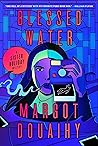
2026 #32 Blessed Water (Sister Holiday #2) - Douaihy


Blessed Water (Sister Holiday Mystery #2)Blessed Water by Margot Douaihy
My rating: 3 of 5 stars

3.75 stars
While I'm still invested in the series, Blessed Water didn't quite work for me as well as its predecessor Scorched Grace. With the first book, I noted that everything seemed to accelerate at the end for the sake of resolution, and that was also the case here. But the main issue I had is that the elements of the story seemed to be uneven in how they popped up. Sister Holiday's brother makes a weird appearance, which is welcome if he's going to stick around, but seemed quite extraneous to the mystery. We don't really get any more reveals about her shady past, although "Nina" comes through a bit more.
There are some subtle clues that I got only after reflecting on the story, so I enjoyed that. Sister Holiday's foul mouth is fine, but her penchant for violent thoughts, particularly against Detective Grogan and the purposeless Alex, got a bit tiresome (just overdone, I would say). Her relationship with Riveaux develops nicely, and holds a lot of promise.
You don't need to have read the first one (there are plenty of references to it), but I'd recommend it before launching into this one. A good installment, and I look forward to seeing where this goes.

View all my reviews

2026 Reading Goals 32/60

Tuesday, August 25, 2026

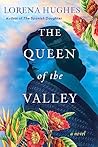
2026 #27 The Queen of the Valley (Hughes)


The Queen of the ValleyThe Queen of the Valley by Lorena Hughes
My rating: 3 of 5 stars (3.5)

I picked this book somewhat at random for the Read Around the World Challenge. This historical backdrop is the 1925 earthquake in Cali, Colombia, so starting it just two days after the awful earthquake in Colombia on August 10th this year felt rather eerie. The book is engaging with a reasonably interesting story/mystery, but I wonder if I would have connected better if I had read the first book, The Spanish Daughter, which introduces the character Puri (short for Purificación). Reading this one without the first didn't thwart enjoyment, but the (minimal) references to the first book would have been more meaningful. How Puri winds up "as a nun" might have been more believable, as well.

The other major context for the story is a cholera outbreak, and Hughes deftly handles descriptions in the cholera ward without sensationalizing the misery. The female characters are particularly strong, and Lucas is nicely complex. Martin is known mostly through the lens of those in his orbit, and I wish that Farid had his own chapters too. There's a web of entanglements that at times was hard to keep track of (Angélica, in particular, felt a bit happenstance and underdeveloped), but keeping the main narrative focused on just three characters (Lucas, Puri, Camila) helped. The circumstances of the disappearance of a certain character also felt a bit patched together near the end.

Overall, a solid read and good piece of historical fiction.

View all my reviews

Challenges 
2026 Reading Goals 27/60
Read Around the World: Ecuador (4/14 for South America)

Wednesday, August 12, 2026

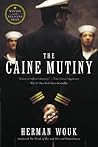
2026 #25 The Caine Mutiny (Wouk)


The Caine MutinyThe Caine Mutiny by Herman Wouk
My rating: 4 of 5 stars


One of the remarkable things about this book is that it isn't really about a mutiny. Yes, there is mutinous behavior, but I'd almost classify it more as a coming-of-age story of Willie Keith. It isn't your average war novel either, although it takes place during WWII. Wouk manages to focus on the world of the USS Caine, a clunky older minesweeper, commanded by various characters through whom we get to see Willie grow. There's also a love interest, but even there, the complexity and nuance sets this novel apart. The
The only thing that keeps it half a star away from 5 for me is the Navy jargon. If you aren't familiar with the various nautical and military terms applied to ships and the like, some of it can feel like a slog. But I'll also say that it was interesting enough that I looked up a good bunch of information on minesweepers and was happy to learn. Lieutenant Commander Queeg (played by Humphrey Bogart in the film), is an excellent character in that he navigates that in-between space between villain and flawed human--something Willie has to reckon with, alongside some of his shipmates.
For those interested in the real-life inspirations: https://www.usni.org/magazines/naval-...

View all my reviews

View all my reviews
Challenges 
2026 Reading Goals 25/60
#192030 Challenge:1951
Pulitzer Winners: 18

Saturday, August 8, 2026

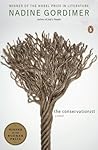
2026 #24 The Conservationist (Gordimer)


The Conservationist: Booker Prize Winner (A Novel)The Conservationist: Booker Prize Winner by Nadine Gordimer
My rating: 3 of 5 stars

I wanted to like this, and in theory, I did. I've heard that this is Gordimer's most poetic book and the language is undoubtedly that. I prefer it in straightforward poetry, however, rather than omniscient third person narration. Stylistic considerations aside (which I think are truly about personal preference), the book is artful in its illumination of white male privilege in the form of Mehring, a wealthy industrialist who buys a farm in South Africa (as a "getaway") that he is ill-equipped to run (leaving most of the management to his Black workers headed by Jacobus). Divorced and with an estranged son, Mehring wanders through life with little regard for relationships (platonic and romantic), and whose self-absorption fuels the evils of apartheid. The book opens with a murdered unidentified Black man being found on the farm, and Gordimer artfully allows that body to "surface" throughout the novel in various ways.

The book is very literary, with little distinction between dialogue and narrative, and some beautiful descriptive language. If you are somehow new to apartheid and colonialism in fiction, well this wouldn't be my first recommendation to introduce those topics, but otherwise it is an experience to read this Booker prize-winning book.

View all my reviews
Challenges on Storygraph (@rebcamuse):
2026 Reading Goals 24/60
#192030 Challenge:1974

Sunday, July 26, 2026

2026 #22 Dawn - Xenogenesis #1 (Butler)


Dawn (Xenogenesis, #1)Dawn by Octavia E. Butler
My rating: 3 of 5 stars

In contrast to the Patternmaster series (and certainly also the Earthseed books), this falls into the category of what I would call more generic science-fiction. That isn't a criticism, but reading this made me realize that I'm less drawn in by aliens vs. humans than her books that bring in more socio-political commentary or dystopia. (I make an exception for Andy Weir's Project Hail Mary which is my favorite book that features an alien. Blame the fact that I'm of the E.T. generation, I guess.)
In Dawn, there's little in the way of world-building, but a lot of species-building (one might guess, with the name of the series). Lilith is an interesting character, but I found her hard to place because she is both an observer of humanity and an actor of humanity. Butler doesn't give us a lot of time to adjust to the other human characters in the book, so I had trouble feeling much toward them other than viewing them as archetypes of different foibles. Maybe that was the point.
Did I enjoy it enough to read the rest of the trilogy? Maybe, but those will go on the back-burner "to read" list.

View all my reviews

Challenges on Storygraph (@rebcamuse):
2026 Reading Goals 22/60
#192030 Challenge:1987

Tuesday, June 16, 2026

2026 #14 1Q84 (Murakami)


1Q84 (1Q84, #1-3)1Q84 by Haruki Murakami
My rating: 3 of 5 stars

Ok, there's a lot to say here, but I'll try to keep it brief. Really this is 3.75 for me, and in places, a solid 4 stars. But for such a long book, I needed more consistency of those 4 star moments. I'm tenacious, which is why I stuck with it, but there were definite times that threatened a "DNF". This was my first Murakami, and I get the impression that it is probably not the best gateway drug (much in the way that Tristan und Isolde was NOT the best "first opera" for me to analyze in college). It was long in a way that I did not appreciate. I feel this way about Robert Schumann's music sometimes.

The premise is VERY intriguing and I will say, if you are not into magical realism or anything related, don't bother with this. I appreciated the lessons about cults. I loved the characters of the Dowager, as well as Tamaru, and weirdly enough, Ushikawa. Aomame had her moments for me, and Tengo, too, but not enough for me to feel satisfied by the ending (when I got there, after 6 renewals on Libby). I also loved Fuka-Eri's "usual style free of question marks."

I read some reviews because I was a bit mystified. Some extoll Murakami's pacing. I cannot agree. There were places that felt like an endurance test. The intertextual references kept things interesting and nerdy-- I need to put together a 1Q84 playlist (or find one that inevitably already exists). I will be forever indebted to being introduced to Janáček's Sinfonietta because of this book.

There seems to be a weird obsession with pubic hair--sometimes ACTUAL pubic hair, and sometimes used as a comparative for head hair (see: Tengo, Ushikawa). Perhaps there's some deeper significance of which I'm not aware -- if so, please let me know. I found the entire three volumes weird in the sex arena, and in some places downright disturbing. I am not titillated in the least by non-consensual sex, even in the service of acting as a spiritual conduit.

Is it imaginative? YES. There are places that felt like imagination for imagination's sake, but others that took me on a journey. The ending was a disappointment, although I understand the lack of resolution to be understood as "infinite possibilities." Is it a love story? Sort of. It lacks the maudlin sentimentality of "Somewhere in Time," but also didn't make me care enough about the two main protagonists.

It is certainly a down-the-rabbit-hole experience, but I feel I would have been happy with something a third of the total length. I've reached out to friends who are fans of Murakami because, as I said, I have the distinct impression that this may not have been the best choice of a "starter" in terms of his oeuvre. I'm definitely game for reading more of his work, but this was more of a marathon than I wished.

View all my reviews

Wednesday, March 18, 2026

2026 #10 One of Ours (Cather)


One of OursOne of Ours by Willa Cather
My rating: 4 of 5 stars

I was once asked why I join different reading challenges, and it is to have opportunities like reading this book. Male protagonist. Coming of age story. Wartime (WWI). The combo of all of these put together would normally put me off, but it won the Pulitzer Prize in 1923 (thereby checking off two different challenges I've signed on for), and this was my first Willa Cather (and probably won't be my last). When Cather was writing in 1922, it was a mere four years after World War I ended, so for her time it was contemporary fiction (for mine, historical). Claude Wheeler, a young Nebraskan farmer, searches for his identity as a student, as a farmer's son, as a friend, as a husband, as a soldier, and not least as an American. Cather has a gift for making you care about sunsets and wheat fields in the same measure as young men marching off to war because she weaves these things together with intentionality, always teetering on the brink of idealism to remind you it is there, but also with a certain pragmatism to keep us with one foot in reality. The book is harshly beautiful, if I can describe it thus. Cather allegedly ascribed to Claude some aspects of her own personality, along with that of her cousin G.P., who was killed in action during WWI. The result is a protagonist with whom we can sympathize, even when he makes poor decisions (or maybe ESPECIALLY when he does), and for whom we cheer in his idealism and sense of resolve.

The book is not a "war novel" -- the war only makes a real entrance with descriptions of trench warfare and the like toward the end of the book. There are moments where Cather's critique shines through, like when Ernest tells Claude: "You Americans are always looking for something outside yourselves to warm you up, and it is no way to do. In old countries, where not very much can happen to us, we know that, --and we learn to make the most of little things." (88). And other times she zooms out from the story to remind us of the entire Zeitgeist. As news of the war becomes more noted by members of the Wheeler family, Claude's mother goes up to the attic to find a map of Europe -- "a thing for which Nebraska farmers had never had much need."(246). Cather follows this with: "But that night, on many prairie homesteads, the women, American and foreign-born, were hunting for a map." (246). There are so many moments like this.

Cather received criticism (from the likes of Sinclair Lewis and H.L. Mencken) for romanticizing war, and that's perhaps a valid critique. However, with almost a century of hindsight, I read it differently. The romanticization is really about Claude and his idealism (and that of his soldier companions). The emotional distance Cather employs in her descriptions of some of the brutalities of war creates an almost journalistic narrative, and she reserves her emotional energy for moments of human interaction. I don't think Cather is suggesting/advocating war as a solution for youthful searching for purpose, but I think she is suggesting that World War I offered something particular for certain young American men who became disillusioned with what was available on their home turf.


View all my reviews

Challenges on Storygraph (@rebcamuse):
2026 Reading Goals 10/60
#192030 Challenge: 1922


Sunday, December 21, 2025

2025 #52 The Book of George (Greathead)


The Book of George: A NovelThe Book of George: A Novel by Kate Greathead
My rating: 3 of 5 stars

Who is George? Well, while we are treated to almost four decades of his existence, I'm not sure I felt any more confident in answering that question at the end than I did at the beginning. George is, it seems, fairly unremarkable, and I think (THINK) that's the point? This does lead to some humor, and the frustrating inconsistency of George's attitudes is also a plus. I think we are supposed to see him as flawed -- and he is-- but who isn't? He's self-centered and winds up in precarious situations of his own making (I couldn't help but think of another George...Costanza!), yet also seems to be able to interact socially and land a spot in a Super Bowl commercial. So, he's complex, in that ordinary human kind of way. His on-and-off again relationship with Jenny, who is also flawed, provided the most interest, but there were several spots where this threatened to be a do-not-finish for me. I'm glad I persisted, however, because I actually liked the (non-)ending because it was perfect for the book (something I appreciate even when I don't love the book that much). Ultimately I think it probably did not resonate as much with my Gen-Xness as it might with younger folk.


View all my reviews

Saturday, November 29, 2025

2025 #49 Headshot (Bullwinkel)


HeadshotHeadshot by Rita Bullwinkel
My rating: 3 of 5 stars

3.75
Conceptually, this book is fantastic, and the fact that it highlights young women boxers is exceptional. I bear some responsibility for my somewhat "meh" reaction to the book as I have very little interest in boxing, and I'm sure that sullied my reaction a bit. That said, the book does not go into detail in terms of actual boxing maneuvers, etc, so don't let a dislike to boxing deter you from reading it. I'm just calling out perhaps an implicit bias of my own.

The writing style is appealing, as we are granted access to the headspace of the different competitors. In the end, however, I think I found it too many characters to hold on to, although Bullwinkle admirably fills out a dossier for each with moving and thoughtful details. I think those who made it to the final rounds stayed with me a bit more, but it also took me quite a while to finish the book, so I didn't retain it the way I might have otherwise. I appreciated the glimpses into the future of each of the characters as well, which was a great reminder that we are all our own pasts, presents, and futures. I found Izzy and Iggy the most interesting, perhaps because of their familial connection, which added a whole other dimension to the story.

I wished, perhaps, for more backstory at the outset, so that I could invest in the characters more as the narrative progressed.

View all my reviews

Thursday, October 30, 2025

2025 #45 Beautyland (Bertino)


BeautylandBeautyland by Marie-Helene Bertino
My rating: 4 of 5 stars

The title felt a bit gratuitous to me, but then I thought, what would I title this novel? I have no idea. There are moments that read like a charming coming-of-age tale, others that twist your heart as our human-ness is witnessed and performed by Adina, and still others that serve up whimsical nostalgia from the late 70s, spanning from a famous moment on The Price is Right to Voyager's gold-plated time capsule phonograph record. It turns out the whimsy is deeper, after all, especially as Adina struggles with homesickness and trying to belong, and then experiences the deep grief of loss. Similar to Kazuo Ishiguro's Klara and the Sun, Bertino's novel made me care about Adina more than her origin story, and I often forgot that there was an element of fantasy/sci-fi here. Part of this is due to the dry, but not unfeeling, delivery of the protagonist. Adina has an element of an "Everyman" (and yes, I'll use the male dominant term to connect specifically to its 15th-century reference) to her--we are Adina, if we choose to step back and look. What a gift to be able to see ourselves through her eyes, to laugh at our silliness, to cry at our cruelty, to empathize with our pain.

View all my reviews

Monday, October 13, 2025

2025 #43 Martyr! (Akbar)


Martyr!Martyr! by Kaveh Akbar
My rating: 5 of 5 stars

This remarkable debut novel lives up to the hype. Fans of Akbar's poetry won't be disappointed, as he weaves in poems into the manuscript authored by the protagonist, Cyrus, an Iranian-American poet, writer, and recovering alcoholic. I did not know what to expect, having read little about the book as I'm simply trying to read all the 2025 Tournament of Books selections, and I think I'm better for not knowing what I was getting into. It is hard to describe the ride that is this book -- it is beautiful, tragic, funny, historical fiction, and one of those books where you feel you can connect with almost every character. There's even a plot twist -- handled deftly by Akbar, without resorting to clichéd sentimentality. Akbar lays bare themes of addiction, abandonment, artistic impulse, religiosity, media filters, racism, sexuality, and yes-- martyrdom--all in a way that seems like one of those rare honest conversations one might have with a close friend (often while inebriated, for some). The only drawback (if I can call it that) for me was the final scene between Cyrus and Zee. While I understand the reason for the lack of earthiness, it jolted me out of what I loved so much about the book -- the "here-and-nowness" of it--the starkness and the reality. I would have enjoyed a more subtle experience. But that doesn't keep me from saying that Martyr! is definitely in my top five books that I've read this year.

View all my reviews

Sunday, September 28, 2025

2025 #41 The Wedding People (Espach)


The Wedding PeopleThe Wedding People by Alison Espach
My rating: 4.5 stars

4.5 stars. I enjoyed this way more than I thought I would, but I also seem to have bias against certain types of cover art? Anyway, Phoebe is an amazing protagonist, and the book is full of characters who are hiding behind façades, and Espach lets us see that so that they don't become caricatures. The initial premise doesn't seem like it would be very funny--and it isn't--but the story is so very human and redemptive in that the characters get to be real people, making real choices. A delightful read. As it is part of my Tournament of Books 2025 list read, I'll say I enjoyed it more than Margo's Got Money Troubles, which is a good comparative in terms of style/genre.

View all my reviews

Tuesday, September 16, 2025

2025#40 The Poisonwood Bible (Kingsolver)


The Poisonwood BibleThe Poisonwood Bible by Barbara Kingsolver
My rating: 5 of 5 stars

Some books, possibly the best books, are experiences. That most definitely describes this epic work. Any review I might write here would not match the scale of the book, but I will try to offer some thoughts. I won't take up space with a summary, since that is available elsewhere, but get right to what made the book so powerful for me.

Characterization. I'll focus on the main characters here: The four daughters are very different, starting with the Nellie Oleson-like eldest daughter Rachel, who launches malapropisms at her detractors (real and imagined) as if they were poisoned arrows. We can occasionally laugh at her (one of my favorites: "Thyroid Mary"), but when she isn't overwritten, we might recognize the whiteness of settler colonialism at perhaps its most pernicious, because it comes with such a set of excuses and sense of self-righteousness. There are also moments where she might remind us of certain "leaders":

"Heck, wasn't I the one hollering night and day that we were in danger? It's true that when it happened I was the oldest one there, and I'm sure some people would say I should have been in charge." (465)

Leah strives to be pious (at least initially) and to please her father, but unlike her older sister, we see far more growth in her character. Adah, Leah's twin sister, is physically disabled, but likely the smartest of the bunch and relies upon manufacturing palindromic phrases (the juxtaposition of this linguistic ability against her sister Rachel's is not lost on the reader). The youngest, Ruth May, has probably one of the more "hit-you-over-the-head" narratives in the book, but we learn why. Then there is the father - Pastor Nathan Price, and the mother, Orleana. Except for Rachel, occasionally, no one is a cliché. We grow to care both for their individual narratives, as well as that of the family. Some of the other major characters, like Anatole, for example, we see mostly through the eyes of one (or more) of the daughters and this is important to remember because Kingsolver seems to do this to recognize her own positionality.

There are so many pull quotes -- I'm glad I read this on my kindle so I could easily share them on GR, but aside from the story itself, Kingsolver's gift with language is astounding. Even the simplest description becomes fresh in her words: "In the local market, a bubble of stopped conversation moves with me as I walk." (472) And occasionally, we get something akin to an aphorism: "we are our injuries, as much as we are our successes" (496).

Truly the book deserves an essay-length review, but if I am not up to the task it is for lack of time, not desire. For readers unfamiliar with the history of the Congo in the twentieth century, I'd recommend even just a quick Wikipedia review before launching into this book (and I almost NEVER , as a historian, recommend Wikipedia). This would make a VERY interesting "companion" read to Joseph Conrad's Heart of Darkness.

It took me a good chunk of the summer to finish this book -- not because it is long, but because I had to set it aside occasionally. It is rich, sorrowful, deep, informative -- there's just a lot. But I think it deserves that time and attention.


View all my reviews

Friday, August 29, 2025

2025 #37 Margo's Got Money Troubles (Thorpe)


Margo's Got Money TroublesMargo's Got Money Troubles by Rufi Thorpe
My rating: 4 of 5 stars

Lots of folks misuse the word "ambivalent" but I think that's the right word to describe how I feel about this book. Think more 3.75 stars. There were parts of this book I LOVED and parts I really did not love.

Suzie? I kept forgetting she existed and then she'd pop up like a game of whack-a-mole. The mushroom "scene" was off the rails, although I suppose that was the point. But these types of things made the plot feel like a manipulation, as if Thorpe was just interested in having the reader be a yo-yo she could play with. I least enjoyed the descriptions of the OnlyFans content - not that I'm prudish, but if I'm not a consumer of that content, I don't really relish reading about it either, even in a pragmatic, funny way. I did find, however, Margo's "writeups" very amusing. The more surreal content? Not my thing.

Jinx was a GREAT character and his relationship with Margo is largely what pushes this toward 4 stars for me. I also loved the mix of first and third person narration. And for as little as he's actually described, I felt I had a strong picture of Bodhi in my mind.

So, I had to sit with this for a day before writing a review because I did like it and it did make me laugh (and also cry). I think it felt a bit too improvisatory for me in terms of storyline, but some of the characters were gold.


View all my reviews

Friday, August 15, 2025

2025 #34: Liars (Manguso)


LiarsLiars by Sarah Manguso
My rating: 2 of 5 stars

I think this book is going to land differently depending on the personal experiences of readers. While that's true of any book, I had a really hard time relating to the relentless onslaught of the narrative. I felt like I was a therapist, and I was simply reading a transcript of sessions of a woman in an unhappy marriage. That said, I did appreciate that the post-divorce narrative didn't go the way of the cliché, I suppose. As a child of divorced parents, it did make me think a bit, but mostly the book just tired me out. I needed more shape and direction.

View all my reviews

Tuesday, July 29, 2025

2025 #31 Colored Television (Senna)


Colored TelevisionColored Television by Danzy Senna
My rating: 4 of 5 stars

Like Yellowface by R.F. Kuang, Colored Television digs into the trials and tribulations of the writing life, especially those compounded by racism. Unlike the former book, however, it doesn't quite go to the same extremes, and the protagonist here, Jane Gibson, is generally more likeable than June in Yellowface.

The book gets off to a slow start, where we are treated to the inner workings of Jane's mind before we care too much about her. She's living in someone else's house with her husband Lenny and their two children, Ruby and Finn. Her marriage is slightly less than functional, its success measured by frequency and quality of sex, and Lenny has his own ambitions as an artist that don't always complement Jane's sabbatical wherein she is trying to finish her second book in order to get tenure. Senna does excellent work layering the texture with tension. First and foremost, there is Jane's own mixed-race identity and how it does/doesn't interact with both her personal and professional life. She has dreams of luxury, and she has everything riding on this second novel, Nusu Nusu, to make her financial dreams come true. While we don't have deep dives into the novel, we understand enough to know that it is an intergenerational narrative about mulatto [term as used in the book] people.
 
In some sense, Jane's wishful thinking is enabled by her friend Brett, in whose house they are staying (and whose wine collection they are drinking). While Jane does find success in completing the novel, things go downhill very quickly, when Jane is confronted with the commoditization of identity in the publishing industry.

In not quite a twist--but perhaps a questionable choice--rather than address that core issue, Jane decides to come at it from a different angle, again centering her ideas of "success" rather than her ideologies. She manipulates and deceives, but in rather earthy ways, rather than hyperbolic hysteria. The deceit does drag on a bit too long, but the plot mobility increases so that we aren't drowned in an investigation into inner psyches, and Jane's naivete softens her character a bit. The book is more a tragicomedy than anything else, and the humor is sardonic. There's survival here, and that's an important element of the book. Jane's will to keep going, setting her lack of scruples aside, is a striving to which most readers can relate at some level.


View all my reviews

Thursday, June 5, 2025

2025 #25 The Extinction of Irena Rey (Croft)


The Extinction of Irena ReyThe Extinction of Irena Rey by Jennifer Croft
My rating: 3 of 5 stars

The premise--a translation of a story about translators and translation authored by a translator--is clever, yes. What I didn't expect was the humor that springs up like an unexpected mushroom in a field of moss. That gives it a 3. 75 for me.
There are moments of meta-translation like:
"Her face was the white of a freshly laundered sheet that someone other than me had laundered. (My laundry always turns out beige or gray.)" In this humble offering from Emi, we see how imagery in translation always connects to experience in one way or the other (remembering that the text we are reading was in fact written in Spanish, and we are reading it translated into English). Croft skillfully uses the slightly askew simile to call out some of the challenges of translation. But this is all operating on a deeper level, and occasionally detracts from surface-level enjoyment of the book.

The book is complex, sometimes overly so, and the narrator becomes increasingly unlikeable in her high-school level emotional intelligence (this is, however, somewhat soothed by the occasional footquips (as opposed to footnotes) from the translator (Alexis), who is somewhat of an arch-nemesis figure for the author (Emi) throughout most of the book (although the reason why is never totally clear, save for Emi's need to assign blame somewhere)). Apologies for the excessive parentheses in the previous sentence. The descriptions of nature and fungi are beautiful, but we are quickly yanked out of any idyll of the primeval Polish forest toward a speculative fiction that resembles Mr. Toad's Wild Ride. There's a lot of ideological whiplash and flights of fancy that did not enrich my experience of the book, clever thought it is. There's a mystery too -- the titular Irena Rey goes missing-- but I stopped caring too soon in the book.

I am glad I read it, and there were definitely parts of the book I thought were glorious in prose and imagination. But at the end I felt I had finished putting together a piece of furniture, and found myself looking at several screws and bolt or two that were "left over."

View all my reviews

Tuesday, May 13, 2025

2025 #20: Great Expectations (Cunningham)


Great ExpectationsGreat Expectations by Vinson Cunningham
My rating: 3 of 5 stars

Really more 3.5 stars.

Having decided to try to read all the 2025 Tournament of Books shortlist, I started with Great Expectations and I'll resist troping the title in this review.

A debut novel by New Yorker theater critic Vinson Cunningham, it traces the rather passive existence of David Hammond, a twenty-something Black man who almost unwittingly winds up as a staffer on Obama's 2008 presidential campaign (although in the book, the former president is never identified by name). Cunningham was actually a staffer, so one wonders how much of this "novel" might actually be memoir, and that actually becomes important as the "plot" isn't really much of a draw. It isn't about the campaign, to be sure, but we are treated to some smarmier moments of life on the campaign trail, but interspersed with David's musings on his past: his time in the Pentecostal church as a child, his rather incidental fatherhood, his hookups, his childhood in Chicago... It is difficult to get a foothold in the narrative sometimes. There are sentences that sing (and there's a good deal of sonic and musical emphasis in the novel), but then there are more stream-of-consciousness babblings that seem to be aspirational Saramago.

I had a tough time sustaining my attention (two renewals on Libby!), but the last quarter of the book finally seemed to pick up a bit, although I'm hard-pressed to tell you why. There is a little bit of intrigue and controversy that hits the campaign, but David also seems to take that in as a passive observer. It is hard to call him a protagonist as he doesn't seem to be actively or emotionally invested in his own life or observations. They are just there.

It is a good book--and with some of the detritus cleared and perhaps a bit more interest in the trajectory of narrative, it could have been great. Certainly it was enough that I'll be curious to read what comes next from Cunningham, and I hope there is a "next"!


View all my reviews