Showing posts with label trilogies. Show all posts

Monday, June 22, 2026

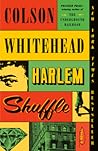
2026 #15 Harlem Shuffle (Whitehead)


Harlem Shuffle (The Harlem Trilogy, #1)Harlem Shuffle by Colson Whitehead
My rating: 4 of 5 stars

For reasons not totally clear to me, it took me a LONG time to get into this book. In truth, it was only Part 3 that really engaged my interest, but I think that had a lot more to do with the fact I was traveling and unfocused. I loved The Underground Railroad so I had big hopes here, and when I sat down and read carefully, I felt much more connected to Ray Carney and the book. So I'm probably going to go back and read the first two parts at some point.

This historical backdrop isn't easy (partially because some of the same issues persist), but the wry narrative works really well, and Whitehead peppers in scenic references to this historical landscape: the recently completed Pan Am building (now MetLife), the partially completed Lincoln Center, the demolition and clearing that made way for the World Trade Center. That alone cast an eerie pall over the last few pages of the book. I also thought the 1964 Harlem Riot was integrated in a very real way--in how it impacted real folks "on the ground". As someone who marks the 1992 Los Angeles riots as a formative experience of my life, I recognized the complex and wide variety of feelings from the city's inhabitants. Like the emerging space for the WTC, the weight that history repeated/repeats itself makes this way more than a "suspenseful crime thriller" (NPR blurb in book).

The detachment from violence and the sort of "everyman" qualities of the protagonist are very effective in conveying a sense of realism rather than sensationalism. Strangely, Pepper became my favorite character -- or at least Pepper's later interactions with Ray.

And there are moments of absolutely spectacular dry humor -- Ray's noting of the furniture in the board room in the final showdown, his complete "payment" to Pepper, descriptions of Aunt Millie: "She could have kicked the ass of a druggie or the ne'er-do-well nephew of her upstairs neighbor--her mastery of her weapon of choice, the hairbrush, went unchallenged..." (246). I also loved the descriptions of some of the less scrupulous characters: "Miami Joe was not a law-abiding sort and had no love for its earthly muscle..." (96).

Whitehead's writing is so clever in how it packs character into description: "[Carney] ran like a kid convinced that the whole grown-up world with its entire grown-up might was going to beat him silly." (291)

Or another favorite:

"No, its best not to hear your grown friends talked to the way Ambrose Van Wyck addressed his son. The humiliation splashes everywhere. You'll get it on you and it'll become your own bad time, the bloody resurrection of your own childhood sadnesses." (270)

Despite the rough beginning, I'm sold enough to read Crook Manifesto and my four stars acknowledges my own fault in not engaging with the first two parts of the novel.

View all my reviews
Challenges on Storygraph (@rebcamuse):
2026 Reading Goals 15/60
Tackle your Physical TBR 2026: no. 9

Tuesday, June 16, 2026

2026 #14 1Q84 (Murakami)


1Q84 (1Q84, #1-3)1Q84 by Haruki Murakami
My rating: 3 of 5 stars

Ok, there's a lot to say here, but I'll try to keep it brief. Really this is 3.75 for me, and in places, a solid 4 stars. But for such a long book, I needed more consistency of those 4 star moments. I'm tenacious, which is why I stuck with it, but there were definite times that threatened a "DNF". This was my first Murakami, and I get the impression that it is probably not the best gateway drug (much in the way that Tristan und Isolde was NOT the best "first opera" for me to analyze in college). It was long in a way that I did not appreciate. I feel this way about Robert Schumann's music sometimes.

The premise is VERY intriguing and I will say, if you are not into magical realism or anything related, don't bother with this. I appreciated the lessons about cults. I loved the characters of the Dowager, as well as Tamaru, and weirdly enough, Ushikawa. Aomame had her moments for me, and Tengo, too, but not enough for me to feel satisfied by the ending (when I got there, after 6 renewals on Libby). I also loved Fuka-Eri's "usual style free of question marks."

I read some reviews because I was a bit mystified. Some extoll Murakami's pacing. I cannot agree. There were places that felt like an endurance test. The intertextual references kept things interesting and nerdy-- I need to put together a 1Q84 playlist (or find one that inevitably already exists). I will be forever indebted to being introduced to Janáček's Sinfonietta because of this book.

There seems to be a weird obsession with pubic hair--sometimes ACTUAL pubic hair, and sometimes used as a comparative for head hair (see: Tengo, Ushikawa). Perhaps there's some deeper significance of which I'm not aware -- if so, please let me know. I found the entire three volumes weird in the sex arena, and in some places downright disturbing. I am not titillated in the least by non-consensual sex, even in the service of acting as a spiritual conduit.

Is it imaginative? YES. There are places that felt like imagination for imagination's sake, but others that took me on a journey. The ending was a disappointment, although I understand the lack of resolution to be understood as "infinite possibilities." Is it a love story? Sort of. It lacks the maudlin sentimentality of "Somewhere in Time," but also didn't make me care enough about the two main protagonists.

It is certainly a down-the-rabbit-hole experience, but I feel I would have been happy with something a third of the total length. I've reached out to friends who are fans of Murakami because, as I said, I have the distinct impression that this may not have been the best choice of a "starter" in terms of his oeuvre. I'm definitely game for reading more of his work, but this was more of a marathon than I wished.

View all my reviews

Saturday, June 14, 2025

2025 #26 Children of Anguish and Anarchy (Legacy of Orïsha, no. 3)


Children of Anguish and Anarchy (Legacy of Orïsha, #3)Children of Anguish and Anarchy by Tomi Adeyemi
My rating: 3 of 5 stars

In my review of Children of Virtue and Vengeance, the second of the Legacy of Orïsha trilogy, I wrote: "I am still invested. I want to know where they are headed. I want to be invited back to the world of purples and golds. But I hope that the third book will let me stay awhile before the fighting begins. There's more to say about what lies behind the strife. There's more to tell us about what will be lost before we actually lose it. "

I'm sad to say that the long-awaited book did not fulfill this wish. If anything, there's even more fighting, and less substance. We have new enemies: King Baldyr and The Skulls and new allies: New Gaians. We barely get any time on Orisha to even care about what is happening in healing old wounds. There's a formula applied to the four main characters: Zelie, Tzain, Inan, and Amari -- each has regrets, each thinks about those who have passed, each cuts down and fights enemies...but there's not a lot else that is happening. We see hints of the deeper character studies present in the wonderful first installment, Children of Blood and Bone, particularly with Zélie teetering on the edge of her power being usurped for evil or for good, and there is one particular scene with Tzain, who is going through a similar struggle, that invests in the deeper themes. The book is too short to really get into too much world-building, so the net effect is one of a passive interest in the mythologies and theologies that seemed so crucial in the first book.

I don't know what it is to write a trilogy, and I imagine the creative commitment is immense. Is it still a good read? Sure, and if anything one might benefit more if they haven't read the other two (although I also want to recognize I probably should have gone back and reread the other two books because I was a bit iffy on some of the details). Adeyemi's descriptive writing is a pleasure, and her skill with it enlivens this particular book, especially in how she captures the Green Maidens, Mae'e, and Zélie's transformation(s).

View all my reviews

Wednesday, April 16, 2025

2025 #17 The Last Town (Crouch) - Wayward Pines #3


The Last Town (The Wayward Pines, #3)The Last Town by Blake Crouch
My rating: 4 of 5 stars

This really swings back and forth between 3.75 and 4 stars for me.
No real spoilers here unless you haven't read the other two books in the trilogy, in which case you really shouldn't be reading reviews (any reviews) of this one.

--------------------
Surprisingly, I liked the ending. I even liked the epilogue---I never like epilogues. But, I have questions.

What happened to the solitaire-playing lady and the abbie? Maybe I missed it. I really thought we were going to go somewhere with that--maybe connect it back to Margaret. That was a welcome respite to the relentless violence. I would have rather than have been developed than the saccharine conversation between Ethan and Ben about an idealized future where they'd like to teach the world to sing in perfect harmony.

The first quarter of the book was rough --- much like the endless fugitive scene in the first book (or was it the second?) this one spent way too long with the gory details--and they are truly that, gory.

Teresa gets to join Mae Holland (Dave Eggers's The Circle) in my winner's circle of obnoxious protagonists. The only time I liked her in this book was when she found the chutzpah to tell Ethan the truth and then told him to shut it when he started going all entitled macho man on her. But absolutely cringeworthy was the discussion with Hassler in the jail cell with Ben sitting right there. Have some self-respect, people. I guess maybe some people find that language romantic (Teresa's note, that we learned of in the previous book), but I don't (it isn't that I find it offensive...just doesn't make me feel a strong bond of love between two people...not sure what I was supposed to feel). Also, big UGH on her reasons for staying with Ethan.

I rather loved Kate and Hassler meeting up on the cliff, even if it did feel a bit cliché. David Pilcher's god-complex wore me down a bit, but I have to say that Max Meyers created such a picture in my mind--fantastic voicing.

This was a fun series -- it doesn't have the depth and sophistication of Dark Matter, Recursion, or Upgrade (admittedly, I didn't love the latter)--but it has a pretty good sense of beginning, middle, and end and enough moving parts to hold interest when the story gets too wrapped up in being an action movie.

View all my reviews

Sunday, January 19, 2025

2025 #4 Wayward (Crouch) - Wayward Pines #2


Wayward (Wayward Pines, #2)Wayward by Blake Crouch
My rating: 4 of 5 stars

Really a 3.5 - 3.75 for me.
The second installment of the Wayward Pines trilogy is better than the first, as it is has more dimensions and sub-plots. While it is possible to read the second without the first, I don't advise it. The story is terrific, full stop. What isn't terrific is the weird amount of kink whenever it comes to most of the female characters (and their interaction with Ethan). The big "reveal" scene between Ethan and Teresa almost made me stop listening. Teresa's characterization is inconsistent, and Pam is WAY overwritten (the audiobook probably exacerbates this, but to no fault of Max Meyers, who does a great job).

The insertion of Adam Hassler as a character provides a lot of intrigue and tension, and Crouch deftly interwove that element into the book. I do have to say that I approach the third installment with some trepidation as I enjoyed the not-knowing when it came to Hassler, and I'm hoping that the third book does not rely on tired tropes.

The ending is an excellent cliffhanger and has the intended impact -- I will absolutely finish the series.

View all my reviews

Serious About Series Challenge 2025 - January

Monday, December 16, 2024

2024 #52 Pines (Crouch) - Wayward Pines #1


Pines (Wayward Pines, #1)Pines by Blake Crouch
My rating: 3 of 5 stars

The premise is great, typical of Blake Crouch. However, the chapters upon chapters of Ethan running and rock climbing I could have done without. I almost gave up, but luckily all is revealed and I'm in for the trilogy.

View all my reviews

Friday, June 9, 2023

2023 #17: Quicksilver - The Baroque Cycle #1 (Stephenson)


Quicksilver (The Baroque Cycle #1)Quicksilver by Neal Stephenson
My rating: 3 of 5 stars

I really need to preface this with the following: This was probably not a good choice as an audiobook. So, please know that this rating might be much better if I had read the print version--I hope. Visual tedium doesn't bother me nearly as much as aural tedium, so with that out of the way...

I had heard some good things about Neal Stephenson's books, and as someone who enjoys historical fiction, and is a music historian, I thought this initial volume of The Baroque Cycle would be a "no-brainer" (of a choice). The story is immeasurably creative and inspired, taking place in both in 1713 and in flashbacks some 40 years earlier. The protagonist--not the right word--is Daniel Waterhouse, an ex-Puritan scientist ("natural philosopher"), who is living in Massachusetts Bay Colony and is on board a ship (the Minerva) headed back to England to resolve one of the many intellectual disputes which seem to have been the lifeblood of thinking men in the eighteenth century. And yes, the cronies of the Royal Society and the illustrious historical figures are names that Stephenson whisks out of the history books and into his drama: Samuel Pepys, Isaac Newton, Gottfried Leibniz, Robert Hooke...just to name a few. The droll humor was the saving grace and largely what had me coming back to finish.

Where I struggled were the long passages of historical minutiae which seemed utterly superfluous to the story and very much an attempt to show Stephenson's immense research and knowledge of the time period. A discussion of coinage, for example, added very little to the story, and was one of the most tedious things I have ever listened to within the context of a piece of fiction. Encyclopedic detail has a place, and I prefer it to historical fictions that are so absurd as to be unethical, but historical fiction is still literature and I felt there were far too many moments where the "plot" came to halting stop to luxuriate (fixate) upon some historical icon of progress.

On the other hand, there are clever moments where Stephenson shines as an author: the discussion between John Wilkins and Daniel Waterhouse regarding redundancies in the philosophical language they are creating is subtly mirrored in Wilkins running to write something down and grabbing his quill, and shaking off the "redundant" ink. Ha!

About halfway through I felt perhaps I was doing this book a real disservice by listening to it instead of reading it, and it made me think about modalities. I have the privilege of choice here, and I'm wondering if I didn't, perhaps I would not have found the book so tedious. The failing may be mine, because even when I was frustrated with rabbit holes of endless details, I had a sense that there is a brilliance to what Stephenson has created here. In amongst all the self-indulgent navel gazing (of the characters), there is a coming-of-age story, a seafaring adventure story, a recasting of historical figures (Newton as a masochistic emaciated brat was essential), and the more traditional history-as-scenic-backdrop moves (the Great Fire of London, the bubonic plague) that Stephenson does more justice to than most.

Listening to the book was an experience--and while it wasn't altogether joyful or pleasurable, I came away from it wanting to pick up the next volume in print. I respected and enjoyed Stephenson's ability to enliven historical narratives with multi-dimensional perspectives and wit, to boot.

View all my reviews

Monday, June 6, 2022

2022 #4: Fall Of Giants (Follett)


Fall of Giants (The Century Trilogy, #1)Fall of Giants by Ken Follett
My rating: 4 of 5 stars

This book is a massive achievement, no question. "Epic" certainly describes the scope of this novel that manages to narrative the lives of five different families, in multiple places, across the span of several years, beginning in 1911 and stretching into the aftermath of WWI. Follett creates characters who are flawed, and remarkably human in those flaws, against a backdrop that changes all the rules (war). I really appreciated the multiple perspectives from different players as they grapple with or uphold the various party lines. That politics is messy is no revelation, but Follett manages to remind us that while the history books recount war as a hegemonic chess game, there are thousands of lives down on "ground level" that are impacted in myriad ways. I labored to get through some sections about war strategy and the battlefield scenes, but found myself roped back in as the stories of love and loss emerged. I'd say I found the book too long, but admittedly I can't tell you what parts I'd cut (objectively). I'm not sure I love historical fiction or ~1000 page books enough to read the others in the trilogy, but for those who enjoy sagas that strike a good balance between characterization and historical narrative, I'd definitely recommend this.

View all my reviews

Friday, January 3, 2020

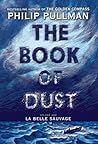
2019 #13: La Belle Sauvage (Pullman) - The Book of Dust #1

La Belle Sauvage (The Book of Dust, #1)La Belle Sauvage by Philip Pullman
My rating: 5 of 5 stars

The last time I "devoured" a book this fast (one day) it was Pullman's The Golden Compass. This first installment of the The Book of Dust trilogy is a remarkable prequel! It digs into Lyra's world anew, through the eyes of Malcolm, a stunningly well-written character. Pullman has such a gift for writing characters who are children, and this book is no exception. If I have to be critical, I'd say there are a few twists and turns that seemed a bit superfluous (and that is an intended pun given the major event that runs through the book), although they will resonate more for those who have read the His Dark Materials trilogy. There are a few characters of whom we only get a glimpse that I hope return in The Secret Commonwealth, which was just published last October.

There are some very intense and violent scenes, so while some would classify this as YA, I think it would need some debriefing with younger teens. Aside from that, however, I could not be happier to once again venture into this world of daemons, choices, and parallelisms. Truly a stunning book.


Saturday, April 20, 2019

2019 #4: The Book of Life (Harkness)

The Book of Life (All Souls Trilogy, #3)The Book of Life by Deborah Harkness
My rating: 4 of 5 stars

This third installation of the All Souls Trilogy improved upon some of the issues I had with Shadow of Night. I felt a better connection with the characters, although their characterization was uneven and seemed at the service of needing to tie up plot elements. When we finally get to meet the members of the Congregation, there's not quite enough time to see them as three-dimensional. The narrative tempo is better on the whole, although the climactic scene is surprisingly (although mercifully) concise. I find myself not sure whether I love Diana Bishop as a protagonist and I'm certainly ambivalent about Matthew. I'd like to think that is intentional on the part of Harkness. Certainly the books explore the darker side of our existence and the role of power in the choices we make with our own abilities.


Sunday, January 20, 2019

2019 #3: Shadow of Night (Harkness)

Shadow of Night (All Souls Trilogy, #2)Shadow of Night by Deborah Harkness


Harkness bit off a lot here with this second venture in the trilogy--and only some of it was adequately chewed. I'm a (music) historian, and even I began to tire of Elizabethan London. I missed the characters from the first book, to whom I had just established a connection in the last quarter of that novel. That said, there are places in this book where Harkness's talents as an author shine.

While there are moments that are a bit obvious in terms of historical placement, Harkness is subtle (at least initially) in illuminating the treatment of women in the sixteenth century. Any woman will recognize the feeling of being talked about as if we aren't standing there in the room, and Harkness works this into the narrative quite beautifully. At some point it becomes necessary to be a bit more overt as Diana has to assert her twenty-first century self into the Renaissance, but I appreciated that Harkness did not hit us over the head with it at the outset.

There is an uneven characterization for some of the leading players throughout the book and this applies to both wholly fictitious characters and those based on historical figures. Like Diana, the reader is feeling surrounded by threads that she must constantly monitor lest they tie themselves in knots. In A Discovery of Witches, the characters didn't really move me until the last third of the book. This second installment has too many characters so that there is very little time to care or form an attachment to any of them--I was left feeling a lack of emotional investment when it came to the many "goodbyes" in the book.

The time in England and Prague could have been reduced in length, and the end of the book most definitely sets you up to read the third part of the trilogy. There's no fault in that, of course, and I'm happy to report that my overall impression of the book was positive and I will eagerly read The Book of Life.


Wednesday, December 26, 2018

2018 #6: A Discovery of Witches (Harkness)

A Discovery of Witches (All Souls Trilogy, #1)A Discovery of Witches by Deborah Harkness
My rating: 5 of 5 stars

I've never been a fan of vampires. Of all the occult/otherworldly creatures, those are typically the only ones that give me actual nightmares. But one of the true gifts of this book is that you tend to forget that the characters are witches, vampires, and daemons. Diana Bishop is a scholar (and a witch). Matthew Clairmont is a scientist (and a vampire). Harkness crafts each character with such care and attention that I could hardly put this book down. Anyone who has done archival work already knows of the innate magic to be found in touching pages of history, but this book should be particularly appealing to scholars who also enjoy fantasy fiction genres.