Showing posts with label 192030. Show all posts

Saturday, August 8, 2026

2026 #24 The Conservationist (Gordimer)


The Conservationist: Booker Prize Winner (A Novel)The Conservationist: Booker Prize Winner by Nadine Gordimer
My rating: 3 of 5 stars

I wanted to like this, and in theory, I did. I've heard that this is Gordimer's most poetic book and the language is undoubtedly that. I prefer it in straightforward poetry, however, rather than omniscient third person narration. Stylistic considerations aside (which I think are truly about personal preference), the book is artful in its illumination of white male privilege in the form of Mehring, a wealthy industrialist who buys a farm in South Africa (as a "getaway") that he is ill-equipped to run (leaving most of the management to his Black workers headed by Jacobus). Divorced and with an estranged son, Mehring wanders through life with little regard for relationships (platonic and romantic), and whose self-absorption fuels the evils of apartheid. The book opens with a murdered unidentified Black man being found on the farm, and Gordimer artfully allows that body to "surface" throughout the novel in various ways.

The book is very literary, with little distinction between dialogue and narrative, and some beautiful descriptive language. If you are somehow new to apartheid and colonialism in fiction, well this wouldn't be my first recommendation to introduce those topics, but otherwise it is an experience to read this Booker prize-winning book.

View all my reviews
Challenges on Storygraph (@rebcamuse):
2026 Reading Goals 24/60
#192030 Challenge:1974

2026 #23 The Modigliani Scandal (Follett)


The Modigliani ScandalThe Modigliani Scandal by Ken Follett
My rating: 3 of 5 stars

Published under a pseudonym (Zachary Stone) in the 1970s before Follett reached his fame, The Modigliani Scandal is an entertaining look at the follies of the art world, and a reasonably good "mystery" of sorts. The back-of-the-book blurb would have it: "A high-speed, high-stakes caper from the grand master of international action and suspense." High-speed is pushing it a bit--the plot only really picks up speed in Part III, "Figures in the Foreground," but it is good fun. None of the characters are particularly likeable, although I daresay I was originally rooting for Dee, since she needs the "lost Modigliani" for her thesis. Certainly there is intrigue, but as stakes go, they aren't that relatable unless you happen to be in the art world running a gallery. The best part for me is how Follett sets up the denouement at a pub, but then steps back from it before revealing what happens inside that pub. That kept me reading and made for an entertaining ending.

View all my reviews

Challenges on Storygraph (@rebcamuse):
2026 Reading Goals 23/60
#192030 Challenge:1976
Tackle Your Physical TBR 2026 challenge: 14/18

Sunday, July 26, 2026

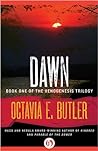
2026 #22 Dawn - Xenogenesis #1 (Butler)


Dawn (Xenogenesis, #1)Dawn by Octavia E. Butler
My rating: 3 of 5 stars

In contrast to the Patternmaster series (and certainly also the Earthseed books), this falls into the category of what I would call more generic science-fiction. That isn't a criticism, but reading this made me realize that I'm less drawn in by aliens vs. humans than her books that bring in more socio-political commentary or dystopia. (I make an exception for Andy Weir's Project Hail Mary which is my favorite book that features an alien. Blame the fact that I'm of the E.T. generation, I guess.)
In Dawn, there's little in the way of world-building, but a lot of species-building (one might guess, with the name of the series). Lilith is an interesting character, but I found her hard to place because she is both an observer of humanity and an actor of humanity. Butler doesn't give us a lot of time to adjust to the other human characters in the book, so I had trouble feeling much toward them other than viewing them as archetypes of different foibles. Maybe that was the point.
Did I enjoy it enough to read the rest of the trilogy? Maybe, but those will go on the back-burner "to read" list.

View all my reviews

Challenges on Storygraph (@rebcamuse):
2026 Reading Goals 22/60
#192030 Challenge:1987

Tuesday, July 21, 2026

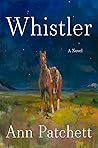
2026 #21 Whistler (Patchett)


WhistlerWhistler by Ann Patchett
My rating: 5 of 5 stars

Well, my streak of crying at some point during an Ann Patchett novel continues unabated. This one, however, snuck up on me. It is what I would call a "quiet book." There's a plot, but it comes in pieces as a recollected narrative. There's also a very mild plot that takes place in the present, but as plots go, it is less important. I would also like to say God Bless Ann Patchett for NOT giving us an epilogue. Some readers will want one, and the book sets it up, but we get instead, what to my mind was the perfect ending.

If you've read any blurbs or reviews, you know that the book is not about a horse, but don't worry -- the horse is significant as a metaphor. There were a few places where I felt the narrative dragged a bit and the relationship between Daphne and Eddie seemed strange and maybe even questionable, initially, until the backstory starts filling in. As a character, Daphne seemed a bit idealized to me at times, but I also think I'm slightly envious of her hardiness (both as a child and as an adult).

Like most of Ann Patchett's novels, this is a very human story, and the author gets out of the way of her characters and let's them tell us what we need to know, when we need to know it. I highly recommend it for those favoring reflection and character growth. If you are lucky enough (as I am) to have a beautiful relationship with a step-parent, you will probably very much enjoy this book. If, however, you've had a troubled or terrible relationship with a step-parent (particularly a stepfather), I'd recommend passing on this one if that relationship has traumatized you.


View all my reviews

Challenges on Storygraph (@rebcamuse):
2026 Reading Goals 21/60
#192030 Challenge:2026

Sunday, July 12, 2026

2026 #19 Water for Elephants (Gruen)


Water for ElephantsWater for Elephants by Sara Gruen
My rating: 4 of 5 stars

I typically read "hyped" books well after the hype calms down so I can resist the noise and form my own opinion. I was given Water for Elephants as a gift back in 2007, so in this case, the waiting period has been a *bit* longer than I intended. I enjoy my engagement with lit-social media, but in this case, it may not have been a good thing. One of the "bookTokers" I follow half-heartedly (because I find his "reviews" rather ego-swollen, even though I mostly agree with him) did a quick video about the biggest "plot twists," based on his audience's feedback. He mentioned that he didn't really feel this one had a plot twist, but it was more just a part of the plot. What bothers me is that I now had this in mind the ENTIRE time I was reading the book.

Plot twist or no, I'll say that I think I would have preferred to do without the part of the book that enables the so-called plot twist at the end. I don't think it added much, and the real story was gritty enough. I don't like to use the spoiler tag, so I'm hoping that's vague enough for those who haven't read it, and will make sense to those who have.

It is a great read -- I sped through it basically in two days when I had a chunk of time to read. The characters are vivid and the story is compelling as is the historical context of a depression-era circus. The shifts between time periods work (not an easy move to do well), and there are some really beautiful and human moments. I was prepared for more of a tear-jerker given what I've heard over the years, so I was surprised to have had only two moments of deep sadness, and one of them I saw coming, so I braced myself for it. What I suspected would be the tragedy of the novel was not, so I guess on that front I was pleasantly surprised.

I personally did not need what I call the "catch-up" chapter (Chapter 25), but I can also see that it would be necessary for some. I'm usually happy to have some loose ends left to weave together in my imagination. All in all, however, this is worthy of a lot of the acclaim it received and I'm glad I (finally) read it!

View all my reviews

Challenges on Storygraph (@rebcamuse):
2026 Reading Goals 19/60
Tackle your Physical TBR 2026: no. 13
#192030 Challenge:2006

Thursday, July 9, 2026

2026 #18 Cosmicomics (Calvino)


CosmicomicsCosmicomics by Italo Calvino
My rating: 3 of 5 stars

Oh, the wacky world of Calvino, for whom history and science are playthings. Here in Cosmicomics Calvino takes on origins of the universe, manifesting in twelve creation myths of a sort. Most of the stories feature a narrative told by Qfwfq, and aged something-or-other that seems to have born witness to origins ranging from the universe itself to the development of the conch shell. This latter narrative is "The Spiral" and was the story I enjoyed the most. Each story begins with a italicized blurb of real science, which is then the springboard for Qfwfq's fanciful narratives. One of the most clever aspects is the anthropomorphizing of pre-anthro existence, and Calvino occasionally meditates on the value of "signs" before there were, "signs." This reflects, no doubt, the influence of Saussure, the Swiss semiotician who, along with Roland Barthes, had a significant impact on Calvino's literature. Calvino's imagination is boundless, and the stories are as much of love, unrequited and not, and microexistence, as they are of the actual devices that serve as the foci of each story.

I'm not sure this book will land well with everyone. I had started it almost sixteen years ago, and put it aside. I picked it up again because I knew I could start again and it is a digestible 153 pages. I'm glad I did, especially for the dry and quirky humor that is a trademark of Calvino. It must be noted that William Weaver's gifts as a translator are on full display (if you find yourself under-appreciating translation, I strongly recommend the wonderful Experiences in translation by Umberto Eco). Calvino asks for some investment, but if you walk through the door he opens, you'll likely be glad that you did.

View all my reviews
Challenges on Storygraph (@rebcamuse):
2026 Reading Goals 18/60
Tackle your Physical TBR 2026: no. 12
#192030 Challenge:1965

Tuesday, June 30, 2026

2026 #16 State of Wonder (Patchett)


State of WonderState of Wonder by Ann Patchett
My rating: 4 of 5 stars

"There was no clear point of loss. It happened over and over again in a thousand small ways and the only truth there was to learn was that there was no getting used to it." (269)

Patchett is one of my favorite writers because she drops lines like this that carry heartfelt truths that transcend the specific narrative of the story. State of Wonder explores ethics, love, and what drives us as humans. The protagonist, Marina Singh, is on a hero's journey into the heart of the Amazon, but her return, and indeed her journey, morphs as the book progresses, making this an engaging adventure on top of a deeper character study. I do love endings that are happy, yet not ("bittersweet" doesn't really work here), but I could have done without the "comfort sex."

The moral high ground is a series of shifting tectonic plates in this novel, and that's what makes it such a wonderful read.

View all my reviews
Challenges on Storygraph (@rebcamuse):
2026 Reading Goals 16/60
Tackle your Physical TBR 2026: no. 10
#192030 Challenge: 2011

Wednesday, March 18, 2026

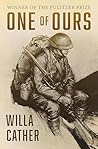
2026 #10 One of Ours (Cather)


One of OursOne of Ours by Willa Cather
My rating: 4 of 5 stars

I was once asked why I join different reading challenges, and it is to have opportunities like reading this book. Male protagonist. Coming of age story. Wartime (WWI). The combo of all of these put together would normally put me off, but it won the Pulitzer Prize in 1923 (thereby checking off two different challenges I've signed on for), and this was my first Willa Cather (and probably won't be my last). When Cather was writing in 1922, it was a mere four years after World War I ended, so for her time it was contemporary fiction (for mine, historical). Claude Wheeler, a young Nebraskan farmer, searches for his identity as a student, as a farmer's son, as a friend, as a husband, as a soldier, and not least as an American. Cather has a gift for making you care about sunsets and wheat fields in the same measure as young men marching off to war because she weaves these things together with intentionality, always teetering on the brink of idealism to remind you it is there, but also with a certain pragmatism to keep us with one foot in reality. The book is harshly beautiful, if I can describe it thus. Cather allegedly ascribed to Claude some aspects of her own personality, along with that of her cousin G.P., who was killed in action during WWI. The result is a protagonist with whom we can sympathize, even when he makes poor decisions (or maybe ESPECIALLY when he does), and for whom we cheer in his idealism and sense of resolve.

The book is not a "war novel" -- the war only makes a real entrance with descriptions of trench warfare and the like toward the end of the book. There are moments where Cather's critique shines through, like when Ernest tells Claude: "You Americans are always looking for something outside yourselves to warm you up, and it is no way to do. In old countries, where not very much can happen to us, we know that, --and we learn to make the most of little things." (88). And other times she zooms out from the story to remind us of the entire Zeitgeist. As news of the war becomes more noted by members of the Wheeler family, Claude's mother goes up to the attic to find a map of Europe -- "a thing for which Nebraska farmers had never had much need."(246). Cather follows this with: "But that night, on many prairie homesteads, the women, American and foreign-born, were hunting for a map." (246). There are so many moments like this.

Cather received criticism (from the likes of Sinclair Lewis and H.L. Mencken) for romanticizing war, and that's perhaps a valid critique. However, with almost a century of hindsight, I read it differently. The romanticization is really about Claude and his idealism (and that of his soldier companions). The emotional distance Cather employs in her descriptions of some of the brutalities of war creates an almost journalistic narrative, and she reserves her emotional energy for moments of human interaction. I don't think Cather is suggesting/advocating war as a solution for youthful searching for purpose, but I think she is suggesting that World War I offered something particular for certain young American men who became disillusioned with what was available on their home turf.


View all my reviews

Challenges on Storygraph (@rebcamuse):
2026 Reading Goals 10/60
#192030 Challenge: 1922


Friday, February 20, 2026

2026 #5 Murder in the Cathedral (Eliot)

Murder in the CathedralMurder in the Cathedral by T.S. Eliot
My rating: 5 of 5 stars

Poetry, prose, and play, woven together by Eliot. What a tremendous rendering of one of the most famous medieval martyrdoms, no less fashioned as a bit of a medieval morality play (particularly with the personified "tempters" with whom Thomas Becket converses prior to his death. The language is beautiful, with Eliot wielding alliteration more elegantly than his knights wield their swords bent on murder. The drunken knights get their own drinking song, with a couplet refrain "Come down Daniel to the lions' den,/Come down Daniel for the mark of the beast." Allusions abound.

I read this as a followup to Alison Weir's biography of Eleanor of Aquitaine, which in large part ,was more about Henry II. What a creative, engaging, and intelligent look back at history.

View all my reviews

Challenges on Storygraph (@rebcamuse):
2026 Reading Goals 5/60
#192030 Challenge: 1935
Tackle your Physical TBR 2026: no. 4

Monday, February 16, 2026

2026 #4 Eleanor of Aquitaine (Weir)


Eleanor of Aquitaine: A Life (World Leaders Past & Present)Eleanor of Aquitaine: A Life by Alison Weir
My rating: 3.75 stars

My original interest in this book was to fill out some of my historical context surrounding troubadours, and to be sure, there are plenty of references to these poet-composers of southern France in relation to their poetic chronicles of Eleanor of Aquitaine. The quote from the Boston Globe on the covers says, "An alluringly candid portrait of this most public yet elusive of medieval women." To this, I say, "sort of." It isn't Weir's fault -- the records just aren't there (unsurprisingly -- "elusive" is correct). Weir makes do with a wonderful host of historical accounts and primary sources, but the net result is that a good proportion of the book is NOT about Eleanor of Aquitaine, but instead Henry II, and the various Kings (including first husband Louis VII), archbishops, dukes, etc. Once Henry dies in Weir's narrative, however, Eleanor gets more air time (and I think this likely aligns with the historical record as well). So, in a way, I think the book is a meta-reflection of the documentation upon which it rests.

That said, the real mark of a good history book is to get you interested in that which you didn't know you were interested! Weir achieves this in her thorough narrative of the personalities, unions, rivalries, etc that make up 12th-century France and England. There's enough about Eleanor that Weir's main point is illuminated: "[Eleanor of Aquitaine] came into her own at an age when most women were either dead or long in retirement, and ruled as capably as any man. She was no shrinking violet, but a tough, capable, and resourceful woman who travelled widely throughout the known world and was acquainted with most of the great figures of the age." (346). The details of that narrative are worth reading. This is a revision of the heretofore widely accepted tropes of Eleanor as "wicked queen" and "adultress."

It is generally a really great chronicle of the status of women in the medieval period, especially royal women who were seen as barter for various diplomatic transactions. The double standards abound when it comes to marital infidelity, and one has to chuckle at the charges of consanguinity leveled at both of Eleanor's marriages -- the charming handwritten genealogical tables at the back of the book come in handy.

One consistent issue I had is that Weir often describes various figures in a formula that seems to be: extol their prowess and strength, then debunk/contradict it with various accounts of their hubris and in some cases, real lack of humanity. This often takes place in the span of two short paragraphs. For example, in describing King John (as just one example), Weir tells us that he received a lot of bad press, but that recent studies show "he was a gifted administrator who showed a concern for justice...he showed real concern for his kingdom." She goes on to tell us that the "Exchequer, Chancery, and law courts began to function more effectively" and that he "took a more than ordinary interest in the welfare of his common subjects." (318-319). In the very next paragraph, however, we are offered a quote from a chronicler that he was "but a plunderer of his own people, trusting strangers rather than his subjects, wherefore he was eventually deserted by his own men and, in the end, little mourned." (319). This seems to be a regular narrative approach in describing all the main male figures of the historical narrative. I appreciate that these men very likely did have a rather incongruous set of qualities/vices, but the repeated structure in the narrative felt like pop-up instances of whiplash, rather than relating the understandable complexity.

I found myself wondering about some of the other women in the book--particularly Eleanor's daughter in law Berengaria (wife of Richard I), who seemed the most untainted by folly and foibles. This is, as I said, a strength of the book. Weir's research and gifts for writing draw you in to the medieval trials and tribulations of the various bloodlines of French and English royalty.

View all my reviews
Challenges on Storygraph (@rebcamuse):
2026 Reading Goals 4/60
#192030 Challenge: 1999
Tackle your Physical TBR 2026: no. 3
Tuesday, January 27, 2026

2026 #3 Alice Adams (Tarkington)


Alice AdamsAlice Adams by Booth Tarkington
My rating: 3 of 5 stars (3.5)

This is a book that is very much "of its time" as one might expect. It is also teaching me something about the Pulitzer prize in the 1920s. The book is rather innocuous from a 1920s standpoint, but certainly the racism doesn't land well for modern readers. The story isn't one that would hold a lot of interest in modern times, perhaps, but therein also lies its value. Alice Adams is an interesting character--caught between daughterly loyalty, youthful vanity and social aspirations, and the various slings and arrows of her circumstances as both a woman and a member of the Adams family. The book is as much about the family (and its dynamics) as it is Alice herself, and while she seems dated and petty in some instances, she's remarkably plucky and resilient. The same cannot be said of either of her parents, and her brother is definitely the most colorful character of the book.

The book itself is rather humorous, something I didn't particularly expect, and Tarkington writes rather dryly of his characters, seeming to stand back with a smirk at their various foibles. The style (and book in general) reminded me very much of Theodore Dreiser's Sister Carrie, published two decades prior, although Alice is ultimately far more like-able and much more a "heroine."

Alice's courtship with Arthur Russell was one of the more entertaining aspects of the novel, and cheers to Tarkington for writing her as a woman of wit, whose repartee with Russell shows her true stuff. The book is a slow read, and some of the details bordered on tedium (particularly in the early chapters), but it is fascinating to see the book as a reflection of social mores of the time as well as how family dynamics can balance between love and social obligations.

View all my reviews
Challenges on Storygraph (@rebcamuse):
2026 Reading Goals: 3/60
#192030 Challenge: 1921

Saturday, January 17, 2026

2026 #1 Intermezzo (Rooney)


IntermezzoIntermezzo by Sally Rooney
My rating: 4 of 5 stars

3.75

I started this book in August and then I put it down. Peter and Ivan did not immediately catch my interest, so I moved on to other things. But I returned, and I'm glad I did. I don't love the "no dialogue-styled-as-dialogue" aspect, although I appreciated it more when I was invested in a moment that was more meaningful to me. I enjoyed the last quarter of the book the most, wherein the five main characters start to come together. We spend a lot of time in the heads of Peter and Ivan, and I started to grow tired of the both of them, but the cool move here is that Rooney shows us (eventually) how they start to grow tired of themselves. That's what made the book for me. I'm glad I read it.


Challenges on Storygraph (@rebcamuse):
2026 Reading Goals: 1/60
Tackle Your Physical TBR 1/18
#192030 Challenge: 2024

Litsy #WickedWords 2026 (January):
Pawn
Knight
Rook