Showing posts with label TYPTBR. Show all posts

Saturday, August 8, 2026

2026 #23 The Modigliani Scandal (Follett)


The Modigliani ScandalThe Modigliani Scandal by Ken Follett
My rating: 3 of 5 stars

Published under a pseudonym (Zachary Stone) in the 1970s before Follett reached his fame, The Modigliani Scandal is an entertaining look at the follies of the art world, and a reasonably good "mystery" of sorts. The back-of-the-book blurb would have it: "A high-speed, high-stakes caper from the grand master of international action and suspense." High-speed is pushing it a bit--the plot only really picks up speed in Part III, "Figures in the Foreground," but it is good fun. None of the characters are particularly likeable, although I daresay I was originally rooting for Dee, since she needs the "lost Modigliani" for her thesis. Certainly there is intrigue, but as stakes go, they aren't that relatable unless you happen to be in the art world running a gallery. The best part for me is how Follett sets up the denouement at a pub, but then steps back from it before revealing what happens inside that pub. That kept me reading and made for an entertaining ending.

View all my reviews

Challenges on Storygraph (@rebcamuse):
2026 Reading Goals 23/60
#192030 Challenge:1976
Tackle Your Physical TBR 2026 challenge: 14/18

Sunday, July 12, 2026

2026 #19 Water for Elephants (Gruen)


Water for ElephantsWater for Elephants by Sara Gruen
My rating: 4 of 5 stars

I typically read "hyped" books well after the hype calms down so I can resist the noise and form my own opinion. I was given Water for Elephants as a gift back in 2007, so in this case, the waiting period has been a *bit* longer than I intended. I enjoy my engagement with lit-social media, but in this case, it may not have been a good thing. One of the "bookTokers" I follow half-heartedly (because I find his "reviews" rather ego-swollen, even though I mostly agree with him) did a quick video about the biggest "plot twists," based on his audience's feedback. He mentioned that he didn't really feel this one had a plot twist, but it was more just a part of the plot. What bothers me is that I now had this in mind the ENTIRE time I was reading the book.

Plot twist or no, I'll say that I think I would have preferred to do without the part of the book that enables the so-called plot twist at the end. I don't think it added much, and the real story was gritty enough. I don't like to use the spoiler tag, so I'm hoping that's vague enough for those who haven't read it, and will make sense to those who have.

It is a great read -- I sped through it basically in two days when I had a chunk of time to read. The characters are vivid and the story is compelling as is the historical context of a depression-era circus. The shifts between time periods work (not an easy move to do well), and there are some really beautiful and human moments. I was prepared for more of a tear-jerker given what I've heard over the years, so I was surprised to have had only two moments of deep sadness, and one of them I saw coming, so I braced myself for it. What I suspected would be the tragedy of the novel was not, so I guess on that front I was pleasantly surprised.

I personally did not need what I call the "catch-up" chapter (Chapter 25), but I can also see that it would be necessary for some. I'm usually happy to have some loose ends left to weave together in my imagination. All in all, however, this is worthy of a lot of the acclaim it received and I'm glad I (finally) read it!

View all my reviews

Challenges on Storygraph (@rebcamuse):
2026 Reading Goals 19/60
Tackle your Physical TBR 2026: no. 13
#192030 Challenge:2006

Thursday, July 9, 2026

2026 #18 Cosmicomics (Calvino)


CosmicomicsCosmicomics by Italo Calvino
My rating: 3 of 5 stars

Oh, the wacky world of Calvino, for whom history and science are playthings. Here in Cosmicomics Calvino takes on origins of the universe, manifesting in twelve creation myths of a sort. Most of the stories feature a narrative told by Qfwfq, and aged something-or-other that seems to have born witness to origins ranging from the universe itself to the development of the conch shell. This latter narrative is "The Spiral" and was the story I enjoyed the most. Each story begins with a italicized blurb of real science, which is then the springboard for Qfwfq's fanciful narratives. One of the most clever aspects is the anthropomorphizing of pre-anthro existence, and Calvino occasionally meditates on the value of "signs" before there were, "signs." This reflects, no doubt, the influence of Saussure, the Swiss semiotician who, along with Roland Barthes, had a significant impact on Calvino's literature. Calvino's imagination is boundless, and the stories are as much of love, unrequited and not, and microexistence, as they are of the actual devices that serve as the foci of each story.

I'm not sure this book will land well with everyone. I had started it almost sixteen years ago, and put it aside. I picked it up again because I knew I could start again and it is a digestible 153 pages. I'm glad I did, especially for the dry and quirky humor that is a trademark of Calvino. It must be noted that William Weaver's gifts as a translator are on full display (if you find yourself under-appreciating translation, I strongly recommend the wonderful Experiences in translation by Umberto Eco). Calvino asks for some investment, but if you walk through the door he opens, you'll likely be glad that you did.

View all my reviews
Challenges on Storygraph (@rebcamuse):
2026 Reading Goals 18/60
Tackle your Physical TBR 2026: no. 12
#192030 Challenge:1965

Tuesday, June 30, 2026

2026 #16 State of Wonder (Patchett)


State of WonderState of Wonder by Ann Patchett
My rating: 4 of 5 stars

"There was no clear point of loss. It happened over and over again in a thousand small ways and the only truth there was to learn was that there was no getting used to it." (269)

Patchett is one of my favorite writers because she drops lines like this that carry heartfelt truths that transcend the specific narrative of the story. State of Wonder explores ethics, love, and what drives us as humans. The protagonist, Marina Singh, is on a hero's journey into the heart of the Amazon, but her return, and indeed her journey, morphs as the book progresses, making this an engaging adventure on top of a deeper character study. I do love endings that are happy, yet not ("bittersweet" doesn't really work here), but I could have done without the "comfort sex."

The moral high ground is a series of shifting tectonic plates in this novel, and that's what makes it such a wonderful read.

View all my reviews
Challenges on Storygraph (@rebcamuse):
2026 Reading Goals 16/60
Tackle your Physical TBR 2026: no. 10
#192030 Challenge: 2011

Monday, June 22, 2026

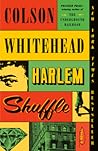
2026 #15 Harlem Shuffle (Whitehead)


Harlem Shuffle (The Harlem Trilogy, #1)Harlem Shuffle by Colson Whitehead
My rating: 4 of 5 stars

For reasons not totally clear to me, it took me a LONG time to get into this book. In truth, it was only Part 3 that really engaged my interest, but I think that had a lot more to do with the fact I was traveling and unfocused. I loved The Underground Railroad so I had big hopes here, and when I sat down and read carefully, I felt much more connected to Ray Carney and the book. So I'm probably going to go back and read the first two parts at some point.

This historical backdrop isn't easy (partially because some of the same issues persist), but the wry narrative works really well, and Whitehead peppers in scenic references to this historical landscape: the recently completed Pan Am building (now MetLife), the partially completed Lincoln Center, the demolition and clearing that made way for the World Trade Center. That alone cast an eerie pall over the last few pages of the book. I also thought the 1964 Harlem Riot was integrated in a very real way--in how it impacted real folks "on the ground". As someone who marks the 1992 Los Angeles riots as a formative experience of my life, I recognized the complex and wide variety of feelings from the city's inhabitants. Like the emerging space for the WTC, the weight that history repeated/repeats itself makes this way more than a "suspenseful crime thriller" (NPR blurb in book).

The detachment from violence and the sort of "everyman" qualities of the protagonist are very effective in conveying a sense of realism rather than sensationalism. Strangely, Pepper became my favorite character -- or at least Pepper's later interactions with Ray.

And there are moments of absolutely spectacular dry humor -- Ray's noting of the furniture in the board room in the final showdown, his complete "payment" to Pepper, descriptions of Aunt Millie: "She could have kicked the ass of a druggie or the ne'er-do-well nephew of her upstairs neighbor--her mastery of her weapon of choice, the hairbrush, went unchallenged..." (246). I also loved the descriptions of some of the less scrupulous characters: "Miami Joe was not a law-abiding sort and had no love for its earthly muscle..." (96).

Whitehead's writing is so clever in how it packs character into description: "[Carney] ran like a kid convinced that the whole grown-up world with its entire grown-up might was going to beat him silly." (291)

Or another favorite:

"No, its best not to hear your grown friends talked to the way Ambrose Van Wyck addressed his son. The humiliation splashes everywhere. You'll get it on you and it'll become your own bad time, the bloody resurrection of your own childhood sadnesses." (270)

Despite the rough beginning, I'm sold enough to read Crook Manifesto and my four stars acknowledges my own fault in not engaging with the first two parts of the novel.

View all my reviews
Challenges on Storygraph (@rebcamuse):
2026 Reading Goals 15/60
Tackle your Physical TBR 2026: no. 9

Wednesday, April 15, 2026

2026 #12 The Correspondent (Evans)


The CorrespondentThe Correspondent by Virginia Evans
My rating: 5 of 5 stars

I did not expect to enjoy this book as much as I did, given that wholly epistolary narratives often bore me. I can see why some people don't love it, but anyone who outright dislikes it might lack a soul (I said what I said). It is a deeply human narrative, cast in the voice (mostly of) Sybil Van Antwerp, a septuagenarian former legal clerk, who writes letters (and the occasional email) unabashedly to everyone from Joan Didion (who responds!), her neighbor Mr. Lübeck, the customer service agent at a DNA genetics site, her lifelong best friend, and more. Sybil has secrets, but not of the Frieda McFadden variety...more of the deeply tragic variety that many more of us carry than we likely know. What makes the book so striking for me is how unsensationalized it is--Sybil runs against the grain in several ways, but she's ultimately very human and relatable. Certainly one might empathize with her innate need for connection, which she expresses (at times stubbornly) through her devotion to letter writing.

There is a semi-predictable (and not really hidden) sub-narrative, and if anything, I found that to be a distraction from amazing exchanges (particularly with Basam and Henry). Some threads get tied up in a nice bow, but some don't, and that's exactly as it should be. When Sybil does finally reveal her secret, for me it was about to WHOM and HOW she revealed it that was the most touching. But again, by the time we got there, I was really much too invested in all the connections she had in various ways to feel too stunned/upset. I guess I felt upset for her and it does help explain a lot.

The end did not make me cry, but the middle did -- on several occasions. And that's a book I love. And it made me want to write a few letters of my own.


View all my reviews
Challenges on Storygraph (@rebcamuse):
2026 Reading Goals 12/60
Tackle your Physical TBR 2026: no. 8
#192030 Challenge: 2025

Thursday, March 26, 2026

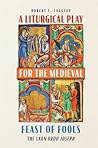
2026 #11 A Liturgical Play for the Medieval Feast of Fools: The Laon Ordo Joseph (Lagueux)


A Liturgical Play for the Medieval Feast of Fools: The Laon Ordo JosephA Liturgical Play for the Medieval Feast of Fools: The Laon Ordo Joseph by Robert C. Lagueux
My rating: 4 of 5 stars

Full disclosure: the author is a friend and colleague/boss.

That said, I read this on its own merit (and NOT at the behest of the author), as I am a self-described "medievalist groupie" (in terms of musicological specialty) and I found myself entranced by the detailed contextualization of this medieval drama. Lagueux devotes much needed attention to the "gloss" and how it operates dramaturgically, supported by well-conceived suppositions regarding the performance of the work in Laon. The situation is very nuanced, and he makes a convincing case for multiple levels of Biblical exegesis that play out in the Ordo Joseph. Most fascinating is the symbology and the role reversal of various clerics of the Church in service of enacting social inversion. Unlike the music associated with Florentine Carnival (e.g. canti carnascialeschi), in this context, Lagueux notes, "...inversion does not require mad revelry." (88). His investigation of the Ordo Joseph supports his claim that, "...meaningful inversion can and does occur in the context of an ecclesiastically sanctioned undertaking." (88)

Equally valuable and intriguing is the author's "reconstruction" or after Peter Jeffery, "re-envisioning" of the music, based on thoughtful and detailed consideration of the available chants (in Laon 263, many for Epiphany) that would work for the rhythms and rhyme schemes of the text. Lagueux also considers intertextual significance, such as the use of the sequence In sapientia (fol. 131v-132v) which offers a Reader's Digest view (my words) of the life of Christ, reflecting both the commemoration of Epiphany as celebrated in the Middle Ages, as well as dialoguing with christological connections in the story of Joseph.

View all my reviews

Challenges on Storygraph (@rebcamuse):
2026 Reading Goals 11/60
Tackle your Physical TBR 2026: no.7


Monday, February 23, 2026

2026 #7 Body and Soul (Conroy)


Body and SoulBody and Soul by Frank Conroy
My rating: 4 of 5 stars

Honestly, really a 4.5, largely based on the ending. Conroy didn't go for the cliché, and that was so refreshing. The book is beautiful on so many fronts, and there are so many opportunities to be maudlin, but Conroy takes the road less traveled (most of the time). The relationship between Claude and Weisfeld is likely one of my favorite relationships in all of literature.

There are a few times where it gets in the weeds with musical description (and I say this as a musicologist) that seemed to be trying too hard, but on the whole the musical journey seemed very relatable and even inspiring. Not everyone is a Claude, of course, who we understand to be a prodigy, but Conroy shapes his character enough we are intrigued in how he has to navigate his world (and the world at large).

After a slow-ish start, that seemed like it was going the route of the tried and true inspirational tale of the talent who comes from tough circumstances, things get considerably more interesting as Claude experiences loss and disappointment (unconnected to his music and performing), and some of the secondary characters actually develop as well. Really a joy to have read it.


View all my reviews
Challenges on Storygraph (@rebcamuse):
2026 Reading Goals 7/60
Tackle your Physical TBR 2026: no. 5

Friday, February 20, 2026

2026 #5 Murder in the Cathedral (Eliot)

Murder in the CathedralMurder in the Cathedral by T.S. Eliot
My rating: 5 of 5 stars

Poetry, prose, and play, woven together by Eliot. What a tremendous rendering of one of the most famous medieval martyrdoms, no less fashioned as a bit of a medieval morality play (particularly with the personified "tempters" with whom Thomas Becket converses prior to his death. The language is beautiful, with Eliot wielding alliteration more elegantly than his knights wield their swords bent on murder. The drunken knights get their own drinking song, with a couplet refrain "Come down Daniel to the lions' den,/Come down Daniel for the mark of the beast." Allusions abound.

I read this as a followup to Alison Weir's biography of Eleanor of Aquitaine, which in large part ,was more about Henry II. What a creative, engaging, and intelligent look back at history.

View all my reviews

Challenges on Storygraph (@rebcamuse):
2026 Reading Goals 5/60
#192030 Challenge: 1935
Tackle your Physical TBR 2026: no. 4

Monday, February 16, 2026

2026 #4 Eleanor of Aquitaine (Weir)


Eleanor of Aquitaine: A Life (World Leaders Past & Present)Eleanor of Aquitaine: A Life by Alison Weir
My rating: 3.75 stars

My original interest in this book was to fill out some of my historical context surrounding troubadours, and to be sure, there are plenty of references to these poet-composers of southern France in relation to their poetic chronicles of Eleanor of Aquitaine. The quote from the Boston Globe on the covers says, "An alluringly candid portrait of this most public yet elusive of medieval women." To this, I say, "sort of." It isn't Weir's fault -- the records just aren't there (unsurprisingly -- "elusive" is correct). Weir makes do with a wonderful host of historical accounts and primary sources, but the net result is that a good proportion of the book is NOT about Eleanor of Aquitaine, but instead Henry II, and the various Kings (including first husband Louis VII), archbishops, dukes, etc. Once Henry dies in Weir's narrative, however, Eleanor gets more air time (and I think this likely aligns with the historical record as well). So, in a way, I think the book is a meta-reflection of the documentation upon which it rests.

That said, the real mark of a good history book is to get you interested in that which you didn't know you were interested! Weir achieves this in her thorough narrative of the personalities, unions, rivalries, etc that make up 12th-century France and England. There's enough about Eleanor that Weir's main point is illuminated: "[Eleanor of Aquitaine] came into her own at an age when most women were either dead or long in retirement, and ruled as capably as any man. She was no shrinking violet, but a tough, capable, and resourceful woman who travelled widely throughout the known world and was acquainted with most of the great figures of the age." (346). The details of that narrative are worth reading. This is a revision of the heretofore widely accepted tropes of Eleanor as "wicked queen" and "adultress."

It is generally a really great chronicle of the status of women in the medieval period, especially royal women who were seen as barter for various diplomatic transactions. The double standards abound when it comes to marital infidelity, and one has to chuckle at the charges of consanguinity leveled at both of Eleanor's marriages -- the charming handwritten genealogical tables at the back of the book come in handy.

One consistent issue I had is that Weir often describes various figures in a formula that seems to be: extol their prowess and strength, then debunk/contradict it with various accounts of their hubris and in some cases, real lack of humanity. This often takes place in the span of two short paragraphs. For example, in describing King John (as just one example), Weir tells us that he received a lot of bad press, but that recent studies show "he was a gifted administrator who showed a concern for justice...he showed real concern for his kingdom." She goes on to tell us that the "Exchequer, Chancery, and law courts began to function more effectively" and that he "took a more than ordinary interest in the welfare of his common subjects." (318-319). In the very next paragraph, however, we are offered a quote from a chronicler that he was "but a plunderer of his own people, trusting strangers rather than his subjects, wherefore he was eventually deserted by his own men and, in the end, little mourned." (319). This seems to be a regular narrative approach in describing all the main male figures of the historical narrative. I appreciate that these men very likely did have a rather incongruous set of qualities/vices, but the repeated structure in the narrative felt like pop-up instances of whiplash, rather than relating the understandable complexity.

I found myself wondering about some of the other women in the book--particularly Eleanor's daughter in law Berengaria (wife of Richard I), who seemed the most untainted by folly and foibles. This is, as I said, a strength of the book. Weir's research and gifts for writing draw you in to the medieval trials and tribulations of the various bloodlines of French and English royalty.

View all my reviews
Challenges on Storygraph (@rebcamuse):
2026 Reading Goals 4/60
#192030 Challenge: 1999
Tackle your Physical TBR 2026: no. 3

Wednesday, January 21, 2026

2026 #2 Ungrading (Blum, ed.)


Ungrading: Why Rating Students Undermines Learning (and What to Do Instead) (Teaching and Learning in Higher Education)Ungrading: Why Rating Students Undermines Learning (and What to Do Instead) by Susan D. Blum
My rating: 4 of 5 stars

Another excellent tome in the Teaching and Learning in Higher Education series from West Virginia University Press, Blum's Ungrading is probably one of the most often cited sources on the topic. The essays in the book provide "solutions in the plural" as Blum puts it, recognizing that capacity and agency will vary across faculty and different contexts, and that ultimately "Ungrading" can mean a lot of different things. Jessie Stommel's "How to Ungrade" offers a fairly extreme form of ungrading (no grades until the course grade, only feedback), while others provide more moderated approaches. Always as entertaining as he is erudite, John Warner gives us "Wile E. Coyote, The Hero of Ungrading" milking an extended metaphor in service of understanding the challenges of ungrading (for both learner and teacher/facilitator). I appreciated Marcus Shultz-Bergin's reflections, "Grade Anarchy in the Philosophy Classroom" which reminds us that we should be prepared for (some) things to perhaps not work as well as we thought they might. In other words --- stay humble. Celebrate your victories, learn from your mistakes. For those interested in a diving in a bit more deeply to pedagogical theory, Christopher Riesbeck's "Critique-Driven Learning and Assessment" gives good information about how to mix the quantitative and the narrative when it comes to assessment.

The mix of approaches and perspectives is generally an asset, although I found some of the essays less relevant and/or robust. As a whole, however, a very worthy read and a great place to start if you want to know about alternative grading.

View all my reviews

Challenges on Storygraph (@rebcamuse):
2026 Reading Goals: 2/60
Tackle Your Physical TBR 2/18

Saturday, January 17, 2026

2026 #1 Intermezzo (Rooney)


IntermezzoIntermezzo by Sally Rooney
My rating: 4 of 5 stars

3.75

I started this book in August and then I put it down. Peter and Ivan did not immediately catch my interest, so I moved on to other things. But I returned, and I'm glad I did. I don't love the "no dialogue-styled-as-dialogue" aspect, although I appreciated it more when I was invested in a moment that was more meaningful to me. I enjoyed the last quarter of the book the most, wherein the five main characters start to come together. We spend a lot of time in the heads of Peter and Ivan, and I started to grow tired of the both of them, but the cool move here is that Rooney shows us (eventually) how they start to grow tired of themselves. That's what made the book for me. I'm glad I read it.


Challenges on Storygraph (@rebcamuse):
2026 Reading Goals: 1/60
Tackle Your Physical TBR 1/18
#192030 Challenge: 2024

Litsy #WickedWords 2026 (January):
Pawn
Knight
Rook